
Summary:
This article examines the evolving balance of power in the Middle East, focusing on the strategic decline of the Iranian regime amid mounting internal and external pressures. It explores how actions by the U.S. (under President Trump and Vice President Vance), European powers, Gulf states, and regional mediators have exposed the gap between Iran’s assertive rhetoric and its real military capabilities. Through analysis of key events—including the dismantling of Iran’s missile and nuclear programs, the fragile dynamics in the Strait of Hormuz, and the isolation of Hezbollah—the piece reveals a region in transition. The willingness of different actors to escalate or restrain, shaped by their own interests and constraints, is redrawing the boundaries of deterrence and shaping the new security order of the Middle East.
Iran’s Strategic Vulnerabilities
- Missile Program: Iran’s missile infrastructure, including storage facilities, launchers, and factories, has been systematically dismantled. This represents a loss of decades of investment and billions of dollars.
- Nuclear Program: The regime’s nuclear capabilities are severely impaired, with uranium enrichment halted and key scientists eliminated. This setback delays Iran’s breakout capabilities indefinitely.
- Leadership Decimation: The Iranian regime’s top-tier leadership, including IRGC commanders and Basij leaders, has been heavily degraded, disrupting operational coherence and strategic messaging.
Challenges for State Leaders
State leaders often face significant challenges when making decisions that could endanger their reputations. For example, French President Emmanuel Macron has encountered difficulties in navigating domestic and international crises. His efforts to implement reforms and mediate in global conflicts have often been met with resistance, highlighting the delicate balance leaders must maintain between bold action and public perception. This underscores the broader difficulty of leadership in an era of heightened scrutiny and polarized opinions.
Is the Iranian regime truly a formidable hegemon, or is it a beleaguered power masking its vulnerabilities behind psychological warfare and strategic theatrics? For decades, Tehran has relied on an aggressive posture—using missile stockpiling, proxy networks, and nuclear ambiguity to coerce neighbors, challenge international norms, and expand its regional footprint. This approach has included carefully calibrated provocations, asymmetric tactics such as supporting non-state actors, and an information warfare campaign designed to amplify its image of strength. Yet, the shifting balance of power in recent years exposes Iran’s growing reliance on spectacle rather than substance.
Western, regional, and Gulf actors have played a decisive role in reshaping the landscape in which Iran operates. American and European coalitions, empowered by more assertive leadership and deeper intelligence sharing, have sought to methodically dismantle Iran’s strategic assets. U.S.-led operations—combined with European insistence on upholding maritime law and regional alliances focused on energy security—have severely restricted Iran’s operational latitude. Meanwhile, Gulf states and regional intermediaries have adapted, balancing between deterrence and dialogue, investing in both military preparedness and diplomatic engagement. This multidimensional pressure has intensified the gap between Iran’s rhetorical bravado and its actual military capabilities, forcing the regime into a defensive posture, exposed to both internal dissent and external challenge. As a result, the geopolitical contest now pivots on the ability of these global and regional actors to sustain coordinated pressure, close off avenues for asymmetric response, and redefine the boundaries within which Tehran can operate.
President Trump’s role has fundamentally reshaped the regional and international dynamics confronting Iran. Unlike his predecessors, Trump has adopted a strategy that combines relentless “maximum pressure” with an unusual degree of tactical unpredictability. His administration has not only increased economic sanctions and escalated rhetoric but has also demonstrated a clear willingness to deploy significant U.S. military assets, including warships, aircraft carriers, and bomber task forces throughout the Persian Gulf.
This hardline posture has had a cascade of consequences across the geopolitical spectrum. Trump’s overt demonstrations of force—such as continued military exercises and persistent naval patrols in and around the Gulf—are intended to send an unmistakable signal to both adversaries and allies that U.S. red lines are real and will be enforced with rapid escalation if necessary. These actions have made the cost of Iranian aggression or miscalculation far more substantial, raising the threshold for risk by making it clear that the U.S. is prepared to answer threats with overwhelming power.
However, the impact of this approach has gone beyond simply deterring Tehran. Trump’s strategy has injected heightened uncertainty into the calculations of America’s European partners, who often favor diplomacy and legal action over the prospect of military confrontation. The president’s unyielding stance has sometimes unsettled financial and energy markets, increasing volatility and prompting nervousness over supply disruptions or sudden conflict escalation. European leaders—especially in the UK and France—now find themselves forced to accelerate coalition-building, balance support for Washington with their own legalistic frameworks, and avoid becoming collateral to U.S.-Iranian brinkmanship.
Domestically, Trump’s assertiveness has been both an asset and a liability. While it rallies “strong leader” support ahead of the U.S. presidential election and resonates with constituencies prioritizing American strength, it also stirs partisan controversy and wariness among a Congress cautious about new military entanglements. His readiness to maintain a robust and visible U.S. military presence even amid fragile ceasefires puts pressure on both American and international negotiators and raises the diplomatic stakes of every provocation—intended to keep Tehran off balance, but also at risk of limiting avenues for de-escalation.
Beyond immediate signaling, Trump’s tactics have compelled both allies and adversaries to rethink the patterns of prior engagement. Tehran can no longer rely on predictable cycles of provocation and response; the potential for rapid U.S. escalation has altered Iranian risk appetite and forced a more defensive posture. Meanwhile, other actors—including Gulf monarchies and regional intermediaries—have had to step up their own diplomatic and military capacities in response to the greater volatility and leadership vacuum left by prior eras of more restrained U.S. policy. The sum of these effects is a more crowded, contested, and complex regional order in which the consequences of miscalculation are amplified, and any perception of U.S. hesitation or incoherence could rapidly escalate into wider conflict.
In short, President Trump’s tenure has redefined the boundaries of acceptable escalation, recalibrated alliance dynamics, and catalyzed a reevaluation of deterrence across the Middle East. His actions have generated both deterrence and disruption, forcing all actors—in Tehran, Brussels, London, and Riyadh—to adapt or risk being overtaken by events.
Vice President JD Vance has assumed an increasingly complex and influential role in shaping the trajectory of U.S. foreign policy toward Iran and the broader Middle East. Unlike President Trump’s overt “maximum pressure” campaign, Vance has taken on the mantle of diplomatic interlocutor and internal counterbalance—a role that both reassures international partners and introduces new layers of ambiguity into the American position.
Vance is widely perceived by Iranian negotiators and regional actors as more dovish and pragmatic than the President, favoring dialogue, incrementalism, and pragmatic compromise over open-ended confrontation. His participation in the Islamabad negotiations, at Tehran’s specific request, reflects his image as someone willing to explore options around sanctions relief, de-escalation measures, and even contested issues such as maritime tolls in the Strait of Hormuz. This perceived flexibility creates essential diplomatic space, signaling to both allies and adversaries that the U.S. government is not locked into a singular approach but is capable of weighing and adjusting its posture in real time.
However, this very adaptability is double-edged. Vance’s effectiveness as a de-escalatory figure is constrained by several critical realities: an increasingly hawkish U.S. Congress demanding a tougher stance on Iran; rising polarization within the U.S. political system; and the ever-present need to project unity with the President, particularly as global adversaries probe for signs of weakness or division in the American leadership. As a result, Vance’s outreach efforts are often hemmed in by domestic political imperatives—a fact not lost on foreign negotiators who may seek to play the executive branch’s internal tensions to their advantage.
For U.S. foreign policy, the emergence of Vance as a key mediator has both positive and potentially perilous implications. On the one hand, it provides Washington with a credible off-ramp to escalation—an avenue to renew diplomatic engagement, recalibrate military risk, and potentially “freeze” crises before they spiral out of control. Vance’s involvement thus signals to risk-averse partners in Europe and the Gulf that the U.S. remains capable of nuanced, layered diplomacy. On the other hand, this dual-track approach can lead to messaging inconsistencies that adversaries may exploit. The presence of both a hawkish President and a pragmatic Vice President at the negotiating table raises the risk of incoherence, miscalculation, or delayed response, especially under the high-stakes, rapid tempo characteristic of contemporary Middle East crises.
Ultimately, Vance’s role elevates the internal complexity of U.S. foreign policy—expanding the toolkit available to American leaders, but also multiplying the variables that partners, rivals, and regional actors must weigh in their own strategic planning. His growing influence is thus a key indicator of both American strategic flexibility and the ongoing challenges of alliance cohesion, domestic consensus, and effective deterrence in a shifting and increasingly multipolar landscape.
European powers, led by the UK and France, have undertaken a multi-layered strategy that melds assertive diplomacy, coalition-building, and the firm defense of international norms. The United Kingdom, under Prime Minister Kir Starmer, has not only galvanized a coalition of over 30 nations to coordinate maritime task forces, but has also positioned itself as a key architect of a rules-based response to Iranian provocations in the Strait of Hormuz. This coalition’s operations go beyond military patrols—they encompass intelligence sharing, legal challenges in international courts, and robust diplomatic engagement with both regional actors and global institutions such as the United Nations and the International Maritime Organization. France complements this approach by advocating for strong EU unity and leveraging its diplomatic weight to ensure any multinational response is anchored in legal legitimacy, thereby avoiding the pitfalls of unilateralism while maximizing international support.
Critically, European strategies rest on a dual foundation: deterrence through credible, collective military presence and stabilization through persistent legal and diplomatic pressure. This has a twofold impact on the geopolitical chessboard. First, it serves as a tangible counterweight to both U.S. unilateral action and Iranian brinkmanship, re-centering the discourse on multilateralism and international law. Second, it increases the diplomatic costs for Iran to escalate—knowing that any misstep will provoke not only individual state responses, but coordinated legal, economic, and, if necessary, military repercussions from a broad alliance. Nevertheless, Europe still faces the challenge of internal cohesion: while the UK may favor more direct engagement, other EU states often advocate restraint and prefer economic sanctions or political dialogue. This diversity of views can slow consensus and delay rapid crisis response, a dynamic Iran at times seeks to exploit.
Overall, the European approach—emphasizing legal resilience, multinational legitimacy, and the calibrated use of force—cements the continent’s role as a vital, if sometimes cautious, shaper of the new Middle Eastern security architecture. By refusing to allow Washington or Tehran to dictate the pace or terms of maritime security, and by persistently championing the primacy of international agreements like the Montego Bay Convention, European powers constrain Iran’s ability to coerce or isolate any single state and reinforce the norms that underpin global commerce, energy security, and regional stability.
Middle Eastern and Gulf states—most notably Saudi Arabia, the UAE, and Qatar—occupy a critical and increasingly dynamic position in the current geopolitical landscape. Their leverage derives not only from energy wealth and geographic proximity to key maritime chokepoints, but also from their growing sophistication in both military preparedness and diplomatic statecraft.
Facing an ever-present threat to vital energy flows through the Gulf, these countries have prioritized a strategic blend of deterrence and pragmatism. Saudi Arabia and the UAE, for example, continue to upgrade naval capabilities, participate in joint drills with Western partners, and back multinational security operations that safeguard the freedom of navigation. This military posture serves both as insurance against Iranian adventurism and as reassurance to international markets dependent on uninterrupted oil and gas shipments. Yet, their commitment to these operations is consistently modulated by a keen awareness of domestic stability concerns—ranging from the social impact of potential disruptions in energy revenue to the risk of popular backlash should direct military confrontation with Iran escalate beyond manageable bounds.
On the diplomatic front, Gulf states have become shrewd negotiators and active coalition-builders. They engage multilaterally, not only with traditional Western allies but also with rising regional actors and international institutions, leveraging organizations such as the Gulf Cooperation Council (GCC) to articulate collective interests while still preserving national autonomy. Qatar’s unique position as both mediator and energy powerhouse exemplifies how Gulf states use economic inducements, back-channel mediation, and public diplomacy to both defuse tensions and advance strategic objectives, whether in dialogue with Iran, support for U.S.-led coalitions, or in the mediation efforts for broader regional disputes.
Pakistan’s emergence as a trusted mediator—recognized by both Washington and Tehran—has added a new dimension to the Middle East diplomatic chessboard. Gulf monarchies have supported Pakistan’s mediation efforts, recognizing that regional solutions and non-Western diplomatic channels can reduce the externalization of their security dilemmas and increase agency in crisis management.
However, Gulf states remain deeply cognizant of the risks posed by miscalculation—whether Iranian retaliation, unintended escalation among coalition partners, or the consequences of unchecked Western intervention. Their historical memory, shaped by periods of both conflict and fragile détente, informs a risk-averse but flexible approach: they are prepared to escalate diplomatically, economically, or, if pressed, militarily, but always with a clear preference for keeping escalation below existential thresholds.
These states have also invested in legal, technological, and economic instruments to complement hard power. They launch diplomatic initiatives at international forums, pursue legal remedies against maritime threats under the auspices of the International Maritime Organization, and diversify economies to increase resilience against external shocks. Recent years have seen the Gulf monarchies deepen intelligence cooperation with Western partners, enhance cyber-defense capabilities, and build local defense industries in ways that incrementally shift the region away from pure dependency toward more balanced, networked security partnerships.
In sum, the Middle Eastern and Gulf states are neither passive observers nor mere junior partners in the unfolding regional dynamic. Rather, they are agile, adaptive actors whose willingness to endorse, shape, or constrain escalation is guided by a careful balancing of national interests, alliance expectations, and regional realities. Their actions—whether in support of coalition-led maritime security, in investing in mediation, or in calibrating responses to Iranian behavior—reflect a profound understanding that their own survival and prosperity hinge on both the stability of the Gulf and their ability to manage relations across a web of competing global powers.
The current landscape is marked by intricate, often competing, strategic calculations among global and regional actors, each navigating unique internal and external pressures. President Trump stands out as the most aggressive among recent U.S. leaders, willing to leverage both rhetorical escalation and visible use of military force to assert American deterrence. His approach, however, is shaped by the constraints of election-year politics, congressional oversight, market sensitivities, and the delicate management of alliances. Trump’s calculus rests on the belief that overwhelming force and unpredictability will not only contain Iran but also keep allies aligned—yet it simultaneously introduces volatility that can unsettle coalition partners,
Ultimately, the question is not whether these actors are willing to act, but how their strategic calculations, alliances, and internal divisions interact to determine the next phase of the regional contest. Their actions and hesitations collectively define not only the fate of Iran’s deterrence but also the institutional guardrails of the evolving Middle East security order.
As the geopolitical tectonic plates shift, decision-makers in defense, military, and international policy must look beyond the daily headlines—not only to analyze the material degradation of Iranian power, but to assess the complex interplay of global leadership shaping this new chapter. The dismantling of Iran’s missile and nuclear infrastructure, the strategic reality in the Strait of Hormuz, and the decoupling of the Lebanese front from Tehran’s immediate influence all mark a historic turning point in Middle Eastern power dynamics, one driven as much by the calculations and pressures of global and regional actors as by the facts on the ground.
At the forefront, President Trump has recast the American role in the region through a fusion of maximalist rhetoric, military demonstration, and transactional diplomacy. His administration’s resolve—evident in continued force projection and insistence on non-negotiable red lines—has injected urgency, unpredictability, and a deeper sense of risk into all ongoing negotiations. Trump’s aggressive posture, particularly with respect to naval deployments and the credible threat of force around the Strait of Hormuz, has underscored for Tehran and for allies alike that U.S. deterrence is no longer rhetorical. Yet, these assertive tactics bring their own complications: they exacerbate market volatility, sow discord among European partners wary of escalation, and inject domestic political uncertainty, especially in a contentious U.S. election cycle.
Meanwhile, Vice President JD Vance offers a contrasting figure—more conciliatory, pragmatic, and openly skeptical of protracted military engagement. Vance has been purposefully inserted into the negotiation process, especially at Islamabad, as a signal to both Tehran and the international community that diplomatic off-ramps remain viable. Vance’s perceived openness to sanctions relief and potential compromise on the maritime toll regime introduces a strategic ambiguity that Iran has tried to leverage. However, his influence is blunted by Congressional hawkishness, shifting U.S. public opinion, and the necessity to demonstrate unity with the President. This dual-track American stance both broadens Iran’s tactical options and complicates U.S. messaging, producing an environment of calculated ambiguity that can either moderate or inflame risk depending on how adversaries and allies read the signals.
On the European front, actors such as the UK and France have doubled down on a calibrated, law-driven approach to the security of navigation in the Gulf. The UK, in particular, now leads a diverse coalition that seeks to blend military deterrence with legal legitimacy—refusing to allow either America or Iran to unilaterally rewrite the rules of commerce. British Prime Minister Kir Starmer’s coalition-building and diplomatic engagement evoke a post-Brexit bid for relevance in global security while checking both American unilateralism and Iranian brinksmanship. However, significant divisions persist within Europe regarding the threshold for military intervention versus sustained economic or legal countermeasures, reflecting a reluctance to be drawn fully into a regional war and a desire to preserve multilateral order. This cautious engagement both strengthens coalition legitimacy and restrains rapid decision-making, potentially giving tactical advantage to more agile or risk-tolerant actors.
Regional powers in the Middle East and Gulf—Saudi Arabia, the UAE, and Qatar foremost among them—balance on a knife-edge. Their dependence on unimpeded energy exports compels support for international freedom-of-navigation patrols and quiet upgrades to their own military readiness. Yet, these states are acutely conscious of popular sensitivities and the existential risks of escalatory confrontation with Iran, leading them to prioritize diplomatic initiatives, legal challenges, and economic inducements over direct conflict. The emergence of Pakistan as an accepted mediator underscores the region’s preference for resolution through negotiation and its search for non-Western diplomatic agency. Nevertheless, Gulf monarchies stand ready to increase their involvement—militarily or otherwise—if Iranian brinksmanship escalates into actions that genuinely threaten regime survival or economic lifelines.
In sum, the willingness of these actors to escalate or compromise is shaped by a spectrum of domestic imperatives, alliance commitments, and risk tolerances. President Trump demonstrates the most overt readiness to cross thresholds, albeit constrained by domestic and alliance politics. Vance embodies the diplomatic alternative but faces real limits on both authority and flexibility. Europe is committed to a rules-based response, but is hampered by internal divergences and a conscious aversion to another regional quagmire. The Gulf states, for all their tectonic financial and diplomatic weight, remain risk-averse and primarily defensive in posture—willing to lean in further only when absolutely necessary. Together, their interplay does not just shape the immediate aftermath of Iranian setbacks but will define the contours, red lines, and permissible gray zones of Middle Eastern security for years to come.
The Dismantling of the Iranian War Machine
The primary trigger for the recent escalation—often referred to by Israeli military echelons as Operation Roaring Lion—was the unacceptable, existential threat posed by Iran’s conventional missile program. Between the previous conflict and the current one, Tehran mass-produced an additional 1,000 projectiles, reflecting a fast-developing threat that Israeli and U.S. defense circles could no longer ignore.
However, the response to this surge was not shaped by Israel alone. President Trump’s administration has exerted outsized influence on both the tempo and direction of allied responses. By championing a policy of “maximum pressure,” Trump fused rhetorical brinksmanship with tangible demonstrations of U.S. military might in the region. Persistent carrier deployments, show-of-force air exercises, and explicit red lines issued from Washington have communicated both resolve and unpredictability—not only to Tehran, but to European and regional partners as well. This approach accelerates decision-making cycles but also introduces a layer of strategic ambiguity; adversaries are faced with a commander-in-chief who appears ready to escalate rapidly, while allies must constantly calibrate their own positions to align (or distance) themselves from U.S. actions. The result is a landscape in which deterrence and escalation are perpetually in play, amplifying pressure on Iran—but also generating anxiety among stakeholders wary of a slide into broader conflict.
Vice President JD Vance’s emergence as a key negotiator adds further nuance to this environment. Unlike the President, Vance projects restraint and pragmatism, signaling the potential for diplomatic off-ramps. His presence at the Islamabad talks, requested specifically by Iranian interlocutors, is interpreted as an opportunity to resolve tensions through compromise rather than force. Yet, this conciliatory posture does not operate in a vacuum. Vance must navigate a U.S. Congress that is increasingly hawkish, as well as a domestic audience that is ambivalent about further entanglements overseas. Thus, while Vance’s role provides hope for de-escalation, it also introduces complexity into the U.S. negotiating position—one that Tehran and regional actors may attempt to exploit, hedging between signals from the West Wing and the Vice President’s office.
In Europe, the United Kingdom and France have taken proactive, if careful, measures to shape outcomes without ceding leadership to either Washington or Tehran. The UK, through Prime Minister Kir Starmer’s diplomacy, has assembled a multinational coalition for maritime security, signaling a commitment to freedom of navigation and international norms. However, European actors are internally divided between advocates of forceful action and those pressing for legal and economic solutions—a tension that slows consensus building and could, under crisis conditions, complicate rapid responses. Their willingness to escalate remains bounded: while the UK Navy leads patrols and France supports diplomatic measures, both countries stop short of endorsing open-ended conflict, reflecting both domestic reluctance and concerns about regional stability.
The Gulf states—Saudi Arabia, the UAE, and Qatar in particular—occupy a pivotal but cautious place in the evolving order. With economies tethered to uninterrupted maritime commerce, these monarchies support coalition naval deployments and quietly upgrade defensive capabilities. Yet, their willingness to engage in overt confrontation with Iran is tempered by fears of regional destabilization and potential domestic unrest. Instead, Gulf actors are prioritizing diplomatic engagement, legal recourse in international fora, and economic incentives to maintain stability—only contemplating direct escalation in response to existential threats or major disruptions to energy exports. The rise of Pakistan as an accepted mediator between the United States and Iran further illustrates the preference in the region for negotiation over confrontation, and the search for new, non-Western channels of influence.
Each of these actors—whether energetic, cautious, or somewhere in between—shapes the current stalemate and future risks. President Trump’s readiness to push the envelope is checked by alliance politics and election-year realities; Vice President Vance’s appetite for compromise is fettered by domestic and congressional hawkishness; European states parade multilateral resolve, yet are risk-averse; and Gulf monarchies remain fundamentally pragmatic, committed to dialogue and deterrence but acutely aware of their vulnerabilities.
In the aggregate, the collective actions, indecisions, and internal contradictions of these global and regional leaders do not simply complicate the containment of Iran; they set the structure and boundaries for what will or will not be tolerated in this volatile new era. How far they are each willing to go—militarily, diplomatically, or economically—depends less on declared doctrine and more on this dynamic interplay of threat perception, alliance management, and domestic constraint, which together will frame both the containment of Iran’s ambitions and the evolving toolkit of twenty-first-century deterrence.
As highlighted by security analysts such as Jakov Lappin, the vast majority of this Iranian missile enterprise has now been systematically dismantled:
- Infrastructure Eradicated: Storage facilities, launchers, factories, and the broader military-industrial complex have been struck decisively, representing a blow to decades of investment and development.
- Nuclear Program Crippled: Iran’s nuclear capabilities—which never fully recovered from the June strikes—have taken further hits. The regime’s ability to enrich uranium is severely impaired, key scientists have been eliminated, and both research and breakout capabilities have been dramatically rolled back.
- Command Decimation: The regime’s top-tier leadership and command-and-control networks—including first and second-tier IRGC commanders, Basij leaders, and immediate replacements—have been heavily degraded. The removal of leadership nodes disrupts not just operational coherence, but also the regime’s strategic messaging.
- Economic Impact: The compounded destruction of dual-use petrochemical plants, key for both industry and funding, has unleashed a financial catastrophe for the Iranian regime. The cost to rebuild this military-industrial capacity runs into the hundreds of billions of dollars, resources Tehran can ill afford to deploy as its economy teeters and civil society strains to cover basic needs.
Yet, Iran obscures these blows through asymmetric warfare—hiding remaining launchers in mountainous terrain and staging limited rocket salvos. This is psychological warfare, designed to project an illusion of enduring capacity and mislead both domestic and international audiences into believing that the Iranian regime’s deterrent remains largely intact. As noted in both U.S. and Israeli defense assessments, nothing could be further from the truth: the regime now faces an agonizing decision between trying to resuscitate its devastated war machine under constant surveillance or redirecting scant resources to an ailing civilian economy where daily life approaches crisis levels.
The Strait of Hormuz: Threat vs. Capability
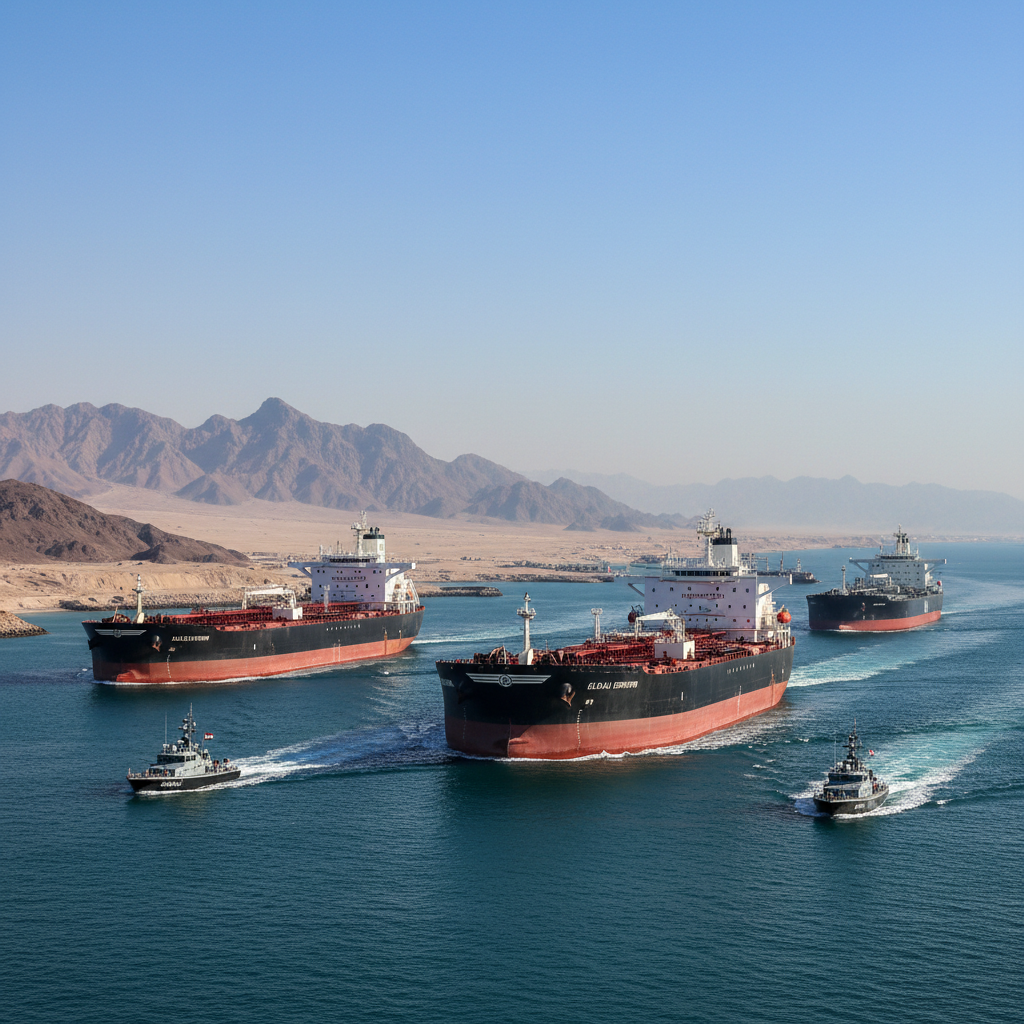
The “control” Iran claims to exercise over the Strait of Hormuz is another masterstroke in psychological and hybrid warfare. Tehran’s leverage over global shipping is built almost entirely on the threat of escalation and the narrative of potential action, not on a sustained, physical military blockade. Here, the posturing and positions of external actors—including the U.S. administration under President Trump, Vice President JD Vance, and a shifting cast of European, Middle Eastern, and Gulf players—both define and destabilize the regional calculus.
President Trump’s administration has made clear that American patience for Iranian brinksmanship is limited. By maintaining a visible and formidable U.S. military presence in the Gulf, Trump demonstrates a willingness to back threats with credible force. This posture, reinforced by hardline rhetoric and a refusal to negotiate under duress, signals to both allies and adversaries that the U.S. is prepared to enforce the freedom of navigation through overwhelming naval power if required. Trump’s approach has the dual effect of deterring Iranian escalation and reassuring nervous maritime stakeholders, but it also heightens volatility in global energy markets and provokes unease among European partners wary of unpredictable escalation.
Vice President JD Vance, representing a more measured voice within the administration, offers a balancing factor. Seen as more open to negotiation and less enthusiastic about long-term military commitments, Vance is regarded by both U.S. allies and Iranian negotiators as someone capable of facilitating compromise—especially regarding contentious issues like sanctions and maritime tolls. His presence at the negotiation table invites dialogue and diplomatic solutions, yet this flexibility also introduces ambiguity into U.S. policy. Internally, the divergence between Trump’s maximalist approach and Vance’s inclination for de-escalation creates a complex and sometimes inconsistent American signaling. Externally, this duality provides both an opening for adversaries to probe divisions and a potential avenue for peaceful resolution, depending on how skillfully it is managed.
European actors, notably the United Kingdom and France, play a pivotal though cautious role in this high-stakes environment. The UK, leading a multinational coalition for maritime security, brings military resources and diplomatic heft, seeking to ensure safe passage and uphold international law without succumbing to unilateral provocations by either Washington or Tehran. British Prime Minister Kir Starmer advocates for collective action, positioning the UK as a mediator willing to shoulder more responsibility in regional stability post-Brexit. Meanwhile, France and other EU states push for a rules-based, multilateral approach, advocating legal, economic, and limited military responses to Iranian threats, but remain divided on thresholds for more forceful intervention. Their willingness to escalate stops short of outright confrontation; their internal divisions and preference for consensus often result in slower, more calculated responses, inadvertently granting more maneuvering space to aggressive actors.
Middle Eastern and Gulf states contribute both to escalation risks and to opportunities for regional de-escalation. Countries such as Saudi Arabia, the UAE, and Qatar, directly exposed to any disruption in Gulf shipping, have quietly increased their own military readiness and support for multinational naval operations, motivated primarily by economic self-preservation. Their approach, however, remains fundamentally risk-averse: rather than seeking overt confrontation, these states emphasize diplomatic engagement, legal maneuvers at international forums, and coordination with coalition forces. The rise of Pakistan as a new mediator, respected by both Tehran and Washington, exemplifies the shift toward seeking regionally anchored resolutions and diversifying the diplomatic toolkit.
Collectively, these actors’ actions both complicate and sometimes clarify the security dynamic in the Strait of Hormuz and the broader regional context. Trump is willing to take bold risks but faces constraints imposed by domestic politics and alliance management. Vance is more open to dialogue but operates under limits set by Congress and the need for allied coherence. European leaders, particularly the British, are prepared to enforce the law on the high seas but are fundamentally reluctant to lead a wider regional war. Gulf leaders, with their economies tightly linked to energy export stability, remain acutely cautious, preferring diplomatic or multilateral security approaches unless pushed to the brink by direct Iranian aggression.
How far each is willing to go varies according to their strategic calculus. For the Trump administration, crossing significant escalation thresholds is a credible option, though not without cost or hesitation. VP Vance’s team offers diplomatic off-ramps, but not at the expense of allied unity or clear American deterrence. European powers are prepared for robust action within well-defined legal frameworks, but avoid open conflict unless absolutely necessary. The Gulf states are steadfast defenders of their own interests, unlikely to spearhead a fight, yet ready to reinforce coalition efforts if survival depends on it.
In sum, the interplay of ambitions, risk tolerances, and diplomatic maneuvering among these actors not only sharpens the contradictions of Iranian hybrid tactics but also sets the stage for what escalation or compromise will look like in the evolving security landscape of the Persian Gulf and beyond.
- Gray Zone Maneuvering: Iran’s use of maritime threats and its floating proposal to impose a shipping toll are seen by international analysts as attempts to manipulate a dangerous “gray zone” in maritime law, challenging the Montego Bay Convention while exploiting gaps in enforcement and international consensus.
- U.S. and Allied Strategy: CENTCOM and allied militaries have spent years wargaming precisely these scenarios. The threat posed by Iran is discounted by the overwhelming superiority of U.S. naval and air forces, and by the existence of robust contingency plans that can secure freedom of navigation should diplomacy fail.
- Negotiation Leverage: Iran has amplified the strait’s importance in negotiations in Islamabad, seeking to convert the mere possibility of closure into geopolitical and economic leverage—efforts that have galvanized responses not only from the U.S., but from a growing UK-led coalition and global maritime stakeholders.
- Distinction Between Threat and Capability: As evidenced by maritime and defense experts, the gap between Iran’s threats and operational ability is massive. Escalatory rhetoric and limited harassment cannot in themselves sustain a blockade or force a favorable political settlement against determined multinational opposition.
Beyond immediate military responses, the international community is grappling with the legitimacy and legality of any attempt to introduce a de facto maritime toll—actions seen as precedent-setting violations of global norms that could ripple as far as the Strait of Gibraltar if left unchallenged.
The Lebanon-Israel Front: An Isolated Proxy
The situation in the Levant further spotlights Iran’s diminishing strategic hand within a complex, multi-actor environment where external leadership and diplomacy are directly shaping outcomes on the ground. The assertive interventions of President Trump have set the tempo for regional escalation and deterrence. Trump’s willingness to break with past restraint—demonstrating U.S. naval and air power and making clear, public red lines—has put Tehran and its allies on notice that the margin for aggressive posturing is narrower and the costs of escalation, potentially much higher. The result is a security atmosphere defined as much by the threat of decisive American action as by the uncertainty it creates among regional and European partners.
In parallel, Vice President JD Vance’s involvement adds a layer of both opportunity and ambiguity. Seen as a pragmatist with skepticism toward extended U.S. military commitments, Vance’s engagement at the Islamabad negotiations signals to Iran and other stakeholders that the United States may be open to calibrated compromises, especially regarding sanctions and maritime rules. Vance’s presence offers a diplomatic off-ramp, but his authority is checked by the President’s hawkish posture, domestic U.S. divisions, and congressional pressure for a firmer hand. This intragovernmental tension complicates both U.S. negotiating leverage and international strategy, giving regional actors further incentive to play one channel against another.
European powers, meanwhile, are stepping beyond observation into active coalition-building. The UK, under Prime Minister Kir Starmer, has spearheaded multinational task forces to secure navigation and uphold maritime law—an effort that underscores European unwillingness to let the U.S.-Iran binary determine regional outcomes. Yet, Europe’s capacity for rapid or forceful action is hampered by internal debates over proportionality and risk; while united in defending global commerce, European capitals remain wary of being pulled into open-ended conflict or of condoning American unilateralism. This hesitancy both restrains and complicates robust collective action, making coalition efficacy situation-dependent.
From the Gulf, Saudi Arabia, the UAE, and Qatar continue to walk a narrow path between protecting existential economic interests—primarily, stable oil exports—and avoiding direct confrontation. While supportive of coalitional freedom-of-navigation patrols, these states weigh every move against the risk of Iranian retaliation and domestic destabilization. They prefer diplomacy and legal recourse, and look to mediators like Pakistan to keep dialogue open, but maintain the latent capacity and will to escalate if vital interests—such as the uncontested flow of energy—are clearly threatened.
Collectively, these actors create a web of both deterrence and ambiguity in the Levant, particularly in relation to Hezbollah and Lebanon. President Trump’s assertive risk tolerance makes escalation plausible, if not desirable; Vance offers an avenue for de-escalation, albeit with evident constraints. European and UK engagement enforces international norms but stops short of endorsing hard power as a primary tool. The Gulf states, through both restraint and readiness, underscore the region’s fundamental desire for stability—but also signal that red lines exist, particularly around trade and regime survival.
Thus, the decoupling of Lebanon from the Iran ceasefire is as much the product of Israeli strategy as it is the byproduct of external actors redefining the boundaries of acceptable escalation and negotiation. As Israel exploits this window, the true test will be how—and whether—these diverse actors can maintain unity of purpose or if their competing priorities will again allow Iranian proxies or new spoilers to exploit cracks in the regional order.
- Strategic Isolation of Hezbollah: The exclusion of Lebanon from the wider ceasefire is a notable Israeli achievement, representing Iran’s inability to protect its primary proxy. This decoupling has left Hezbollah facing the IDF alone, significantly eroding its operational options and morale.
- Collapse of Civilian Shield and Human Terrain: Over 600,000 Lebanese Shiites have evacuated southern Lebanon, depriving Hezbollah of its civilian shield and ecosystem for embedding weapons and operatives. As Yaakov Lappin describes, this dramatic shift undermines the “shadow state” model that sustained Hezbollah’s military structure.
- Emergence of a New Security Reality: Israel is establishing a modern security zone stretching to the Litani River, emphasizing flexible, intelligence-driven control rather than static fortifications. This shift is intended to prevent the re-emergence of the “Ring of Fire” that previously threatened northern Israel.
- Limits of Lebanese State Capacity: The Lebanese state’s inability or unwillingness to disarm Hezbollah ensures that international diplomatic efforts will remain deeply constrained, raising long-term concerns about militias, humanitarian crises, and the risk of renewed civil war if the status quo persists.
- Implications for Iran: The fracturing of Iran’s ability to project power through its primary proxy signals a broader decline in its regional influence at a time of mounting internal and external challenges.
The Gaza Dynamic and Broader Regional Consequences
While Iran and Hezbollah are weakened, the roles played by President Trump, Vice President Vance, and a spectrum of European, Middle Eastern, and Gulf actors are intensifying both the risks and complexities on other fronts.
President Trump’s approach remains a catalyst for escalating brinkmanship. His willingness to sustain large-scale American deployments and to couple these with maximalist rhetoric has instilled a sense of urgency and risk throughout the region. Trump’s readiness to escalate—backing up threats with real naval and aerial power—makes it clear to both allies and adversaries that Washington considers the current balance intolerable. Yet, this assertive posture also introduces volatility, unsettling alliances and drawing skepticism from European partners who fear that a miscalculation could push the region towards a wider conflict. Trump’s transactional style pressures allies for greater burden-sharing, even as it complicates diplomatic unity and regional strategy.
Vice President Vance, meanwhile, serves as a counterweight within U.S. leadership. Perceived as pragmatic and more willing to pursue negotiation, Vance’s engagement, especially through the Islamabad talks, provides Iran and other power centers with a potential off-ramp. His presence reassures dovish voices among U.S. allies and signals to Tehran that there may be alternatives to conflict escalation. However, Vance’s room for maneuver is limited—he faces a hawkish Congress and the imperative not to undercut administration resolve, leading to a layered, sometimes contradictory U.S. policy that adversaries may attempt to exploit for time or concessions.
European actors, notably the UK under Prime Minister Kir Starmer, play a pivotal but nuanced role. The UK leads a multinational coalition to secure maritime passage and assert the primacy of international law, seeking to check both Iranian aggression and overreach by Washington. However, Europe is not of one mind: there is unity on legal principle but hesitancy about military engagement. Differences over escalation thresholds and intervention methods persist, with France backing legal and economic approaches even as British-led forces show military resolve. Such cautious engagement, while adding legitimacy to the coalition, occasionally slows rapid action and leaves maneuvering space for assertive actors.
Middle Eastern and Gulf states—including Saudi Arabia, the UAE, and Qatar—walk a tightrope. Their support for international patrols is driven by vital economic interests, but they are deeply cautious about provoking Iran or inviting disruptive Western intervention. These states invest in diplomatic mediation (with Pakistan now emerging as a central broker), legal strategies, and incremental upgrades to military readiness—preferring stabilization to adventure. Yet, each retains latent capabilities and the political will to escalate should their regime survival or economic lifelines come under direct threat.
The interplay of these leadership choices shapes the current and future contest: Trump signals readiness to cross red lines but is checked by domestic and external politics; Vance amplifies diplomatic options but has limited freedom to diverge from core U.S. positions; Europe champions rule of law but avoids entanglement; and Gulf monarchies steadfastly prioritize survival over risk-taking.
Taken together, these diverse actors enhance deterrence and provide opportunities for de-escalation, but also introduce ambiguity, communication challenges, and potential for strategic miscalculation. Their varied degrees of willingness to escalate or compromise frame not just immediate responses, but the evolving norms, red lines, and risk thresholds of the entire Middle East security architecture.
- Hamas and Gaza: With Israel controlling 50% of Gaza, Hamas is rebuilding in the territory it still holds. The Israeli defense establishment views disarmament of Hamas as a likely next operational necessity, warning that any “feigned” compliance will not mitigate future conflict.
- Resilience of the Israeli Technology Sector: Despite the conflict, Israel’s technology sector demonstrates surprising resilience. High-profile international acquisitions, such as the potential Navius-AI21 Labs deal, highlight continued investor confidence and the adaptability of the Israeli workforce, even under conditions of war. (Laura Selye interview insights)
- Diplomatic and Economic Maneuvering: The agenda at Islamabad includes not only military questions but also legal and economic issues surrounding maritime law, freedom of navigation, and the precedent of toll imposition. These are being watched closely by global powers and multinational corporations alike.
- Coalitional Responses: The growing role of the UK, the mediation efforts of Pakistan, and the formation of international task forces point to a paradigmatic shift from U.S. unilateralism to broader coalitional maritime governance.
Informing Future Strategic Policy
The Iranian regime is emerging from this conflict paralyzed, bloodied, and struggling to project its power or ideology. However, this new vulnerability is not the result of military setbacks alone; it is also shaped and, in many ways, magnified by the behavior and calculations of a diverse cast of global and regional actors.
President Trump, through a doctrine of “maximum pressure,” has compelled a shift in strategic risk for all parties. His mix of uncompromising rhetoric, credible demonstrations of military force in the Gulf, and willingness to push the boundaries of naval engagement has both deterred Iranian escalation and inflamed volatility in global markets. While these actions reassure U.S. allies of America’s commitment to regional security, they simultaneously heighten European and Gulf anxieties about uncontrolled escalation and the unpredictability of U.S. decision-making—especially on the eve of a highly charged election year. Trump’s readiness to escalate has arguably accelerated the erosion of Iran’s deterrence, but it has also complicated alliance management and the search for diplomatic solutions.
Vice President JD Vance introduces a key counterweight within the U.S. leadership. Perceived as cautious and open to engagement, Vance’s role in negotiations—especially at Tehran’s request—offers a diplomatic off-ramp that Iran and risk-averse states can seize upon. Yet, Vance is hemmed in by an emboldened, hawkish Congress and the need to reconcile differences with the President’s more assertive stance. This tension between escalation and de-escalation not only produces ambiguity in U.S. signaling but also gives Iran and external actors opportunities to test for leverage, prolong negotiations, or avoid decisive outcomes.
European states, led by the UK and France, define their own space in this new order, building coalitions to enforce the primacy of international law while avoiding subordination to either U.S. or Iranian hard lines. Prime Minister Kir Starmer’s coalition leadership has been instrumental in organizing multinational patrols and supporting legalistic responses to Iranian provocations. Yet, Europe’s internal divisions—between proponents of robust action and those favoring economic and legal responses—limit the bloc’s willingness to fully commit militarily. As a result, Europe is effective at adding legitimacy and stability, but limited in its ability to provide rapid or forceful intervention should deterrence break down.
Middle Eastern and Gulf powers including Saudi Arabia, the UAE, and Qatar operate on an ever-narrowing path between supporting international coalitions—so essential for the security of their vital energy exports—and avoiding steps that might provoke direct Iranian retaliation or invite wider Western military intervention. Their preference is for quiet diplomacy, incremental upgrades to military readiness, and third-party mediation (exemplified by Pakistan’s new role as interlocutor). However, should the core interests of regime survival or continued energy exports be jeopardized, these actors have signaled a willingness—and latent capacity—to escalate more forcefully than in prior decades.
Collectively, the willingness of these actors to push boundaries or hold back remains fluid, shaped by shifting threat perceptions, alliance priorities, and domestic politics. President Trump is perhaps the most willing to court escalation, albeit within complex domestic and alliance constraints. Vance advances diplomatic engagement but is circumscribed by political realities at home. Europe champions collective legal and security norms, yet is cautious about the costs of deeper involvement. The Gulf monarchies, first and foremost, hedge against instability, always ready to act if absolutely necessary but persistently seeking non-military solutions as a first resort.
Thus, the new landscape emerges as one in which the unraveling of Iran’s deterrence is as much a consequence of external assertiveness, ambiguity, and coalition-building as it is of Tehran’s own failures. The interplay between these global and regional actors both unlocks new opportunities for containment and stability—and injects new risks of confusion, miscalculation, or even escalation into a region already marked by chronic volatility. Their actions not only complicate Iran’s strategic calculations, but also form the frontlines of a broader contest over who will define the red lines and norms shaping the Middle East’s future security order.
For defense analysts, military planners, and policymakers, these developments demand a rapid recalibration. Threat assessment frameworks must evolve to distinguish between psychological projection and tangible capability. Strategic ambiguity, which once constituted Tehran’s primary advantage, is being replaced by a new regional order marked by intelligence-driven deterrence and coalition-based security.
To capitalize on these changes, policymakers should:
- Prioritize intelligence fusion across allied nations to monitor and preempt asymmetric tactics.
- Invest in legal and diplomatic coalitions to reinforce international norms and block precedent-setting infractions, especially in maritime law.
- Integrate economic and technological resilience into defense planning, leveraging private sector dynamism for both deterrence and recovery.
By rigorously analyzing these shifting power dynamics, the international community can re-establish deterrence, secure vital maritime chokepoints, and stabilize the Middle East—ushering in a new era in which bravado is met not with fear, but with clarity, coordination, and resolve.
- @MiddleEastSecurity #IranVulnerability #Geopolitics #StraitOfHormuz #GlobalDeterrence
- @USLeadership #MaximumPressure #IranProxies #MiddleEastStability #CoalitionBuilding
- @EuropeanDiplomacy #MaritimeSecurity #IranSanctions #GlobalNorms #RegionalOrder
- @GulfStates #EnergySecurity #IranThreat #DiplomaticEngagement #MiddleEastBalance
- @DefenseAnalysis #IranMissileProgram #USDeterrence #MiddleEastConflict #StrategicShifts
@UN #InternationalLaw #GlobalSecurity #MiddleEastPeace #DiplomaticEngagement
@NATO #CollectiveDefense #RegionalStability #IranStrategy #GlobalAlliances
@EU #EuropeanUnity #MaritimeSecurity #IranSanctions #GlobalNorms
@GCC #GulfCooperation #EnergySecurity #RegionalDiplomacy #MiddleEastBalance
@IMO #MaritimeLaw #FreedomOfNavigation #GlobalTrade #StraitOfHormuz
@IAEA #NuclearNonProliferation #IranNuclearProgram #GlobalOversight #InternationalSecurity
@WorldBank #EconomicResilience #MiddleEastDevelopment #GlobalPartnerships #StabilityInitiatives
@Interpol #GlobalSecurity #CounterTerrorism #InternationalCooperation #LawEnforcement
@UNSC #GlobalPeace #SanctionsEnforcement #MiddleEastCrisis #InternationalLeadership
@OIC #IslamicCooperation #RegionalUnity #MiddleEastPeace #DiplomaticSolutions @POTUS #USLeadership #MiddleEastPolicy #GlobalSecurity #MaximumPressure
@VP #DiplomaticEngagement #USForeignPolicy #MiddleEastStability #Negotiation
@UKPrimeMinister #GlobalCoalitions #MaritimeSecurity #MiddleEastStrategy #Diplomacy
@FrenchPresident #EuropeanLeadership #IranSanctions #GlobalNorms #RegionalStability
@GermanChancellor #EUUnity #MiddleEastPolicy #GlobalPartnerships #DiplomaticSolutions
@SaudiCrownPrince #GulfLeadership #EnergySecurity #RegionalBalance #MiddleEastPeace
@UAEPresident #DiplomaticInitiatives #GulfStability #EnergyPolicy #MiddleEastEngagement
@IranSupremeLeader #IranPolicy #RegionalInfluence #MiddleEastConflict #Geopolitics
@IsraeliPrimeMinister #NationalSecurity #MiddleEastPeace #RegionalDeterrence #DefensePolicy@ChathamHouse #GlobalAffairs #MiddleEastPolicy #InternationalRelations #StrategicAnalysis
@BrookingsInst #Geopolitics #MiddleEastSecurity #PolicyResearch #GlobalStrategy
@RANDCorporation #DefenseAnalysis #MiddleEastConflict #StrategicPlanning #GlobalSecurity
@CarnegieEndow #InternationalPeace #MiddleEastPolicy #DiplomaticSolutions #GlobalAffairs
@AtlanticCouncil #GlobalStrategy #MiddleEastStability #EnergySecurity #PolicyInsights
@CSIS #StrategicStudies #MiddleEastSecurity #DefensePolicy #GlobalLeadership
@WilsonCenter #MiddleEastProgram #GlobalPolicy #RegionalStability #DiplomaticEngagement
@IISS_org #StrategicStudies #MiddleEastConflict #GlobalSecurity #DefenseAnalysis
@CFR_org #ForeignRelations #MiddleEastPolicy #GlobalStrategy #DiplomaticSolutions
@MEIWashington #MiddleEastInsights #PolicyResearch #RegionalStability #GlobalAffairs
@PakistaniPrimeMinister #RegionalMediation #DiplomaticEngagement #MiddleEastStability #GlobalPartnerships @USCongress #LegislativeLeadership #MiddleEastPolicy #GlobalSecurity #Sanctions
@USSenate #ForeignPolicy #DefenseStrategy #MiddleEastStability #GlobalAffairs
@UKParliament #GlobalDiplomacy #MaritimeSecurity #MiddleEastEngagement #InternationalLaw
@FrenchParliament #EuropeanLeadership #MiddleEastPolicy #GlobalNorms #DiplomaticSolutions
@Bundestag #GermanLeadership #MiddleEastStrategy #EUUnity #GlobalSecurity
@KnessetIL #IsraeliPolicy #NationalSecurity #MiddleEastPeace #DefenseStrategy
@MajlisIran #IranianPolicy #RegionalInfluence #MiddleEastConflict #Geopolitics
@EUParliament #EuropeanUnity #GlobalStrategy #MiddleEastPolicy #InternationalLaw
@GCCParliament #GulfCooperation #RegionalStability #EnergySecurity #MiddleEastEngagement
@PakistaniParliament #RegionalMediation #DiplomaticEngagement #MiddleEastStability #GlobalPartnerships @CENTCOM #USMilitary #MiddleEastSecurity #GlobalDeterrence #DefenseStrategy
@IDF #IsraeliDefense #NationalSecurity #MiddleEastConflict #StrategicOperations
@IRGC #IranianMilitary #RegionalInfluence #MiddleEastConflict #AsymmetricWarfare
@RoyalNavy #MaritimeSecurity #GlobalStrategy #MiddleEastStability #NavalOperations
@USNavy #FreedomOfNavigation #DefenseStrategy #MiddleEastPolicy #GlobalSecurity
@NATOForces #CollectiveDefense #MiddleEastEngagement #GlobalSecurity #StrategicAlliances
@Sandhurst #MilitaryAcademy #LeadershipTraining #GlobalSecurity #DefenseEducation
@WestPoint_USMA #MilitaryLeadership #StrategicStudies #DefenseTraining #GlobalSecurity
@NavalWarCollege #MaritimeStrategy #DefenseEducation #MiddleEastPolicy #GlobalLeadership
@NationalDefenseU #StrategicPlanning #MilitaryEducation #GlobalSecurity #MiddleEastPolicy @the_national_center_for_public_policy_research@HarvardKennedySchool #PublicPolicy #InternationalAffairs #GlobalLeadership #StrategicStudies
@FletcherSchool #Diplomacy #InternationalLaw #MiddleEastPolicy #GlobalStrategy
@SFSGeorgetown #ForeignService #GlobalAffairs #MiddleEastEngagement #DiplomaticStudies
@JohnsHopkinsSAIS #InternationalRelations #MiddleEastPolicy #GlobalSecurity #StrategicAnalysis
@LSEIRDept #InternationalRelations #GlobalPolicy #MiddleEastStrategy #DiplomaticSolutions
@SciencesPo #GlobalAffairs #EuropeanLeadership #MiddleEastPolicy #InternationalDiplomacy
@KingsCollegeLondon #WarStudies #DefensePolicy #MiddleEastConflict #StrategicResearch
@StanfordFSI #GlobalSecurity #MiddleEastPolicy #InternationalAffairs #PolicyResearch
@MIT_Polisci #PoliticalScience #GlobalStrategy #MiddleEastEngagement #DefenseAnalysis
@ColumbiaSIPA #PublicAffairs #GlobalPolicy #MiddleEastStrategy #DiplomaticEngagement
Discover more from Responsible Public Affairs
Subscribe to get the latest posts sent to your email.