
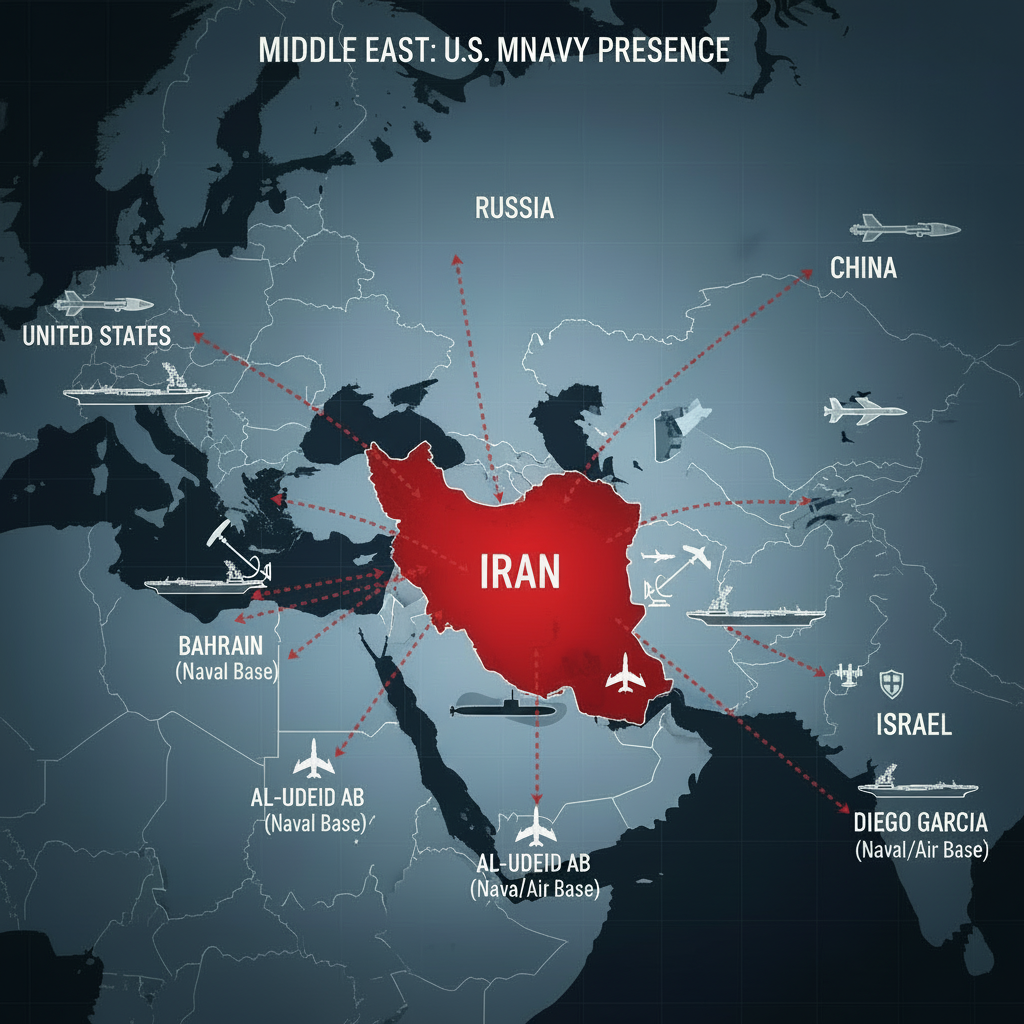
Iran’s geopolitical position and the resulting global tensions are shaped by historical rivalries, controversial nuclear ambitions, and shifting alliances. This context highlights the complex relationships between Iran, the United States, Russia, China, and regional powers like Israel, as well as the implications for both regional and global stability.
Meanwhile, strategic military exercises such as France’s Orion operations reflect growing Western concerns over potential threats, particularly from Russia. This article explores the multifaceted nature of these tensions, from Iran’s nuclear ambitions to European military exercises, strategic alliances, and their implications for global security.
Iran and U.S. Sanctions: A Strategic Isolation
Since the 1979 Islamic Revolution, Iran has maintained a defiant stance toward the United States, epitomized by slogans like “Death to America.” This rhetoric, while ideological, has translated into strategic decisions that have exposed the country to severe economic sanctions. These sanctions, imposed in response to Tehran’s nuclear ambitions and its perceived destabilizing role in the region, have plunged Iran’s economy into a deep crisis.
An internal debate is emerging among Iran’s traditional allies, particularly in Russia. Some Russian observers openly criticize Iran’s strategy, calling it provocative and ineffective. They argue that by defying the U.S. without securing viable agreements, Iran has further isolated itself on the international stage. This critique underscores a growing perception that Tehran must choose between escalating its confrontation with Washington or considering concessions to ease sanctions.
Iran’s Nuclear Ambitions: A Global Threat
400 kg of Enriched Uranium: A Red Line Crossed
Iran has recently accumulated over 400 kg of uranium enriched to 60%, a level close to what is required to produce a nuclear weapon. If enriched to 90%, this uranium would be sufficient to produce several nuclear bombs. This accumulation deeply concerns the United States, Israel, and their allies, who view it as a direct threat to regional security.
A Game of Hide-and-Seek with the International Community
Iran has been accused of concealing undeclared nuclear facilities, such as the Fordow and Natanz sites, built underground to withstand airstrikes. These facilities, combined with a refusal to fully cooperate with the IAEA, heighten suspicions about the military intentions of Iran’s nuclear program.
Development of Ballistic Vectors
Alongside its nuclear program, Iran has significantly advanced its ballistic capabilities. Missiles like the Shahab-3, Sejjil, and Khorramshahr can strike targets thousands of kilometers away, including in Israel and Europe. These ballistic vectors, combined with potential nuclear capabilities, represent a major strategic threat.
Russia: A Pragmatic and Ambivalent Ally
Military and Nuclear Cooperation
- Arms Sales: Russia has supplied Iran with advanced air defense systems, such as the S-300, bolstering Tehran’s defensive capabilities.
- Nuclear Program: Moscow has played a key role in developing Iran’s civilian nuclear program, including constructing the Bushehr nuclear plant.
A Limited but Strategic Military Presence
Russia maintains a military presence in the region, particularly in Syria, where it supports Bashar al-Assad’s regime. Russian bases in Syria, such as Tartus and Hmeimim, play a key role in this strategy.
An Ambivalent Position
- Mediation in Nuclear Negotiations: Russia has proposed processing Iran’s enriched uranium on its territory, an initiative aimed at limiting Iran’s nuclear capabilities while enhancing Russian influence.
- Relations with Israel: Moscow also maintains close ties with Israel, including coordinating military actions in Syria.
China: A Strategic Economic Partner, Yet Cautious
China’s Economic Interests
- Energy Dependence: China heavily relies on Middle Eastern oil imports, with Iran being a significant supplier.
- Infrastructure Investments: As part of the Belt and Road Initiative, China has invested in infrastructure projects in Iran.
A Discreet Military Presence
Unlike the U.S. and Russia, China does not have military bases in the region. However, it maintains a naval presence in the Gulf of Aden and the Indian Ocean to secure its trade routes.
Strategic Caution
Despite its economic ties with Iran, China remains cautious in its political and military support, preferring to maintain balanced relations with the U.S. and Gulf monarchies.
The United States: A Dominant Military Presence in the Region
U.S. Military Bases: Strategic Footholds
- Diego Garcia: Located in the Chagos Archipelago, this base hosts strategic bombers and serves as a logistics hub for regional operations.
- Al-Udeid (Qatar): The center of U.S. operations in the Middle East.
- Bahrain: Home to the U.S. Fifth Fleet, essential for securing the Strait of Hormuz.
Naval and Air Forces
- Aircraft Carriers and Naval Strike Groups: USS Gerald R. Ford and USS Dwight D. Eisenhower.
- Missile Defense Systems: Patriot and THAAD batteries deployed across Gulf countries.
Orion Operations: NATO’s Preparation for High-Intensity Conflicts
The Orion operations, organized by France every three years, are among the most ambitious military exercises conducted by the French armed forces. These exercises are part of NATO’s broader strategy to strengthen its capabilities against potential threats, particularly from Russia.
Main Objectives of Orion Operations:
- Preparation for High-Intensity Conflicts: War simulations involving technologically advanced adversaries.
- Inter-Allied Coordination: Strengthening cooperation among NATO member states’ armed forces.
- National and Regional Resilience: Crisis management scenarios, including cyberattacks and hybrid threats.
A Clear Message to Moscow
The Orion operations send a clear message to Russia: NATO and its members are actively preparing to face any aggression, whether conventional or hybrid.
#BreakingNews #WorldNews #Geopolitics #InternationalRelations #MiddleEast #GlobalSecurity #MilitaryNews #DefenseNews #NuclearPolicy #USPolitics #Russia #China #Iran #Diplomacy #ConflictResolution #GlobalAffairs #StrategicStudies #ForeignPolicy #SecurityStudies #MiddleEastPolitics #GlobalTensions #MilitaryStrategy #NATO #UN #Sanctions #EnergySecurity #RegionalStability #USMilitary #RussianInfluence #ChinaStrategy #IranNuclearDeal #MiddleEastSecurity #DefenseStrategy #InternationalSecurity #GlobalConflict #Alliances #MilitaryPresence #NavalForces #StrategicPartnerships #GlobalPower #MiddleEastAffairs
@BBCWorld @CNN @Reuters @AP @TheEconomist @FinancialTimes @nytimes @washingtonpost @guardian @AlJazeera @FRANCE24 @LeMonde @DerSpiegel @TIME @Newsweek @Forbes @Bloomberg @WSJ (The Wall Street Journal) @SkyNews @ABC @CBSNews @NBCNews @ForeignAffairs @ForeignPolicy @TheAtlantic @DefenseOne @WarOnTheRocks @BrookingsInst @CSIS @RANDCorporation @AtlanticCouncil @MiddleEastInst @TheWilsonCenter @CNASdc @ChathamHouse @IISS_org (International Institute for Strategic Studies) @CarnegieEndow (Carnegie Endowment for International Peace) @Stratfor (Strategic Forecasting) @AJEnglish @Haaretzcom @ArabNews @TehranTimes79 @Jerusalem_Post @AsharqNews @TheNationalNews (Émirats arabes unis) @DailyStarLeb (Liban) @Dawn_News (Pakistan) @TOIWorld (The Times of India – Monde)

