
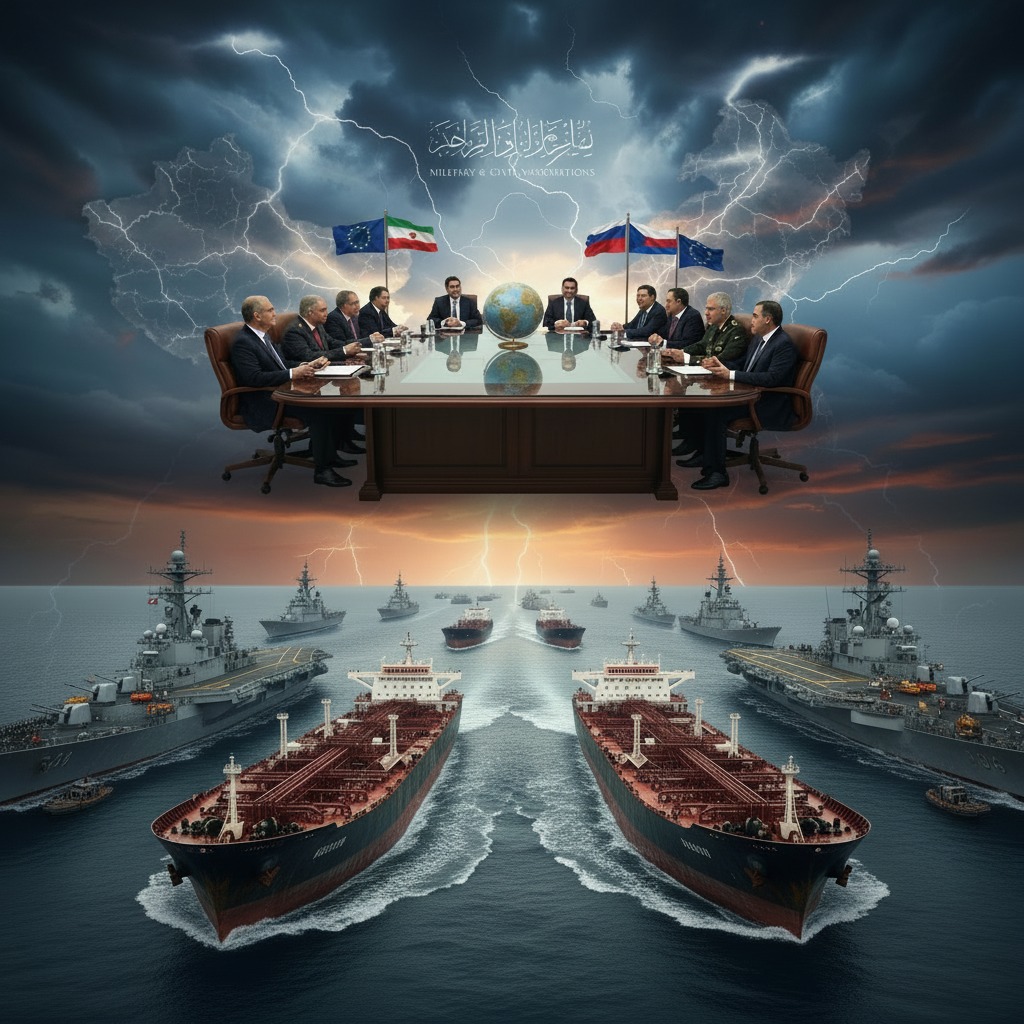
Introduction: Civil vs. Military Negotiations
Negotiation is a fundamental process for resolving disputes, allocating resources, and shaping interactions—whether in the boardroom or on the battlefield. Yet the context, stakes, and methods differ sharply between civil (business or diplomatic) and military negotiations.
Key Differences:
- Objectives: Civil negotiations often seek compromise for mutual benefit, focusing on deals, contracts, or regulatory compliance. Military negotiations, by contrast, address existential threats, security guarantees, and the distribution of hard power.
- Leverage and Stakes: In business, BATNA (Best Alternative to a Negotiated Agreement) is calculated in economic or reputational terms, while in military contexts, alternatives may involve imminent violence, large-scale disruption, or loss of life. Although nowadays they can be mixed because of the importance of reputation.
- Parties and Stakeholders: Civil negotiations usually occur between defined organizations or individuals acting on behalf of corporate or civic interests. Military negotiations engage states, alliances, militias, or international bodies—with divergent mandates and, often, unclear authority structures.
- Visibility and Secretariat: Business negotiations are often private, governed by enforceable contracts and civil law. Military negotiations may unfold under global scrutiny or secrecy, sometimes lacking universally recognized frameworks, especially in “gray zones” or during open conflict.
- Legal Context: Civil negotiations occur within the laws of the relevant jurisdiction. In military confrontations such as over the Strait of Hormuz, the lines of legality, enforcement, and neutrality are much more contested.
Understanding these differences is foundational to adapting negotiation best practices from the business world to the unique imperatives and challenges of military impasses.
Historical Evolution of Military Negotiation: Key Moments and Innovators
The art of military negotiation has evolved across centuries, shaped by power struggles, treaties, and the quest for peace amid war. Several milestones stand out:
- Treaty of Kadesh (c. 1259 BCE): Often cited as the earliest recorded peace treaty, brokered between Ramses II (Egypt) and Hattusili III (Hittites) after years of war. This agreement introduced diplomatic envoys and mutual defense clauses, framing negotiation as a tool for enduring stability.
- Westphalian Peace (1648): The Peace of Westphalia ended the Thirty Years’ War and formalized the modern state system. It introduced the principle of sovereignty—transforming how states negotiated over territory, allegiance, and religion, and setting a precedent for multilateral settlement.
- Congress of Vienna (1814-1815): After the Napoleonic Wars, Metternich and Castlereagh navigated a complex balancing act through direct, multilateral negotiation, laying the groundwork for collective security (e.g., the Concert of Europe).
- World Wars Armistices: The armistice at Compiègne (1918) showed how military stalemates trigger structured negotiations, while World War II negotiations forged the United Nations and rules for post-war order (Yalta, Potsdam).
- Cold War Era: The Cuban Missile Crisis (1962) highlighted the criticality of backchannels, tacit warnings, and crisis management outside formal treaty frameworks.
- Modern Developments: Recent conflicts have relied on evolving strategies—UN mediation, observer missions, and hybrid models linking civil and military frameworks. Notably, the Dayton Accords (1995) for Bosnia and the Good Friday Agreement (1998) in Northern Ireland mixed military disengagement with inclusive bargaining.
Each historical phase refined the art and science of negotiation, blending psychological, procedural, and legal tools. Innovators such as Talleyrand (diplomatic finesse in Napoleonic Europe), Henry Kissinger (shuttle diplomacy in the Middle East), and modern facilitators like Martti Ahtisaari (Aceh, Kosovo) have expanded what is possible when talks seem impossible.
Beyond the BATNA: Redefining Leverage in the Strait of Hormuz Stalemate
Today, negotiating over the Strait of Hormuz is complicated by the challenge that, under international law, no single nation should claim ownership or exclusive control over this vital open shipping channel. The current situation is further strained not just by local rivalries, but by the broader legal and geopolitical implications of any unilateral action—especially as the US President, following the failed talks in Islamabad, is now threatening a maritime blockade. The core objective should not be to establish dominance but to restore the internationally recognized neutrality of the strait, as was the norm before the outbreak of war. Achieving consensus on this principle is vital to regional stability, free navigation, and the upholding of global norms. Yet, with positions hardening and threats escalating, negotiators must find ways to create viable objectives and secure international support. Ensure the Strait remains open, Iran’s nuclear ambitions are contained, and conflict does not spiral out of control.
For decades, the United States and Iran have engaged in a high-stakes, asymmetric conflict. At the heart of this tension lies the Strait of Hormuz, a narrow waterway through which roughly a fifth of the world’s oil consumption passes. When tensions flare, the threat of closure—or severe disruption—looms large. Traditional negotiation theory suggests that without a strong Best Alternative to a Negotiated Agreement (BATNA), negotiators are at the mercy of their counterpart. In international relations, dealing with “take it or leave it” ultimatums and massive power imbalances often leads to diplomatic paralysis or armed conflict.
However, as negotiation expert Jonathan Hughes demonstrates in his recent Harvard Business Review article, “Negotiating When There Is No Plan B” (Harvard Business Review, May-June 2024), dealmakers are seldom as powerless as they assume—even in the absence of a clear alternative. While Hughes examines these strategies through a business lens, they offer valuable direction for international and military impasses like the US-Iran deadlock over the Strait of Hormuz. His framework has already influenced thinking well beyond corporate boardrooms, underscoring how the creative expansion of options and leverage—properly adapted—can apply to complex security crises.
1. Harness the Power of Partial Alternatives
In a zero-sum geopolitical standoff, policymakers often search for a silver bullet—a complete alternative to the current crisis. When that fails, they feel trapped.
Instead, nations must cultivate partial alternatives. While the US cannot magically replace the Strait of Hormuz, it can mitigate reliance. Developing alternative regional pipelines (such as the East-West Pipeline in Saudi Arabia), boosting strategic petroleum reserves, and accelerating the transition to renewable energy sources are partial alternatives. By reducing the global economic shock of a strait closure by even 20% or 30%, the US diminishes Iran’s primary asymmetric leverage.
Worldwide Example: In the Russia-Ukraine conflict after 2022, European countries rapidly expanded LNG import terminals and pipeline interconnections to lessen dependence on Russian gas—creating partial alternatives when no full replacement existed.
2. Analyze the Counterparty’s Hidden Vulnerabilities
When dealing with hostile actors, it is easy to negotiate from a place of fear, fixating on one’s own vulnerabilities. However, dependence is almost always mutual.
If the US and global markets rely on the Strait for energy transit, Iran relies on that exact same waterway for its economic survival. Iran’s economy is heavily dependent on oil exports to Asian markets, particularly China. The Iranian government also faces significant domestic pressure regarding inflation and economic stability. By recognizing the severe fixed costs and internal political risks Iran faces if commerce halts, US negotiators can negotiate from a position of objective strength rather than perceived weakness.
Worldwide Example: During the Korean War armistice talks (1951–53), both sides recognized mutual vulnerabilities—UN forces could blockade North Korea, while Chinese intervention risked US escalation—eventually leading to compromise.
3. Establish Temporary Alternatives and Tacit Consent
When a grand bargain or formal treaty is politically impossible, negotiators should explore what can be achieved through tacit consent.
In the Strait of Hormuz, an explicit agreement on naval conduct may be viewed as political capitulation by hardliners in both Washington and Tehran. Instead, both sides can rely on temporary, unwritten workarounds. Unilateral declarations of specific transit corridors or temporary de-escalation protocols—where one side alters its naval patrols and waits to see if the other mirrors the behavior—can create a functional operating environment without the need for a formal signature.
Worldwide Example: The “Red Phone” direct communication line during the Cold War was a tacit mechanism to de-escalate crises and prevent misunderstandings without a formal treaty for every contingency.
4. Focus on the Players and the Process
Geopolitical entities are not monolithic. Procedural alternatives involve targeting the specific factions and individuals shaping the conflict.
In the US-Iran dynamic, this means utilizing back channels and leveraging third-party stakeholders. Engaging regional intermediaries such as Oman and Qatar, which maintain distinct economic and diplomatic ties with Tehran, alters the procedural dynamics. Furthermore, understanding the competing factions within Iran—the IRGC versus the civilian government—allows negotiators to craft proposals that appeal to the specific interests of the dominant faction, bypassing inflexible official postures.
Worldwide Example: In Colombia’s peace process (2012–2016), negotiators benefited from Norway and Cuba as neutral venues and the engagement of various state and insurgent factions, which helped overcome deadlocks.
5. Reframe Threats as Warnings
In high-stakes brinkmanship, threats (“Stand down or we will strike”) provoke adversarial, nationalistic reactions and escalate the probability of war.
Diplomatic breakthroughs require reframing coercive threats into self-protective warnings. A warning focuses on mutual consequences and objective constraints. For example, rather than threatening military annihilation if a tanker is seized, a warning might state: “If freedom of navigation is compromised, global financial markets will force a coalition response that neither of our economies can afford.” This shifts the framing from an aggressive ultimatum to a shared reality of mutual damage, reducing defensiveness and opening doors for pragmatic de-escalation.
Worldwide Example: During the Cuban Missile Crisis, President Kennedy’s administration communicated the consequences of escalation as warnings rather than ultimatums, enabling the Soviet Union to step back without humiliation.
6. Appeal to Fairness and International Norms
When power dynamics are highly skewed and all other leverage fails, shifting the paradigm to fairness can serve as a potent disruptor.
In global conflicts, “fairness” often means adhering to international law and maritime norms. By consistently framing the dispute not as a bilateral US–Iran power struggle, but as a defense of the globally accepted United Nations Convention on the Law of the Sea (UNCLOS), negotiators draw in the broader international community. This forces parties to justify their actions against global standards rather than simply reacting to an adversary.
Worldwide Example: In the South China Sea, states such as the Philippines have successfully used UNCLOS and international tribunals to gain leverage in disputes against stronger powers like China.
Breaking the Deadlock: Creating Viable Objectives With International Support
To resolve the impasse in accordance with international law, negotiators must craft realistic objectives and enjoy global backing. The primary goal should be to reaffirm the Strait of Hormuz’s neutrality, keeping it open for international navigation in accordance with UNCLOS principles. This requires forging an agreement—potentially through the UN or an empowered coalition of neutral states—that prevents unilateral control or maritime blockades.
Preventing Iran’s advancement of nuclear weapons capabilities simultaneously remains a vital security objective. Both aims—free navigation and non-proliferation—should be framed not as adversarial ultimatums but as shared international interests. Building a broad coalition (including EU states, Gulf countries, and major Asian economies) will be essential, uniting stakeholders by their reliance on open sea lanes and regional stability.
The process should emphasize transparency, adherence to established norms, and neutral third-party guarantees—such as international observers or UN-mandated maritime patrols. Economic incentives and sanctions relief could be phased in parallel with verifiable curbs on Iran’s nuclear activities, ensured via rigorous inspection regimes.
History demonstrates that internationally anchored, multifaceted negotiation produces results: The Joint Comprehensive Plan of Action (JCPOA) involved major powers restraining Iran’s nuclear program; the Camp David Accords and Dayton Peace Agreement created guarantees and frameworks that outlasted their immediate crises.
Enduring stability for the Strait depends on sustained international engagement, credible enforcement, and negotiation strategies rooted in mutual recognition of power and norms.
Conclusion: Toward Creative, Credible, and Collective Security
These creative negotiation tactics—adapted from business into the security realm—prove that even where no single, clear alternative exists, power remains in how options are defined, leveraged, and shared. As Hughes (2024) and negotiation theorists since Fisher and Ury remind us, the absence of a classic “Plan B” must not be mistaken for the absence of power.
In the era of complex military confrontations and shifting international norms, it is the negotiators who innovate, build strategic coalitions, and uphold law over unilateral advantage that break deadlocks and avert catastrophe. The Strait of Hormuz will serve as a test of such skills—and a case study for generations.
Key References
- Hughes, J. (2024). “Negotiating When There Is No Plan B.” Harvard Business Review. https://hbr.org/2024/05/negotiating-when-there-is-no-plan-b
- Fisher, R., & Ury, W. (1981). Getting to Yes: Negotiating Agreement Without Giving In. Penguin.
- International Energy Agency. (2023). World Energy Outlook.
- United Nations Convention on the Law of the Sea (UNCLOS), 1982.
- Allison, G. (1969). “The Cuban Missile Crisis.” The Essence of Decision. Harvard University Press.
- Additional worldwide cases as referenced throughout the text.
@GeopoliticalNegotiations #GeopoliticalNegotiations
@GlobalTensions #GlobalTensions
@MilitaryStrategy #MilitaryStrategy
@DiplomaticDiscussions #DiplomaticDiscussions
@StraitOfHormuz #StraitOfHormuz
@InternationalRelations #InternationalRelations
@NavalPower #NavalPower
@OilTankers #OilTankers
@ChinaAndRussiaInfluence #ChinaAndRussiaInfluence
@HighStakesDiplomacy #HighStakesDiplomacy
@ConflictResolution #ConflictResolution
@MaritimeSecurity #MaritimeSecurity
@EnergyTransit #EnergyTransit
@StrategicAlliances #StrategicAlliances
@CrisisManagement #CrisisManagement
@UnitedNations #UnitedNations
@InternationalMaritimeOrganization #InternationalMaritimeOrganization
@UNCLOS #UNCLOS
@GulfCooperationCouncil #GulfCooperationCouncil
@OPEC #OPEC
@InternationalEnergyAgency #InternationalEnergyAgency
@InternationalAtomicEnergyAgency #InternationalAtomicEnergyAgency
@BrookingsInstitution #BrookingsInstitution
@CouncilOnForeignRelations #CouncilOnForeignRelations
@CSIS #CSIS
@RANDCorporation #RANDCorporation
@InstituteForPoliticalAndInternationalStudies #InstituteForPoliticalAndInternationalStudies
@ChinaInstituteOfInternationalStudies #ChinaInstituteOfInternationalStudies
@ShanghaiInstitutesForInternationalStudies #ShanghaiInstitutesForInternationalStudies
@RussianInternationalAffairsCouncil #RussianInternationalAffairsCouncil
@CarnegieMoscowCenter #CarnegieMoscowCenter
@ChathamHouse #ChathamHouse
@EuropeanCouncilOnForeignRelations #EuropeanCouncilOnForeignRelations
@ClingendaelInstitute #ClingendaelInstitute
@GulfResearchCenter #GulfResearchCenter
@USCongress #USCongress
@NationalPeoplesCongress #NationalPeoplesCongress
@RussianFederalAssembly #RussianFederalAssembly
@UKParliament #UKParliament
@EuropeanParliament #EuropeanParliament
@SaudiShuraCouncil #SaudiShuraCouncil
@UAEFederalNationalCouncil #UAEFederalNationalCouncil
@TheNewYorkTimes #TheNewYorkTimes
@TheWashingtonPost #TheWashingtonPost
@CNN #CNN
@Bloomberg #Bloomberg
@TheWallStreetJournal #TheWallStreetJournal
@PressTV #PressTV
@IRNA #IRNA
@GlobalTimes #GlobalTimes
@Kommersant #Kommersant
@BBC #BBC
@TheGuardian #TheGuardian
@TheTimes #TheTimes
@FinancialTimes #FinancialTimes
@DeutscheWelle #DeutscheWelle
@LeMonde #LeMonde
@ElPais #ElPais
@TheNational #TheNational @jerusalempost #JerusalemPost
@Haaretz #Haaretz
@TimesOfIsrael #TimesOfIsrael
@LCI, @cnews

