
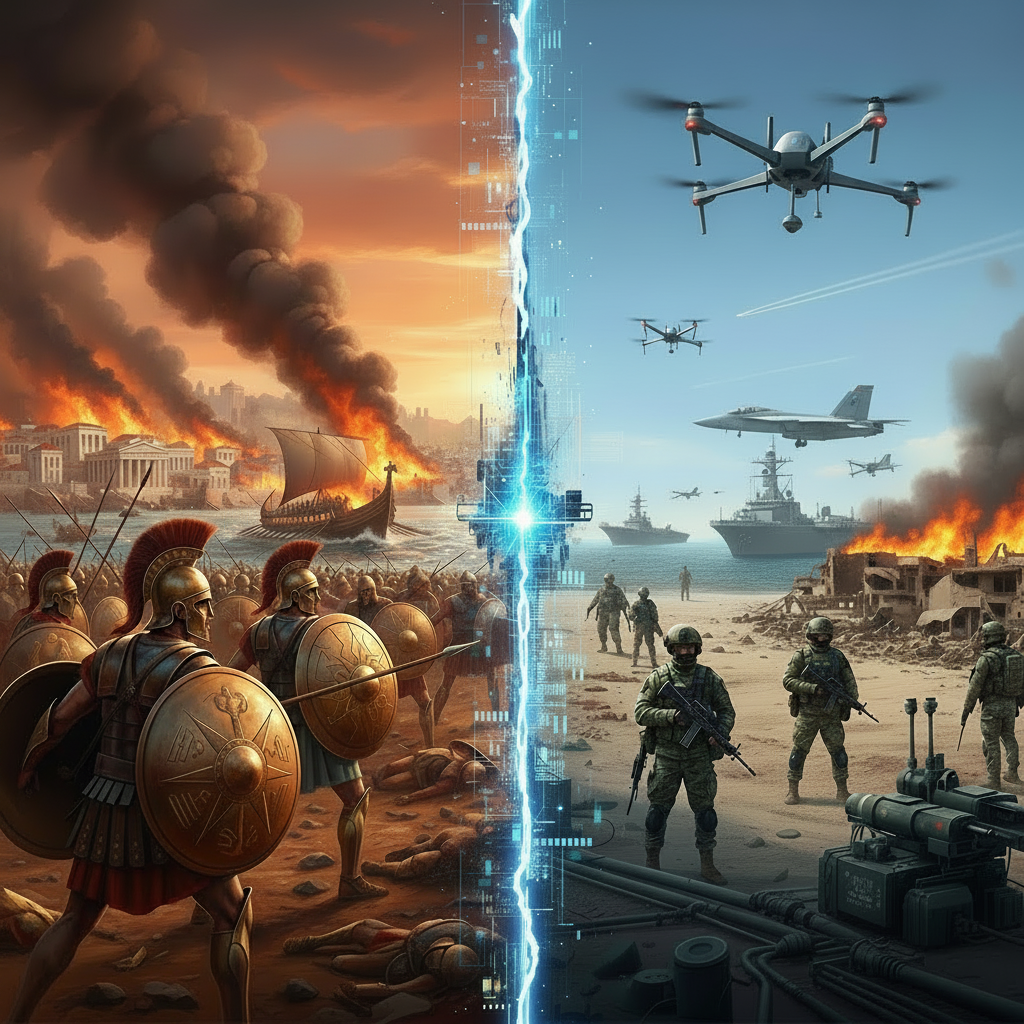
The Peloponnesian War, as recounted by Thucydides, is one of history’s most enduring case studies on the dynamics of power, rivalry, and the unintended consequences of prolonged conflict. Its lessons remain strikingly relevant today, particularly as tensions between the United States and Iran continue to simmer. This ancient conflict offers a lens through which we can better understand the risks and opportunities of managing great power competition. However, the Peloponnesian War is not the only historical analogy that can shed light on the current geopolitical landscape. By examining other conflicts—such as World War I, the Cold War, and the Vietnam War—we can draw deeper insights into the complexities of the US-Iran rivalry and the broader challenges of maintaining peace in a multipolar world.
This dossier explores the parallels between historical conflicts and the US-Iran standoff, identifies key lessons, and offers actionable recommendations for policymakers. It emphasizes the importance of learning from history while avoiding the pitfalls of oversimplified analogies, as highlighted by Odd Arne Westad in The Coming Storm and other scholars of applied history.
Parallels Between Historical Conflicts and the US-Iran Rivalry
1. The Peloponnesian War: Fear, Rivalry, and Escalation
At its core, the Peloponnesian War was a contest between Athens, a rising maritime and commercial power, and Sparta, a dominant land-based hegemon. Thucydides famously attributed the war to “the growth of the power of Athens, and the alarm which this inspired in Sparta.” This dynamic of fear and rivalry feels eerily familiar in the context of the US-Iran relationship. The United States, as the dominant global superpower, perceives Iran’s regional ambitions and nuclear program as existential threats to its interests and allies. Meanwhile, Iran views US policies—such as economic sanctions, military presence in the Middle East, and unwavering support for Israel—as attempts to undermine its sovereignty and influence.
The parallels don’t stop there. In ancient Greece, smaller city-states like Corinth and Corcyra became flashpoints that dragged Athens and Sparta into a broader conflict. Similarly, the US-Iran rivalry is deeply entangled in proxy wars and alliances across the Middle East, from Syria and Yemen to Lebanon and Iraq. These alliances, often ambiguous or opportunistic, create a dangerous web of commitments that could easily lead to unintended escalation.
2. World War I: Multipolarity and the Dangers of Miscalculation
The lead-up to World War I offers another compelling analogy. Like the Peloponnesian War, it unfolded in a multipolar system, with several great powers jockeying for influence. The erosion of British hegemony and the rise of Germany created a volatile environment, much like the current erosion of US dominance and the rise of regional powers like Iran, China, and Turkey. The alliances of the early 20th century—such as the Triple Entente and the Triple Alliance—were designed to deter conflict but ultimately contributed to its outbreak by creating rigid blocs and escalating tensions.
The assassination of Archduke Franz Ferdinand in 1914, a seemingly minor event, triggered a chain reaction that led to global war. This underscores the dangers of flashpoints and the potential for small incidents to spiral out of control. In the US-Iran context, flashpoints such as the Strait of Hormuz, Iraq, and Syria could similarly ignite a broader conflict. The assassination of Iranian General Qassem Soleimani in 2020 serves as a stark reminder of how targeted actions can escalate tensions and provoke retaliation.
3. The Cold War: Ideological Rivalry and Proxy Wars
The Cold War between the United States and the Soviet Union provides a more recent and relevant analogy. Like the US-Iran rivalry, it was marked by ideological differences, mutual suspicion, and a series of proxy wars. The Cuban Missile Crisis of 1962 demonstrates the importance of crisis management and communication in preventing escalation. The establishment of a direct hotline between Washington and Moscow was a critical step in reducing the risk of miscalculation. A similar mechanism could be invaluable in the US-Iran context, where miscommunications and mistrust have often exacerbated tensions.
4. The Vietnam War: The Misuse of Historical Analogies
The Vietnam War offers a cautionary tale about the dangers of misusing historical analogies. US leaders likened Ho Chi Minh to Adolf Hitler and framed any accommodation as appeasement akin to the 1938 Munich Agreement. This simplistic analogy helped justify escalation and contributed to catastrophic decision-making. As Ernest May and Richard Neustadt argue in Thinking in Time, policymakers must identify both similarities and differences between historical precedents and current challenges. In the case of the US-Iran conflict, drawing analogies to past wars should inform, not dictate, policy choices.
Lessons for Contemporary Policymaking
1. Avoiding the Trap of Escalation
The Peloponnesian War and World War I demonstrate how fear, pride, and miscalculation can lead to a cycle of escalation, even when neither side desires full-scale war. Policymakers must prioritize de-escalation and avoid actions that could be perceived as provocations, such as military buildups or aggressive rhetoric. Confidence-building measures, such as joint initiatives on shared concerns like counterterrorism or climate change, could help reduce tensions.
2. The Importance of Clear and Credible Alliances
Ambiguous alliances were a key factor in the outbreak of both the Peloponnesian War and World War I. In the US-Iran context, the lack of clarity in commitments to regional partners could lead to unintended entanglements. Strengthening and clearly defining alliances, while ensuring they serve as deterrents rather than provocations, is essential. For example, the US could work with NATO and regional partners to develop a coherent strategy for the Middle East that balances deterrence with diplomacy.
3. Recognizing the Limits of Military Solutions
Athens’ failure in Sicily and the US experience in Vietnam underscore the dangers of overextending military ambitions. Similarly, the US and Iran must recognize that military dominance does not guarantee strategic success. Diplomatic solutions, rather than military interventions, are more likely to achieve long-term stability. This includes re-engaging in negotiations over Iran’s nuclear program and addressing broader regional security concerns.
4. The Role of Public Perception and Mistrust
Thucydides noted that public opinion and mistrust played a significant role in driving the Peloponnesian War. Today, mutual suspicion between American and Iranian publics, fueled by propaganda and misinformation, exacerbates tensions. Efforts to build trust and improve communication are critical. Public diplomacy, cultural exchanges, and people-to-people initiatives could help bridge the divide.
Recommendations for the Present and Future
- Strengthening International Cooperation
Robust international institutions and responsive diplomatic mechanisms are vital for managing great power rivalries. The US and Iran should engage in multilateral forums to address shared concerns, such as regional security and nuclear proliferation. - Enhancing Crisis Management Mechanisms
Establishing direct communication channels, like the Cold War hotlines, could help prevent misunderstandings and provide a means to de-escalate during crises. Regular diplomatic engagements should complement these mechanisms at multiple levels. - Monitoring and Regulating Emerging Technologies
The rapid development of artificial intelligence, cyber capabilities, and autonomous weapons poses new challenges for conflict management. International agreements on the use and oversight of these technologies are necessary to reduce the risk of accidental escalation. - Promoting Strategic Humility
Drawing on literary insights, such as Tolstoy’s War and Peace and Simone Weil’s reading of the Iliad, policymakers should recognize the limits of control in warfare. This strategic humility can foster more cautious and deliberate decision-making. - Reframing Public Narratives on War
The belief that modern wars can be controlled or localized must be challenged. Public communication strategies should emphasize the catastrophic consequences of great power conflicts, drawing on historical examples to illustrate the scale of potential destruction. - Adapting to a Multipolar World
Accepting the realities of a multipolar world, as Westad suggests, requires a shift in mindset. Peace should not be equated with the preservation of the status quo but rather with the ability to manage change and accommodate diverse interests.
Conclusion
The Peloponnesian War, World War I, the Cold War, and the Vietnam War all offer valuable lessons for understanding the dynamics of the US-Iran conflict. These historical analogies highlight the dangers of rivalry, miscalculation, and the illusion of control, while emphasizing the importance of diplomacy, cooperation, and strategic humility. By learning from history and applying its lessons thoughtfully, policymakers can navigate the complexities of the current geopolitical landscape and reduce the risk of catastrophic conflict. As Thucydides reminds us, history is not a deterministic guide but a tool for understanding the patterns and pitfalls of human behavior. In the words of Samuel Butler, “Though analogy is often misleading, it is the least misleading thing we have.”
References
- Thucydides, History of the Peloponnesian War
- A foundational text on the dynamics of power, fear, and rivalry in great power conflicts.
- Odd Arne Westad, The Coming Storm: Power, Conflict, and Warnings from History
- A contemporary analysis of historical analogies and their relevance to modern geopolitical tensions.
- Ernest May and Richard Neustadt, Thinking in Time: The Uses of History for Decision-Makers
- A guide to the responsible use of historical analogies in policymaking.
- Graham Allison and Niall Ferguson, Applied History Project, Harvard Belfer Center
- A framework for using historical precedents to inform contemporary decision-making.
- Barbara W. Tuchman, The Guns of August
- A detailed account of the lead-up to World War I, emphasizing the dangers of miscalculation and rigid alliances.
- Leo Tolstoy, War and Peace
- A literary exploration of the chaos and unpredictability of war, challenging the illusion of control.
- Simone Weil, The Iliad, or the Poem of Force
- A philosophical reflection on the dehumanizing power of force in great power conflicts.
- Elizabeth D. Samet, analysis of Odd Arne Westad’s work in Foreign Affairs (May–June 2026 issue)
- A review of Westad’s arguments on the risks of great power war and the lessons of history.
- Samuel Butler, The Notebooks of Samuel Butler
- A collection of reflections, including the observation that “though analogy is often misleading, it is the least misleading thing we have.”
- Barbara W. Tuchman, The March of Folly: From Troy to Vietnam
- A study of how governments pursue policies contrary to their own interests, with lessons applicable to modern conflicts.
- John Lewis Gaddis, The Cold War: A New History
- A concise history of the Cold War, highlighting the importance of diplomacy and crisis management.
- Margaret MacMillan, The War That Ended Peace: The Road to 1914
- An exploration of the political, social, and economic factors that led to World War I.
- Henry Kissinger, World Order
- A discussion of the challenges of maintaining stability in a multipolar world.
- Michael Howard, The Causes of Wars and Other Essays
- A collection of essays on the causes and nature of war, with insights into historical and contemporary conflicts.
- Robert Jervis, Perception and Misperception in International Politics
- A study of how misperceptions influence decision-making in international relations.
#Thucydides, #HistoryOfThePeloponnesianWar, #OddArneWestad, #TheComingStorm, #ErnestMay, #RichardNeustadt, #ThinkingInTime, #AppliedHistoryProject, #GrahamAllison, #NiallFerguson, #BarbaraTuchman, #TheGunsOfAugust, #LeoTolstoy, #WarAndPeace, #SimoneWeil, #TheIliad, #ElizabethSamet, #ForeignAffairs, #SamuelButler, #TheNotebooksOfSamuelButler, #TheMarchOfFolly, #JohnLewisGaddis, #TheColdWar, #MargaretMacMillan, #TheWarThatEndedPeace, #HenryKissinger, #WorldOrder, #MichaelHoward, #TheCausesOfWars, #RobertJervis, #PerceptionAndMisperception
@ForeignAffairs; @BelferCenter; @HarvardKennedySchool; @BrookingsInst; @CarnegieEndow; @RANDCorporation; @CSIS; @AtlanticCouncil; @WilsonCenter; @CouncilonForeignRelations; @CNASdc; @HudsonInstitute; @Heritage; @HooverInst; @ChathamHouse; @INSSIsrael; @JISS_Israel; @BeginCenter; @BrookingsFP; @AsiaSociety; @CarnegieChina; @Tsinghua_Uni; @CICIR_China; @ShanghaiInst; @PekingUniversity; @IsraelMFA; @IsraeliPM; @IDF; @USStateDept; @DeptofDefense; @WhiteHouse; @SecBlinken; @POTUS; @XiJinping; @IsraeliThinkTanks; @ChinaThinkTanks; @USIP; @MiddleEastInst; @FDDCFoundation; @WINEP; @JerusalemInstitute; @ChinaForeignAffairs; @JerusalemCenter; @BeginSadatCenter; @ReutInstitute; @IsraelDemocracyInstitute; @ChinaInstitute; @ChinaPolicy; @ChinaPowerCSIS; @AsiaPacificCenter; @AsiaFoundation; @USCET; @USChinaInstitute; @USAsiaInstitute; @MiddleEastForum; @IsraelPolicyForum; @IsraelInstitute; @IsraelStudies; @ChinaStudies; @ChinaGlobal; @ChinaStrategic; @ChinaDiplomacy; @ChinaSecurity; @ChinaDevelopment; @ChinaResearch; @ChinaAnalysis; @ChinaWatchers; @IsraelWatchers; @MiddleEastWatchers; @USMiddleEastPolicy; @USChinaRelations; @USIsraelRelations; @IsraelChinaRelations; @MiddleEastPeace; @MiddleEastSecurity; @MiddleEastPolicy; @EuropeanCouncil; @EU_Commission; @EEAS_EU; @NATO; @EUCouncil; @EuropeanParliament; @EuropeanThinkTanks; @ECFR; @Bruegel_org; @CarnegieEurope; @GMFUS; @FriendsOfEurope; @ClingendaelInst; @SWPBerlin; @IFRI_; @IISS_org; @ChathamHouseEurope; @CEPS_thinktank; @EPC_EU; @EU_ISS; @EuropeanPolicyCentre; @EuropeanLeadershipNetwork; @StockholmPeace; @OSCE; @EuropeanDefense; @EuropeanSecurity; @EuropeanForeignPolicy; @EuropeanDiplomacy; @EuropeanGeopolitics; @EuropeanStudies; @EuropeanUnionPolicy; @EUChinaRelations; @EUUSRelations; @EUIsraelRelations; @EuropeMiddleEastRelations; @EuropeGlobalSecurity; @EuropeStrategicPolicy; @EuropePeaceInitiatives; @EuropeConflictResolution; @EuropeAsiaRelations; @EuropeWatchers; @EuropeanGlobalAffairs; @EuropeanDefensePolicy; @EuropeanSecurityStudies; @EuropeanGeopoliticalAnalysis; @EuropeanPolicyResearch; @EuropeanForeignAffairs; @EuropeanGlobalStrategy; @EuropeanPeaceBuilding; @EuropeanConflictStudies; @EuropeanStrategicStudies; @EuropeanPolicyWatchers; @EuropeanUnionThinkTanks; @EuropeanGlobalRelations; @EuropeanMiddleEastPolicy; @EuropeanAsiaPolicy; @EuropeanChinaPolicy; @EuropeanUSPolicy; @EuropeanIsraelPolicy; @EuropeanGlobalWatchers
Discover more from Responsible Public Affairs
Subscribe to get the latest posts sent to your email.