
Posted on 23/03/2011 by Frank Farnel
Although written in 2011, this article contains insights into communication strategies that remain highly relevant today.
When it comes to raising awareness and building the reputation of the countless goods, technologies, and services we rely on daily, a one-size-fits-all approach simply doesn’t work. Effective communication requires tailoring messages to resonate with individual audiences—a principle that is critical to success.
This is especially true at GE Energy Europe, where our communications and public affairs team operates in a highly complex and dynamic environment, supporting ambitious goals.
A Multifaceted Communication Challenge
Our mission is twofold: to effectively promote our diverse portfolio of cutting-edge energy technologies, solutions, and services, and to do so in a way that resonates with audiences at both local and regional levels. From coal to wind, nuclear to smart grids, and everything in between, GE Energy Europe offers one of the most comprehensive energy solutions portfolios in the world. Communicating this complexity in a single market is challenging enough; doing so across an entire region is a monumental task.
Staying Close and Relevant
The European energy sector presents unique challenges due to its intricate web of local, national, and regional relationships, shaped by legacy technologies, territorial strategies, and institutional policies. To be recognized as a key contributor to the European energy debate and a supporter of the EU’s 20-20-20 climate goals, we must engage closely with institutions and governments. This requires a multi-channel, multidisciplinary approach to communication.
Adding to the complexity, energy is a highly topical issue. Media coverage spans global challenges, local developments, and everything from turbine maintenance to consumer empowerment. To remain relevant, we must craft compelling narratives that address global energy challenges while resonating with local audiences.
Integration: The Core of Our Strategy
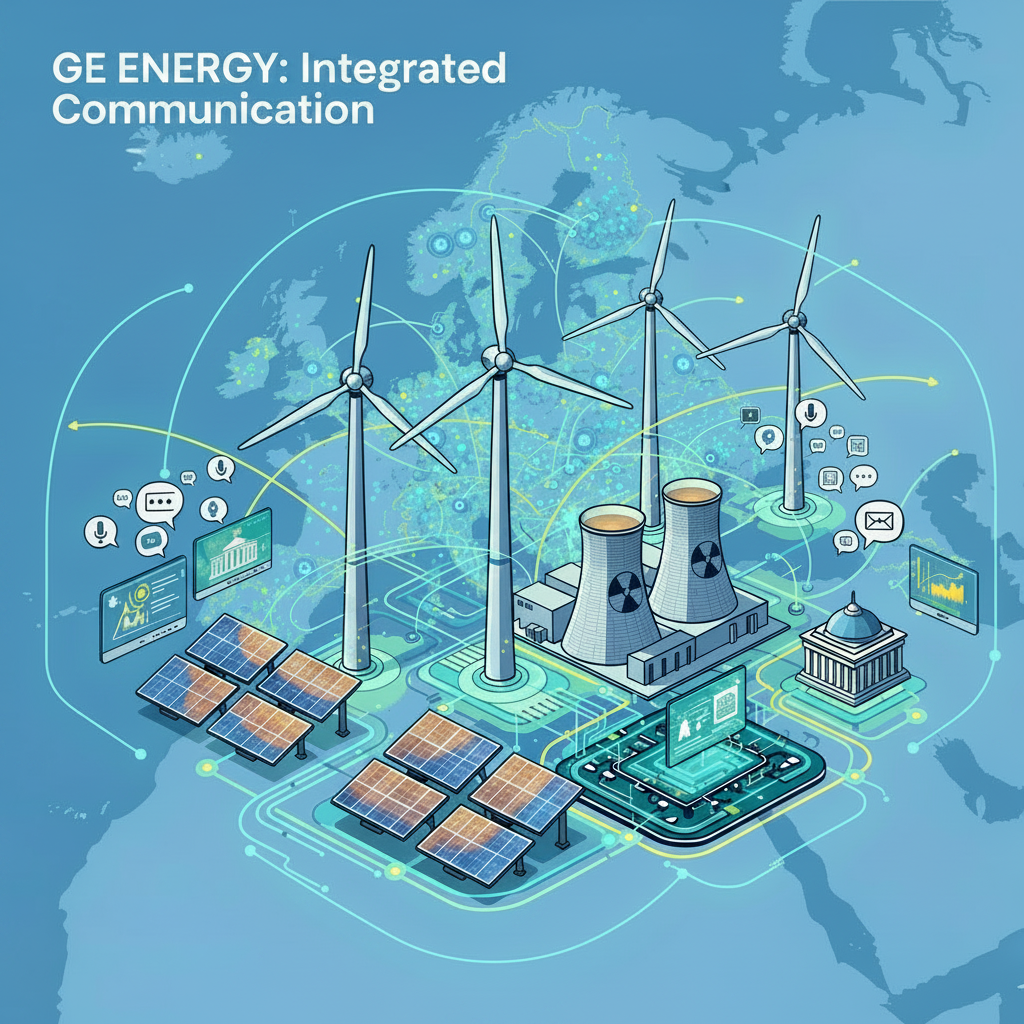
To meet these challenges, GE Energy Europe has made integration the cornerstone of its communication strategy. Whether geographic, topical, or functional, our initiatives are designed to “connect the dots,” blending countries, topics, channels, and disciplines to maximize impact across Europe.
As William Arthur Ward wisely said, “We must learn before we can prepare.” At GE Energy Europe, understanding local needs is essential. Only by appreciating the unique drivers in each market—political, social, economic, and environmental—can we offer tailored solutions that meet specific requirements.
Connecting the Dots
Energy needs and solutions vary widely across Europe. For example, nuclear energy may dominate in one country while being virtually absent in another. Even within regions, energy generation and distribution methods can differ significantly. This diversity demands a nuanced approach to communication.
From our central hub, a multicultural team adapts messages to suit the diverse cultures and audiences we serve. We approach every campaign with clarity, ensuring it aligns with our technology offerings, internal communications, thought leadership, and local relevance. By identifying the angles that resonate most with each audience, we craft storylines that deliver maximum impact, whether through print, advertising, social media, or a combination of channels.
For instance, when organizing a high-level workshop on “Wind Energy and Regulatory Issues” in Brussels, we collaborate with European institutional partners and involve experts from the UK and Germany to address the interconnected topics of wind energy and smart grids. This integrated approach consistently proves its effectiveness, creating a powerful platform where government relations, public relations, and digital reputation management intersect.
Removing Barriers: A Unique Collaboration with European Regions
Policymaking is a critical concern across Europe, as governments at all levels navigate administrative and legal complexities related to energy infrastructure. GE Energy has long recognized the importance of engaging with governments to understand their needs and position ourselves as a trusted expert in the European energy debate.
Effective communication is a two-way street, built on transparency, integrity, and interaction. This philosophy inspired our collaboration with the Assembly of European Regions (AER), a unique partnership that bridges the gap between global energy expertise and regional decision-makers.
The flagship initiative of this partnership is the annual European Regions Energy Day, which brings together over 300 regional leaders and energy experts in Brussels. This event provides invaluable opportunities to engage with policymakers, understand their challenges, and offer tailored technology solutions.
Building on this success, GE Energy and the AER are expanding their collaboration with more than 25 themed workshops across Europe. These activities enhance our ability to connect with stakeholders at a local level and align perfectly with our integrated communication strategy.
A Digital Platform for Dialogue
Our partnership with the AER has also led to the creation of REFER (Responsible Energy for European Regions), an online platform that fosters dialogue on energy, technology, and infrastructure. REFER provides news, analysis, and insights on topics such as energy efficiency, regional sustainability, and public policy, serving as a valuable resource for politicians, companies, researchers, and citizens.
The platform’s success has extended beyond Europe, attracting interest from regions in Africa, Asia, and the Middle East. We are now developing a smartphone app to make REFER’s content even more accessible. This initiative has been recognized as a best practice, inspiring similar efforts worldwide, including the R20 climate network founded by Arnold Schwarzenegger.
Regional Support: The Key to Success
The success of GE Energy Europe is intrinsically linked to our ability to integrate communications effectively. This requires a deep understanding of the factors shaping local, regional, and national landscapes, from economic challenges to media trends and the digital shift. By staying attuned to these dynamics, we ensure that our communication strategies remain relevant, impactful, and aligned with the needs of our stakeholders.
#communication strategy; #energy solutions; #GE Energy Europe; #integrated communication; #regional engagement; #local audiences; #EU climate goals; #energy technologies; #public affairs; #institutional collaboration; #renewable energy; #nuclear energy; #smart grids; #European energy sector; #policymaking; #digital platforms; #stakeholder engagement; #tailored messaging; #energy infrastructure; #sustainability; #regional support; #energy efficiency; #regional sustainability; #public policy; #media trends; #digital transformation; #government relations; #thought leadership; #multicultural communication; #energy debate; #climate initiatives; #energy workshops; #energy day events; #REFER platform; #energy narratives; #local relevance; #technology solutions; #energy challenges; #energy innovation; #transparency; #integrity; #interaction; #regional decision-makers; #energy partnerships; #energy expertise; #energy storytelling; #energy campaigns; #energy communication channels; #energy sector dynamics; #energy collaboration; #energy advocacy; #energy integration; #energy awareness; #energy reputation management; #energy dialogue; #energy app development; #energy best practices; #energy networks; #energy workshops; #energy events; #energy insights; #energy analysis; #energy leadership; #energy engagement; #energy branding; #energy marketing; #energy outreach; #energy education; #energy policy alignment; #energy sector trends; #energy communication goals; #energy audience targeting; #energy content creation; #energy media coverage; #energy institutional support; #energy regional focus; #energy global reach; #energy digital tools; #energy innovation platforms; #energy sector challenges; #energy sector opportunities; #energy sector solutions; #energy sector communication
@UnitedNations (UN); @EuropeanUnion (EU); @WorldEconomicForum (WEF); @InternationalEnergyAgency (IEA); @AssemblyofEuropeanRegions (AER); @Greenpeace; @WorldResourcesInstitute (WRI); @InternationalRenewableEnergyAgency (IRENA); @GeneralElectric (GE); @SiemensEnergy; @ShellEnergy; @BritishPetroleum (BP); @ExxonMobil; @HarvardUniversity; @StanfordUniversity; @OxfordUniversity; @CambridgeUniversity; @MassachusettsInstituteofTechnology (MIT); @AER; @EAR; @InternationalPublicRelationsAssociation (IPRA); @PublicRelationsSocietyofAmerica (PRSA); @Edelman; @WeberShandwick; @FleishmanHillard; @McKinseyandCompany; @BostonConsultingGroup (BCG); @Deloitte; @PwC; @KPMG; @InternationalChamberofCommerce (ICC); @WorldBank; @InternationalMonetaryFund (IMF); @ClimateActionNetwork (CAN); @CarbonTrust; @EnergyCities; @EuropeanEnergyResearchAlliance (EERA); @InternationalInstituteforSustainableDevelopment (IISD); @RockyMountainInstitute (RMI); @TheClimateGroup; @WorldWildlifeFund (WWF); @FriendsoftheEarth
Discover more from Responsible Public Affairs
Subscribe to get the latest posts sent to your email.