
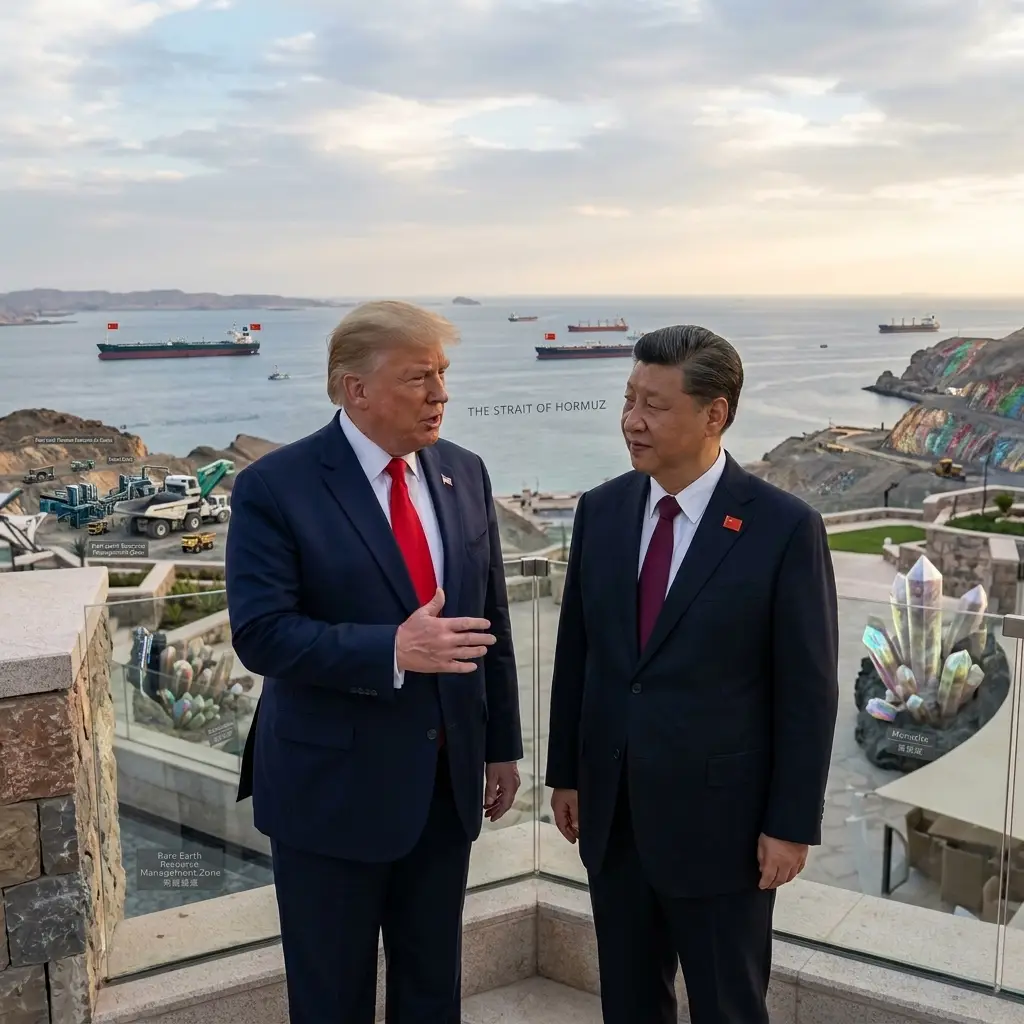
Meta description: A sharp analysis of the Trump-Xi 2026 Summit, US-China trade relations, Taiwan risk, and the Strait of Hormuz oil crisis—plus why global energy security could shape the entire meeting.
Key takeaway: A Trump-Xi 2026 Summit would likely focus on US-China trade relations, technology restrictions, and Taiwan, but a Strait of Hormuz oil crisis could become the most important variable because it would expose China’s energy vulnerability, raise global inflation risk, and force both powers into crisis diplomacy. This summit will not just test personalities or policy talking points. It will test whether two rival powers can manage strategic competition when energy, inflation, and military risk start to converge.
A Trump-Xi 2026 Summit would not be a ceremonial handshake staged for cameras. It would be a high-stakes negotiation between two leaders who view power in direct, strategic, and highly personal terms. If the meeting happens, markets, diplomats, military planners, and business leaders will all ask the same question: can Washington and Beijing stabilize tensions, or will the summit confirm that US-China trade relations and broader strategic rivalry have entered a harder phase?
The answer may depend on more than tariffs, chips, or Taiwan. A serious Strait of Hormuz oil crisis could move energy from the margins of the agenda to its center. If conflict involving Iran disrupts shipping through Hormuz, the summit would become a test of crisis management as much as diplomacy. In that scenario, global energy security would shape the tone, leverage, and outcome of every discussion.
This analysis explains what is likely to drive the summit, where the real pressure points sit, and why energy vulnerability could become the most important variable of all.
Why the Trump-Xi 2026 Summit Matters
The Trump-Xi 2026 Summit would matter because it would reflect a deeper truth: the US-China relationship is no longer built on the assumption that economic ties will soften political conflict. That era is fading fast.
Today, trade is a pressure tool. Technology is a national security issue. Military signaling around Taiwan affects financial markets in real time. Energy chokepoints now have direct influence over diplomatic calculations.
That changes the meaning of summit diplomacy. A meeting between Trump and Xi would not reset the relationship. At best, it could create temporary guardrails. At worst, it could expose how little strategic trust remains between the two powers.
The summit will be judged by outcomes, not optics
Both sides could present the meeting as proof of statesmanship. But the real test would be practical. Investors and policymakers would look for signs on:
- tariff escalation or tariff relief
- semiconductor and technology controls
- military messaging over Taiwan
- crisis coordination if Gulf energy flows are disrupted
- the future direction of US-China trade relations
The core point is simple: this summit would not be about symbolism. It would be about leverage.
Mini-summary: The meeting matters because it could shape the next phase of US-China rivalry. Optics will matter less than whether either side changes the cost of confrontation.
US-China Trade Relations Will Still Drive the Core Agenda
Any serious Trump-Xi 2026 Summit discussion starts with US-China trade relations. Trade remains the most visible battlefield because it touches domestic politics, industrial policy, inflation, and supply-chain strategy all at once.
Trump has long treated tariffs as both an economic weapon and a political signal. He is likely to frame tariff pressure as proof that the United States is defending industry, reducing dependence on China, and forcing Beijing to respond. That message is politically efficient because it is easy to explain and easy to sell.
China, however, will not approach the issue as it did years ago. Beijing has spent time building buffers through export diversification, industrial upgrading, and tighter state coordination. Even so, access to foreign demand, stable supply chains, and advanced technology still matters.
Why tariffs remain powerful but limited
Tariffs can hurt Chinese exporters. They can also raise costs for American firms and consumers. That is the contradiction at the heart of US-China trade relations today.
A renewed tariff push could create pressure in several areas:
- Chinese export competitiveness
- US import pricing
- corporate sourcing decisions
- inflation-sensitive sectors in both economies
- investor confidence in cross-border manufacturing
This is why any deal at the summit would likely be narrow. Neither side wants to give away strategic space. That makes sweeping trade reconciliation unlikely.
What a trade bargain might realistically look like
If there is progress, it would probably be tactical rather than transformative. Possible outcomes could include:
- selective tariff pauses
- targeted market access concessions
- sector-specific purchase commitments
- limited working groups on trade compliance
- temporary confidence-building language for markets
None of that would solve the deeper conflict. It would only slow escalation.
For deeper context, readers can also explore the US-China tariff timeline and how supply-chain decoupling is reshaping global manufacturing.
Mini-summary: Trade will remain central, but the summit is unlikely to produce a grand bargain. Expect tactical adjustments, not structural peace.
Technology Controls Make the Rivalry Harder to Reverse
Trade may be the visible front, but technology is now the deeper contest. Export controls on advanced chips, AI systems, and semiconductor equipment have changed the relationship.
Washington increasingly sees technology leadership as a core security asset. Beijing sees those restrictions as an effort to slow China’s rise. That means compromise is much harder than it was in earlier trade disputes.
Why this issue cuts deeper than tariffs
Tariffs can be adjusted. Technology controls are harder to unwind because they are now tied to defense planning, intelligence concerns, and long-term industrial competition.
At the summit, this issue would likely surface in three ways:
- China would push back against containment
- the US would defend restrictions as necessary
- both sides would try to protect strategic industries without appearing weak
For Xi, this is about development and sovereignty. For Trump, it fits a broader case that the US should not help a rival build future power.
For reference, see the US Department of Commerce export control guidance, CSIS analysis, and Brookings research.
Mini-summary: Technology controls make the rivalry more permanent. They reduce room for compromise and raise the strategic stakes of the summit.
Taiwan Will Hover Over Every Part of the Meeting
No matter what is formally on the agenda, Taiwan will shape the atmosphere of the Trump-Xi 2026 Summit.
For Beijing, Taiwan is a matter of sovereignty and political legitimacy. For Washington, it is tied to deterrence, alliance credibility, and regional military balance. That makes it the most dangerous flashpoint in the relationship.
Why does Taiwan affect more than security policy
Taiwan is not a separate issue that can be boxed away from trade or energy. It affects:
- military deployments
- sanctions planning
- semiconductor supply chains
- investor risk assessments
- diplomatic signaling across Asia
If either side misreads the other on Taiwan, every other summit discussion becomes harder. This is especially true if Trump mixes deterrent messaging with transactional ambiguity. Beijing tends to read inconsistency as risk.
Related reading includes Taiwan Strait risk analysis and the semiconductor supply chain exposure guide.
Mini-summary: Taiwan will not just be one agenda item. It will frame how both leaders interpret strength, credibility, and risk.
The Strait of Hormuz Oil Crisis Could Reshape the Entire Summit
Here is the key point many analyses miss: a Strait of Hormuz oil crisis could become the defining force behind the Trump-Xi 2026 Summit.
If conflict involving Iran disrupts tanker traffic through the Strait of Hormuz, the summit would change instantly. Oil would no longer sit in the background. It would become a strategic pressure point with global consequences.
This matters because the Strait of Hormuz remains one of the most important energy chokepoints in the world. Any prolonged disruption would hit shipping costs, insurance rates, inflation expectations, refinery planning, and industrial production.
Why China is especially exposed
China’s vulnerability in a Hormuz crisis is practical, not theoretical. A meaningful share of its crude imports depends on maritime routes linked to the Gulf. If those routes become unsafe, delayed, or prohibitively expensive, Beijing would face pressure across the economy.
The impact would likely include:
- higher crude import costs
- tighter fuel and feedstock availability
- rising freight and insurance expenses
- pressure on manufacturing margins
- inflation risk across supply chains
This is where global energy security becomes central to summit diplomacy. If Chinese refiners struggle to replace barrels quickly, the problem spreads well beyond energy. Petrochemicals, transport, exports, and industrial activity all come under strain.
Why the oil shock would hit politics as well as markets
Energy shocks are never just about energy. They move through public confidence, consumer prices, and growth expectations.
For Beijing, a severe Strait of Hormuz oil crisis could create a difficult mix:
- slower growth
- higher costs
- weaker business sentiment
- greater pressure on domestic stability
That gives energy security a political edge. In this scenario, China would enter the summit with stronger incentives to reduce escalation in the Gulf, protect supply continuity, and avoid a prolonged shock.
The manufacturing effect could be severe
China’s industrial model still depends heavily on reliable energy and cost-efficient logistics. If oil prices surge and maritime transport becomes unstable, the pressure would show up fast in:
- heavy industry
- chemicals and plastics
- freight and shipping
- export manufacturing
- construction-linked inputs
That would make the Strait of Hormuz oil crisis more than a regional problem. It would become a core factor in US-China trade relations and the wider global economy.
For supporting data, see the IEA oil market outlook, EIA world oil transit chokepoints, IISS, and Chatham House.
Mini-summary: If Hormuz is disrupted, energy becomes a summit-defining issue. China’s exposure would be immediate, broad, and politically sensitive.
Global Energy Security Is Now a Strategic Issue, Not Just an Economic One
The phrase global energy security is often used loosely. In this case, it should be taken literally.
A serious disruption in Hormuz would test whether major powers can keep the global economy functioning under geopolitical stress. It would affect not only oil availability, but also the systems that move, insure, finance, and price energy.
The first market signal would be fear
Before physical shortages fully appear, markets would likely react through risk pricing. Oil futures could spike on fear of escalation. Shipping companies could charge more. Insurers could raise war-risk premiums or tighten coverage.
That would create a chain reaction:
- benchmark oil prices rise
- transport costs increase
- industrial input prices climb
- inflation spreads into consumer goods
- policymakers face pressure to respond
This is how global energy security becomes a macroeconomic issue. The shock travels faster than the barrels.
Why shipping and insurance matter so much
If the Strait of Hormuz is seen as unsafe, the cost of moving oil rises even before supply is fully cut. Tanker availability can tighten. Rerouting can add delays. Insurance can become more expensive or harder to secure.
For import-heavy economies, that creates a double burden:
- paying more for oil
- paying more to transport and insure it
This is one reason the energy section should sit at the heart of any credible Trump-Xi 2026 Summit analysis. The economic pain would not be abstract. It would be measurable and immediate.
Mini-summary: Global energy security is now tied to shipping resilience, inflation control, and strategic stability. Hormuz risk makes all three harder.
What the United States Gains—and Risks—in an Oil Shock
A Hormuz disruption could seem to improve Washington’s position. The US has greater naval reach in the Gulf and more ability to work with partners on maritime security. Compared with China, it is less directly exposed to Gulf crude flows.
That could give the US more diplomatic weight during the Trump-Xi 2026 Summit. But it would not create a clean advantage.
American leverage comes with real costs
The United States cannot escape a global oil price shock. Even if supply losses hit Asia hardest, benchmark prices would still rise. That would affect:
- gasoline prices
- freight and airline costs
- inflation expectations
- consumer confidence
- political pressure on the White House
This is the central tension. Washington could gain strategic leverage from China’s vulnerability while still paying a high economic and political price at home.
The summit would become a crisis-management test
If the oil shock is severe, the US would have to balance several goals at once:
- reassure allies
- protect freedom of navigation
- calm energy markets
- avoid wider war
- use leverage without triggering greater instability
That is hard to do in real time. It is even harder when the other major power at the table is both a rival and a crucial economic actor.
For further reading, consult Congressional Research Service reports on Gulf security and IMF analysis on oil shocks and inflation.
Mini-summary: The US could gain leverage, but not cheaply. Any strategic advantage would come with domestic and global costs.
Conclusion: The Oil Question Could Define the Summit
The Trump-Xi 2026 Summit will likely be framed around rivalry, negotiation, and the possibility of limited stabilization. Trade, technology, and Taiwan will all matter. But the most important hidden variable may be energy.
If the Strait of Hormuz oil crisis becomes real, global energy security will move to the center of great-power diplomacy. China would face serious pressure through oil imports, industrial costs, and domestic confidence. The United States could gain leverage, but only while absorbing global price shocks and greater crisis-management burdens.
Trump-Xi 2026 Summit FAQ: Trade, Taiwan, Oil Risk, and Search Visibility
Q1: How does this article connect trade, Taiwan, and energy security in the Trump-Xi 2026 summit? The article argues that these issues are no longer separate. US-China trade relations shape economic leverage, Taiwan shapes military risk and diplomatic signaling, and a potential Strait of Hormuz oil crisis shapes energy costs, inflation, and industrial stability. Together, they define the real pressure points that could drive the tone, priorities, and outcome of any Trump-Xi 2026 summit.
Q2: Could the Trump-Xi 2026 summit reduce US-China tensions? It could reduce tensions temporarily by creating limited guardrails, improving crisis communication, or producing narrow agreements on trade and stability, but it is unlikely to resolve the deeper rivalry over technology, Taiwan, economic security, and strategic power.
Q3: How could China be affected by an oil supply disruption linked to Iran? China could face higher crude import costs, tighter fuel supplies, rising shipping and insurance expenses, and added pressure on manufacturing, freight, and inflation if conflict linked to Iran disrupts flows through the Strait of Hormuz. In practical terms, that would weaken industrial margins, complicate growth management, and make energy security a far more urgent issue in any Trump-Xi 2026 summit discussion.
Q4: Why does the Strait of Hormuz matter to the Trump-Xi 2026 summit? The Strait of Hormuz matters because any disruption there could drive up oil prices, raise shipping and insurance costs, and put direct pressure on China’s energy imports and manufacturing base. That would turn energy security into a central summit issue, affecting not just global markets but also the balance of leverage between Washington and Beijing.
Q5: What is the Trump-Xi 2026 summit likely to focus on? The summit is likely to center on US-China trade relations, technology controls, Taiwan, and the growing risk that a Strait of Hormuz oil crisis could reshape global energy security, inflation, and strategic leverage for both Washington and Beijing.
#TrumpXiMeeting, #StraitOfHormuz, #EnergySecurity, #RareEarthMinerals, #USChinaRelations, #GeopoliticalDynamics, #DiplomaticSummit, #CriticalResources, #GlobalTrade, #IndoPacificSecurity, #HighResolutionImage, #PoliticalDiplomacy, #ResourceManagement, #StrategicDiscussions, #InternationalRelations, #GlobalEnergyTrade, #MaritimeSecurity, #EconomicNegotiations, #BilateralTalks, #InternationalDiplomacy, #StrategicPartnerships, #ResourceDiplomacy, #EnergyGeopolitics, #MineralResources, #TradeRoutes, #GlobalPolitics, #USChinaSummit, #EnergyNegotiations, #RareEarthMining, #StrategicWaterways, #GlobalResourceManagement, #InternationalTradeRelations, #PoliticalStrategy, #EnergyPolicy, #CriticalMineralSupplyChain, #MaritimeTrade, #GlobalEconomicStrategy, #HighStakesDiplomacy, #ResourceDrivenGeopolitics, #GeopoliticalStrategy, #EnergyResources, #DiplomaticRelations, #GlobalSecurity, #RareEarthSupplyChain, #EconomicStrategy, #USChinaDiplomacy, #StrategicMinerals, #EnergyTrade, #GlobalLeadership, #ResourceSecurity, #InternationalCooperation, #EnergyPolicyDiscussions, #CriticalResourceManagement, #GlobalEconomicPolicy, #MaritimeTradeRoutes, #EnergyAndMinerals, #DiplomaticEngagement, #GlobalResourceStrategy, #USChinaEnergyTalks, #RareEarthGeopolitics, #StrategicEnergyResources, #GlobalDiplomaticSummit, #EnergyAndTradeRelations, #CriticalMineralGeopolitics, #IndoPacificGeopolitics, #GlobalTradePolicy, #EnergyAndSecurity
@USStateDept, @DeptofDefense, @WhiteHouse, @BrookingsInst, @CSIS, @RANDCorporation, @Harvard, @MIT, @Stanford, @Princeton, @Yale, @USChamber, @EnergyDept, @ChinaMFA, @PLA_China, @Tsinghua_Uni, @Peking_Uni, @CASS_China, @EU_Commission, @NATO, @EUCouncil, @SorbonneParis, @SciencesPo, @CNRS, @French_Gov, @TotalEnergies, @EDFofficiel, @Airbus, @ThalesGroup, @Siemens, @BASF, @Volkswagen, @Shell, @BP_plc, @Chevron, @ExxonMobil, @LockheedMartin, @Boeing, @Raytheon, @NorthropGrumman, @GeneralDynamics, @DARPA, @AtlanticCouncil, @ChathamHouse, @CarnegieEndow, @GMFUS, @AsiaSociety, @WilsonCenter, @CEIP, @PetersonInstitute, @IMFNews, @WorldBank, @OECD, @UN, @WTO, @ICRC, @WHO, @UNESCO, @Interpol_HQ, @Europol, @FBI, @CIA, @NSA, @MI5, @DGSE, @Bundeswehr, @RoyalNavy, @USNavy, @USArmy, @USAirForce, @SpaceForceDoD, @PLA_Navy, @PLA_AirForce, @PLA_GroundForce, @CNPC, @Sinopec, @CNOOC, @Huawei, @ZTEPress, @AlibabaGroup, @TencentGlobal, @JD_Corporate, @BYDCompany, @GeelyGlobal, @ChinaRailway, @CRRC_global, @ChinaSouthernAir, @AirChinaNA, @ChinaEasternAir, @COSCOSHIPPING, @ChinaDaily, @XHNews, @GlobalTimesNews, @PeopleDaily, @LeMonde, @Figaro_Live, @LesEchos, @France24_en, @Elysee, @AssembleeNat, @Senat, @CNES, @Dassault_OnAir, @Safran, @ENGIEgroup, @Veolia, @SchneiderElec, @LVMH, @KeringGroup, @Hermes_Paris, @BNPParibas, @SocieteGenerale, @CreditAgricole, @AXA, @Orange, @Bouygues, @Vinci, @Alstom, @ThalesGroup, @ArcelorMittal, @SaintGobain, @Danone, @CarrefourGroup, @PublicisGroupe, @Capgemini, @Atos, @Sanofi, @IpsenGroup, @Servier, @BioMerieux, @Roche, @Novartis, @Bayer, @SiemensHealth, @PhilipsHealth, @EADS, @AirbusDefence, @Leonardo_live, @BAESystemsplc, @RollsRoyce, @Thyssenkrupp, @DeutscheBank, @Commerzbank, @Allianz, @MunichRe, @DaimlerTruck, @BMWGroup, @AudiOfficial, @PorscheNewsroom, @VolkswagenGroup, @BoschGlobal, @Continental, @ZF_Group, @Lufthansa, @DeutschePostDHL, @DB_Presse, @Siemens_Energy, @RWE_AG, @EON_SE_EN, @UniperEnergy, @EnBW, @VattenfallGroup, @Statkraft, @Orsted, @Equinor, @TotalEnergies, @EngieGroup, @EDFofficiel, @SchneiderElec, @Veolia, @SuezGroup, @SaintGobain, @ArcelorMittal, @BASF, @Covestro, @Evonik, @Lanxess, @Henkel, @Clariant, @SolvayGroup, @AkzoNobel, @DSM, @Shell, @BP_plc, @Chevron, @ExxonMobil, @ConocoPhillips, @Halliburton, @Schlumberger, @BakerHughes, @WoodGroup, @TechnipFMC, @Saipem, @Subsea7, @McDermottIntl, @FluorCorp, @JacobsConnects, @Bechtel, @KBRinc, @AECOM, @WSPGlobal, @ArcadisGlobal, @Stantec, @SNC_Lavalin, @Fugro, @TetraTech, @BlackVeatch, @HDR_Inc, @ParsonsCorp, @Kiewit, @TurnerConstrCo, @SkanskaGroup, @VINCI, @Bouygues, @Eiffage, @Hochtief, @Strabag, @Ferrovial, @ACSGroup, @FCC_Group, @Acciona, @Sacyr, @OHL_Group, @SaliniImpregilo, @Astaldi, @WebuildGroup, @Bechtel, @FluorCorp, @JacobsConnects, @KBRinc, @AECOM, @WSPGlobal, @ArcadisGlobal, @Stantec, @SNC_Lavalin, @Fugro, @TetraTech, @BlackVeatch, @HDR_Inc, @ParsonsCorp, @Kiewit, @TurnerConstrCo, @SkanskaGroup, @VINCI, @Bouygues, @Eiffage, @Hochtief, @Strabag, @Ferrovial, @ACSGroup, @FCC_Group, @Acciona, @Sacyr, @OHL_Group, @SaliniImpregilo, @Astaldi, @WebuildGroup
Discover more from Responsible Public Affairs
Subscribe to get the latest posts sent to your email.