

Geopolitical risk in international business has moved from the margins of corporate planning to the center of strategic decision-making. Tariffs, armed conflict, sanctions, and export controls now determine where companies source materials, build factories, sell products, and raise capital. Business decision-making under geopolitical risk increasingly depends on how well firms anticipate these shifts and protect their operations. This article explains how geopolitical risk affects international business, which geopolitical risk management strategies leading firms use to manage it, and what frameworks decision-makers can apply to build supply chain resilience. It examines how export controls and supply chains intersect, how tariffs and sanctions reshape sourcing and production, and how companies balance cost efficiency against the need to withstand disruption. Drawing on recent research from the World Economic Forum, KPMG, and supply chain analysts, it offers practical guidance for policymakers, researchers, and strategists who must anticipate and mitigate these threats.
Key Takeaways
- Geopolitical risk is now a standing cost of doing business, not a temporary disruption. KPMG (2026) reports that trade policy, geopolitical tension, and technological change have become “embedded in the cost of doing business.”
- Companies respond through four main strategies: risk assessment, risk reduction, ringfencing, and rapid response, according to research from the World Economic Forum (2025).
- Diversification is the most common mitigation tactic, including dual sourcing, regional production, and “local for local” operations.
- The geopolitical risk index reached levels in 2025 not seen since 2022, marking a sustained shift from low to high tension, per KPMG (2026).
- Resilience is increasingly prioritized over lowest-cost production, particularly for supply chains exposed to chokepoints, sanctions, and rare earth dependencies.
What is geopolitical risk in international business?
Geopolitical risk refers to the threat that political tensions, conflicts, and policy shifts between nations pose to business operations. It emerges when the political and geographic features structuring relations between countries change, such as new tariffs, sanctions, armed conflict, or export restrictions.
For international businesses, these risks directly affect supply chains, market access, capital flows, and operating costs. A single policy decision in one country can halt production thousands of miles away. In May 2025, for example, Ford shut down a plant for three weeks because China’s export controls on high-powered magnets cut off a critical input, according to its CEO (Z2Data, 2025).
The current environment is notably more volatile than the recent past. The geopolitical risk index moved up on average in 2025 and reached levels not seen since 2022, marking the most elevated readings since the onset of the Afghanistan and Iraq wars (KPMG, 2026). Companies are moving from a period of low tension into one of sustained, heightened risk.
How does geopolitical risk affect business decision-making?
Geopolitical risk shapes four core areas of international business decision-making: sourcing, production location, market selection, and financing. Each decision now carries a risk premium that did not exist during the era of efficient, low-cost globalization.
Sourcing decisions now factor in exposure to disruption at each node of the supply chain. Firms are no longer optimizing for lowest-cost production alone; they examine risks from geopolitics, weather, and policy at every access point (KPMG, 2026). Single sourcing, once valued for efficiency, has become a critical vulnerability.
Production location decisions increasingly favor regional or domestic options. As one manufacturer told the World Economic Forum (2025), “We are producing in China for China now, and in India for both the domestic market and exports.” This regionalization limits exposure to cross-border friction.
Market decisions reflect a reassessment of growth opportunities. Some firms now view OECD countries as more attractive than developing markets “because of relative regulatory strength, currency strength and available financing options,” according to one services company interviewed by the World Economic Forum (2025).
Financing decisions include greater use of hedging. Companies report measurable increases in commodity and interest rate hedges, with some firms hedging positions worth hundreds of millions of euros to protect credit ratings (World Economic Forum, 2025).
What strategies do companies use to manage geopolitical risk?
Leading companies manage geopolitical risk through four organizational responses identified by the World Economic Forum (2025): risk assessment, risk reduction, ringfencing, and rapid response. Most firms apply several of these, though rarely all at once.
Risk assessment: understanding the threat
Risk assessment means devoting more time and resources to understanding the political and economic environment. Many companies have hired government relations staff whose primary duty is to anticipate new laws, wars, sanctions, or tariffs (World Economic Forum, 2025).
Some leaders now take extreme scenarios more seriously, defining a company-specific worst case. For most European firms interviewed, that worst case was either an escalation of the war in Ukraine or a breakdown in the current world order. As one leader put it, “The West ending economic ties with China would be very hard to overcome.”
Risk reduction: lowering exposure
Risk reduction takes many forms, but diversification is the most common. Firms report dual sourcing with fallback options, regional sourcing, and “local for local” production. Higher inventories also serve as a buffer, though some companies are reducing stock again as costs rise and certain risks appear to ease (World Economic Forum, 2025).
Notably, much of this activity is driven by multiple factors. One manufacturer noted that changing its global footprint was “mostly cost optimization, sometimes growth opportunities and regulation,” with resilience against geopolitics as a secondary benefit.
Ringfencing: containing the impact
Ringfencing limits the impact of risks that cannot be eliminated. This often involves structuring operations so they can be isolated or closed quickly, particularly in China. One company explained, “We still operate in China, but in such a way that we can easily close it down” (World Economic Forum, 2025).
Data, IT systems, and research are common candidates for ringfencing, sometimes for regulatory or privacy reasons rather than geopolitics alone.
Rapid response: preparing to adapt
Rapid response focuses on preparedness for events that cannot be predicted. Contingency planning is the norm, with some boards rehearsing war or cyber scenarios. As one leader noted, “We don’t know what is coming, so we try to be prepared for different scenarios.” Another summed up the mindset: “The main change is that we have trained our crisis management muscle” (World Economic Forum, 2025).
Which geopolitical risks should businesses watch most closely?

The most disruptive geopolitical risks for international business in 2025 and 2026 fall into several categories: trade policy, armed conflict, sanctions, and resource dependencies. Each carries distinct implications for supply chain continuity and cost.
| Risk category | Description | Recent example |
|---|---|---|
| Trade policy and tariffs | Tariffs treated as a standing cost; US average effective rates reached 18%, the highest since 1934 | Section 232 tariffs on steel and aluminum doubled to 50% in mid-2025 (Z2Data, 2025) |
| Armed conflict | Disputes disrupting logistics, energy, and raw materials | Strait of Hormuz tensions threatening ~20% of global oil supply (KPMG, 2026) |
| Sanctions and entity restrictions | Trade restrictions forcing divestitures or government intervention | The Nexperia crisis disrupting the automotive chip supply chain (Z2Data, 2025) |
| Rare earth dependencies | Concentrated control of critical minerals creating supply risk | China’s April 2025 export controls on critical minerals (Z2Data, 2025) |
Trade policy has become the most persistent disruptor. KPMG (2026) describes it as “a standing cost embedded in global supply chains, rather than a temporary disruption to wait out.” Compounding this, tariff structures themselves are changing; some semiconductors are now tariffed based on their Country of Diffusion rather than Country of Origin, adding new compliance complexity (Z2Data, 2025).
How much does managing geopolitical risk cost?
Managing geopolitical risk is generally not as expensive as executives fear, especially relative to overall business value. The World Economic Forum (2025) found that mitigation often comes down to a handful of targeted interventions rather than wholesale restructuring.
Two factors keep costs manageable. First, no organization applies every possible mitigation; firms select the measures most relevant to their specific vulnerabilities. Second, many mitigation efforts serve other goals at the same time. As one trading company leader observed, “I don’t see it as significant cost, because it boosts our efficiency too.”
This dual-purpose quality explains why the macro effects of risk mitigation are hard to detect. Diversification and regionalization often reflect cost, growth, and regulatory drivers as much as geopolitical concerns, which is why net globalization data shows limited change despite widespread corporate adjustment.
Should companies prioritize resilience or cost efficiency?
Companies should prioritize resilience over pure cost efficiency when their supply chains are exposed to chokepoints, single sources, or politically volatile regions. For more stable and diversified operations, cost efficiency can remain the leading consideration.
The balance is shifting toward resilience. KPMG (2026) notes that “resilience may begin to be prioritized above costs when supply chain logistics and connections appear increasingly fragile.” This trade-off is most acute in sectors like automotive and high-tech manufacturing, where components may cross multiple borders before final assembly.
The decision depends on specific exposure. Choose resilience-first strategies if your operations rely on a single supplier for critical components, depend on materials concentrated in one country, or run through geopolitical chokepoints such as the Strait of Hormuz. Maintain a cost-first approach where supply is already diversified and inputs are widely available, while still building contingency plans for low-probability, high-impact events.
Real-life examples and case studies
Concrete cases illustrate how geopolitical risk converts into operational and financial consequences. The following examples from 2025 show the mechanisms at work across automotive, semiconductors, and critical minerals.
Ford’s magnet shortage: how rare earth controls halt production
In May 2025, Ford idled production at a US plant for three weeks because it could not secure high-powered magnets cut off by China’s export controls, according to its CEO (Z2Data, 2025). The episode demonstrates how a single concentrated dependency can stop an assembly line thousands of miles from the policy decision that triggered it. Reporting also indicated Ford paused Explorer production at one facility as automakers scrambled for alternatives to China-controlled rare earth inputs (Institute for Energy Research, 2025).
The lesson for strategists: a component that represents a tiny share of total cost can still control whether a factory runs. Mapping these “small input, large impact” dependencies is essential to accurate risk assessment.
The Nexperia crisis: how an ownership dispute became a supply shock
The Nexperia case shows how corporate governance, national security, and export controls can collide. In late September 2025, the US Bureau of Industry and Security expanded its Entity List through a new “Affiliates Rule,” automatically bringing Nexperia into scope because of its ownership by China’s Wingtech Technology (Z2Data, 2025). On September 30, the Dutch government invoked the Cold War-era Goods Availability Act to take management control of the chipmaker, citing a threat to “crucial technological knowledge and capabilities” on Dutch and European soil (Government of the Netherlands, 2025).
China responded on October 4 with its own export controls, barring Nexperia’s Chinese unit and subcontractors from exporting finished components abroad (Z2Data, 2025). The consequences were swift. Nexperia supplies roughly 60% of its products to automakers and controls about 40% of the market for basic chips such as transistors and diodes (Z2Data, 2025). Volkswagen warned workers of possible production stoppages, and the Japanese Automobile Manufacturers Association reported that Nexperia could not guarantee chip deliveries (Z2Data, 2025).
For policymakers, Nexperia is a reminder that investment screening and entity-level interventions carry direct supply chain consequences. Trade groups warned it could take months for European automakers to find alternative suppliers, while existing stock was projected to last only a few weeks (Z2Data, 2025).
China’s rare earth and mineral controls: leverage over the supply chain
China’s 2025 export controls on critical minerals and rare earth magnets gave it strategic leverage over multiple downstream industries (Z2Data, 2025). The controls target both rare earth elements and the magnets and target materials made from them, affecting automotive, defense, and electronics manufacturers that rely on these inputs. Exports of rare-earth magnets to the US fell 93% in May 2025 compared with a year earlier (WSJ, 2025). China’s October 2025 expansion of these controls, layered on top of the Nexperia disruption, tightened supply further.
This case underscores the danger of concentrated resource dependencies. When one country controls a critical input, it gains a policy lever that can be activated quickly and that downstream firms cannot easily offset in the short term.
Tariff escalation: trade policy as a standing cost
Section 232 tariffs on steel and aluminum doubled to 50% in mid-2025, and copper was later added at the same rate (Z2Data, 2025). US average effective tariff rates reached 18%, the highest level since 1934 (Z2Data, 2025). Beyond the rate increases, the tariff framework itself grew more complex, with some semiconductors tariffed by Country of Diffusion rather than Country of Origin (Z2Data, 2025).
For supply chain teams, this shifts tariffs from an occasional shock into a permanent line item that must be tracked at the component level. Tools that verify country of origin across large component libraries help firms anticipate exposure before it hits the balance sheet.
Building geopolitical resilience into strategy
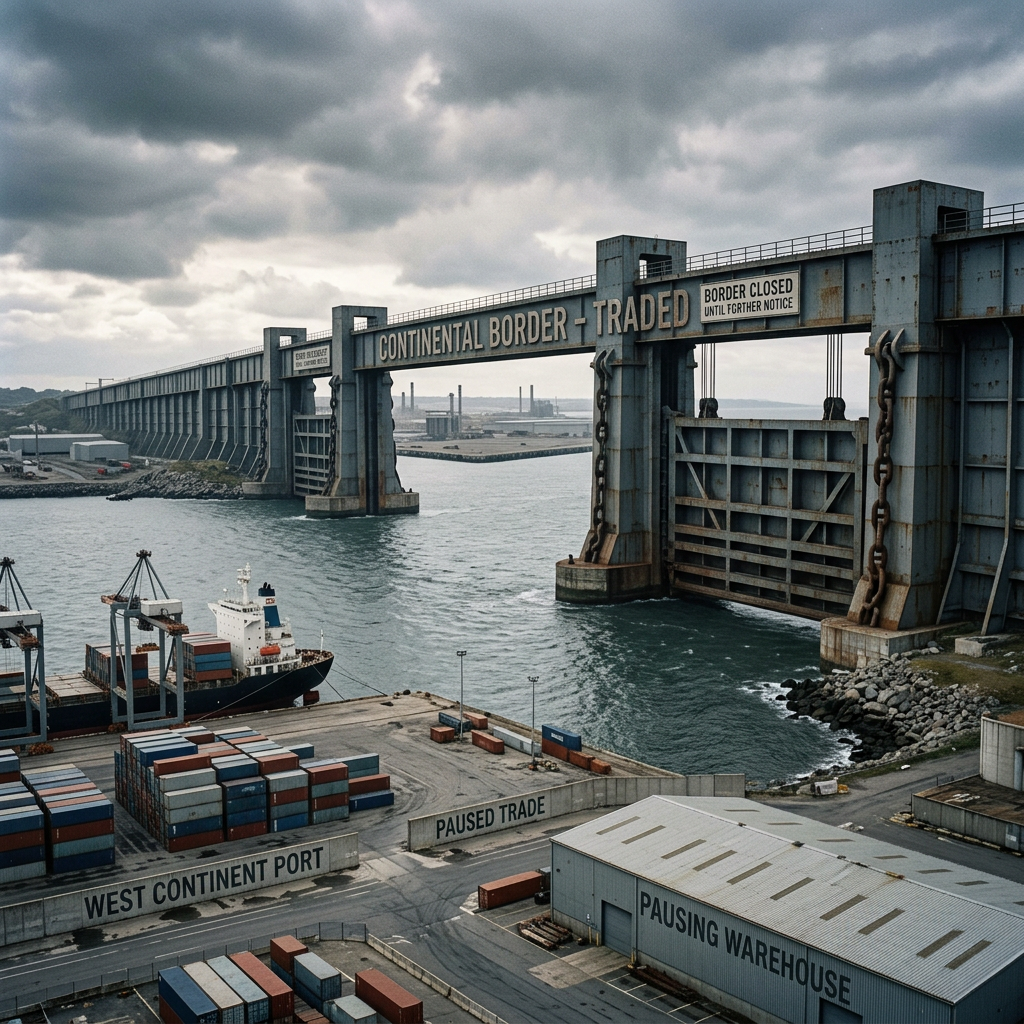
Geopolitical risk is no longer an external shock to absorb occasionally; it is a permanent feature of the operating environment that demands continuous attention. The most resilient companies treat risk assessment, reduction, ringfencing, and rapid response as ongoing disciplines rather than one-time projects. They diversify sources, prepare contingency plans, and build what one leader called a “crisis management muscle.”
For policymakers and strategists, the practical next steps are clear. Map your exposure across every node of your supply chain. Identify single points of failure and politically concentrated dependencies. Develop scenario plans for your specific worst case. And track leading indicators, such as the geopolitical risk index, to anticipate shifts before they disrupt operations. Organizations that embed these practices into strategy now will be better positioned to act decisively as conditions change.
Frequently asked questions
What is the difference between geopolitical risk and political risk?
Political risk typically refers to threats within a single country, such as regulatory changes, expropriation, or instability. Geopolitical risk concerns tensions and conflicts between nations, including wars, sanctions, trade disputes, and export controls. Geopolitical risk often has broader, cross-border effects on supply chains and markets.
How can a company start assessing its geopolitical risk exposure?
A company can begin by mapping its supply chain across all tiers to identify where suppliers, customers, and critical inputs are located. The next step is pinpointing single sources, politically concentrated dependencies, and exposure to chokepoints. Many firms also hire government relations staff to monitor incoming policy changes (World Economic Forum, 2025).
Is reshoring the best response to geopolitical risk?
Reshoring is not always the best response, because it can be slow and expensive. KPMG (2026) notes that moving production fully onshore “would take time and is too expensive for most producers.” Diversification, regional sourcing, and “local for local” production are often more practical than complete reshoring.
Which industries are most exposed to geopolitical risk?
The automotive and high-tech manufacturing sectors are among the most exposed, according to KPMG (2026). These industries rely on complex, multi-country supply chains and depend heavily on inputs such as semiconductors, rare earth minerals, and high-powered magnets that are subject to export controls and tariffs.
How often should businesses review their geopolitical risk strategy?
Geopolitical risk strategy should be reviewed continuously rather than annually, given the speed of policy shifts. KPMG (2026) describes the current environment as one where supply chains are “no longer fixed but expected to be in constant motion,” requiring firms to become nimbler and adjust more rapidly.
End notes
The figures and quotations throughout this article draw on a small set of primary and secondary sources, organized here by theme. Statements about the embedded, standing nature of geopolitical risk, the 2025 geopolitical risk index, the resilience-versus-cost trade-off, and sector exposure (automotive and high-tech manufacturing) come from KPMG (2026). The four-part framework of risk assessment, risk reduction, ringfencing, and rapid response, along with all interview quotations from corporate leaders, hedging figures, and the “crisis management muscle” remark, derives from the World Economic Forum (2025). The Ford plant shutdown is sourced primarily from Z2Data (2025), with the Explorer production pause corroborated by the Institute for Energy Research (2025). The Nexperia case study relies on Z2Data (2025) for the Entity List “Affiliates Rule,” China’s October 4 export controls, market-share figures, and automaker warnings, and on the Government of the Netherlands (2025) for the September 30 invocation of the Goods Availability Act and its official rationale. Tariff data, including Section 232 rates, the 18% average effective rate, and the Country of Diffusion change, are drawn from Z2Data (2025), while the 93% drop in rare-earth magnet exports to the US is sourced from the Wall Street Journal (2025).
References
Government of the Netherlands, Ministry of Economic Affairs. (2025). Statement on the management control of Nexperia under the Goods Availability Act (Wet beschikbaarheid goederen). The Hague, Netherlands: Government of the Netherlands. Retrieved from https://www.government.nl
Institute for Energy Research. (2025). Rare earth supply disruptions and US automotive production [Research report]. Washington, DC: Institute for Energy Research. Retrieved from https://www.instituteforenergyresearch.org
KPMG International. (2026). Geopolitical risk and the global supply chain outlook [Industry report]. Amstelveen, Netherlands: KPMG International Cooperative. Retrieved from https://kpmg.com
Wall Street Journal. (2025, June). China’s rare earth export controls and the global magnet supply. New York, NY: Dow Jones & Company. Retrieved from https://www.wsj.com
World Economic Forum. (2025). How businesses are managing geopolitical risk [White paper]. Geneva, Switzerland: World Economic Forum. Retrieved from https://www.weforum.org
Z2Data. (2025). Tariffs, export controls, and the 2025 supply chain risk landscape [Industry analysis]. San Jose, CA: Z2Data Inc. Retrieved from https://www.z2data.com
geopoliticalrisk, #internationalbusiness, #businessstrategy, #geopoliticalriskmanagement, #supplychainresilience, #exportcontrols, #sanctions, #tariffs, #rareearths, #criticalminerals, #supplychaindiversification, #ringfencing, #reshoring, #regionalsourcing, #marketentry, #globaltrade, #crossborderrisk, #politicalrisk, #strategicplanning, #corporateresilience, #tradepolicy, #semiconductors, #nexperia, #ford, #section232, #geopolitics, #riskassessment, #supplychaindisruption, #globaloperations, #economicsecurity
Discover more from Responsible Public Affairs
Subscribe to get the latest posts sent to your email.