
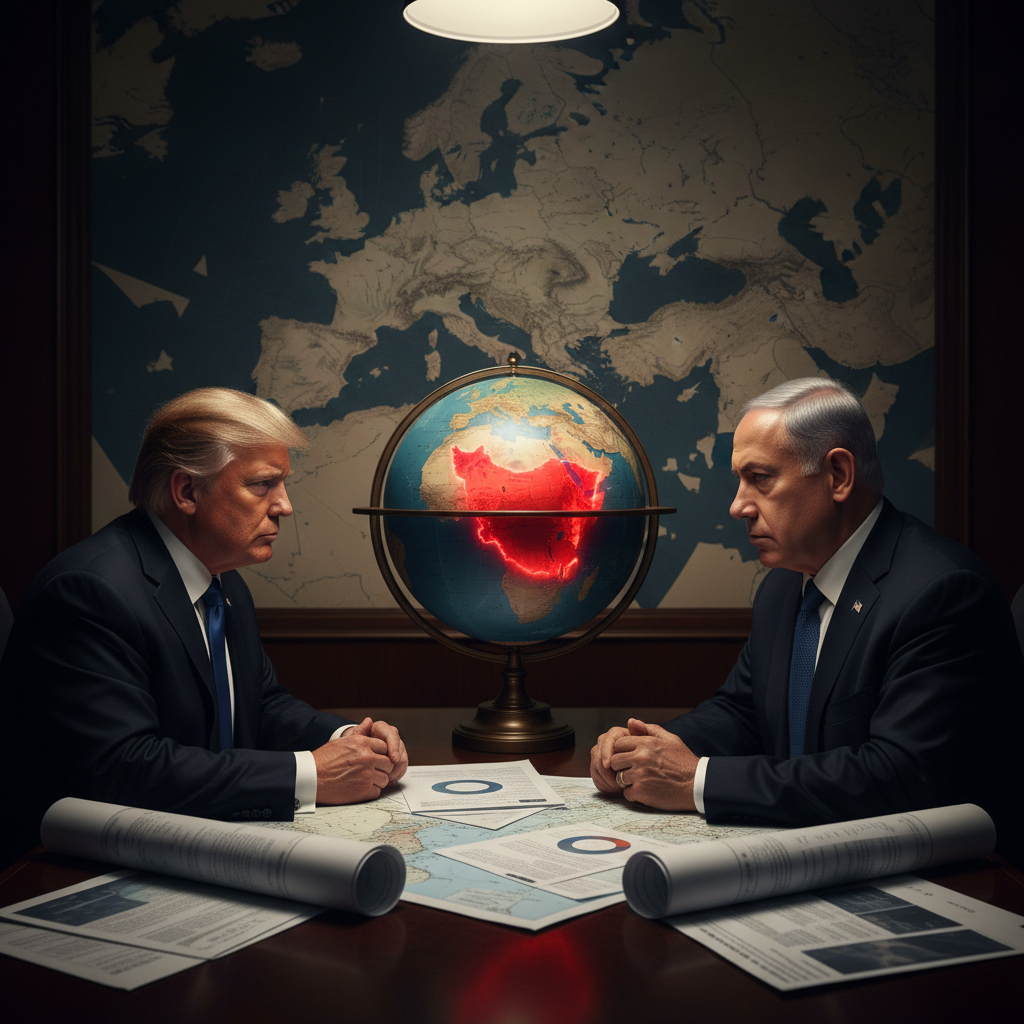
Prime Minister Benjamin Netanyahu’s upcoming visit to Washington, D.C., is a critical moment in the ongoing struggle to address the growing threats posed by Iran. While much of the global focus remains on Iran’s nuclear ambitions, Netanyahu’s trip highlights a broader and equally pressing concern: Iran’s ballistic missile program and its destabilizing impact on the Middle East and beyond. This article explores the risks posed by Iran’s missile and satellite programs, the strategic imperatives driving Netanyahu’s journey, and the broader implications for regional and global security.
Chapter 1: The Immediate Trigger – Missiles, Not Just Nukes
Netanyahu’s urgency stems from a dangerous gap between Israel’s existential security needs and the current trajectory of U.S.-Iran negotiations. Recent talks in Oman, led by U.S. Special Envoy Steve Witkoff and Jared Kushner, have reportedly focused solely on Iran’s nuclear program. Iran has drawn a hard line, refusing to discuss its ballistic missile capabilities. For Israel, this is a red line. A deal that addresses only the nuclear issue while leaving the missile program intact is seen as a grave strategic oversight.
Netanyahu’s message to Washington is clear: “A deal that ignores the missiles is no deal at all.” The Israeli Prime Minister will emphasize that the missile program is not a secondary issue but the centerpiece of Iran’s current strategy to destabilize the region and threaten Israel’s existence.
Chapter 2: The Three Pillars of Iran’s Strategy
To understand why missiles have become the focal point, it is essential to examine Iran’s broader strategy to challenge Israel. Historically, this strategy has rested on three pillars:
- The Nuclear Program: Severely degraded during Israel’s 12-day “Rising Lion” campaign in June, which targeted key facilities and eliminated much of Iran’s nuclear scientific community. Rebuilding this capability will take years.
- The Proxy Network: Iran’s network of proxies, including Hamas, Hezbollah, and militias in Syria, has been systematically weakened. The so-called “Ring of Fire” strategy has largely failed.
- The Missile Program: This is the last remaining pillar of Iran’s strategy. Despite significant setbacks, including the destruction of two-thirds of its missile launchers in June, Iran is feverishly working to rebuild its missile capabilities.
Chapter 3: The Existential Threat – Quantity Over Quality
The primary concern with Iran’s missile program is not the sophistication of its technology but the sheer quantity of missiles it aims to produce. Israeli intelligence estimates that Iran retained between one-third and half of its missile arsenal after the June campaign. The regime’s goal is to build an arsenal of 8,000 ballistic missiles, a stockpile designed to overwhelm Israel’s advanced air defense systems, including Arrow 2, Arrow 3, and David’s Sling.
Iran’s efforts to rebuild its missile capabilities include attempts to smuggle “planetary mixers,” specialized machines required to mix solid rocket fuel. Solid-fuel missiles are particularly concerning because they can be launched with little to no warning, unlike liquid-fuel missiles, which require time to load and prepare.
Chapter 4: The Satellite Program – A New Dimension of Threat
Iran’s ambitions extend beyond missiles to its satellite program, which serves as a dual-use technology with both civilian and military applications. Satellite launches provide Iran with the capability to develop intercontinental ballistic missiles (ICBMs) capable of reaching targets far beyond the Middle East. These developments pose a direct threat not only to Israel but also to Europe and the United States.
The satellite program is a critical component of Iran’s strategy to project power and intimidate its adversaries. By advancing its satellite technology, Iran is laying the groundwork for a future in which it can deploy long-range missiles with precision targeting capabilities.
Chapter 5: Gunboat Diplomacy and the Global Stakes
The U.S. is currently employing “gunboat diplomacy,” with the USS Abraham Lincoln Carrier Strike Group and significant aerial assets positioned around Iran. This show of force is intended to pressure Tehran into making concessions. However, Iran is playing a double game. While engaging in negotiations to buy time, the regime is also committing atrocities at home, reportedly massacring tens of thousands of its own citizens in a desperate attempt to crush domestic unrest fueled by economic collapse.
Netanyahu’s visit to Washington is a critical moment in this diplomatic chess game. While President Trump remains optimistic about striking a deal, Netanyahu will likely argue that any agreement must address the missile program. Failure to do so would leave Israel with no choice but to consider unilateral military action.
Chapter 6: Proxy Wars and Regional Instability
Iran’s missile program is not an isolated issue. It is part of a broader strategy that includes the use of proxies to destabilize the region. A recent example is the foiling of a terror cell in the West Bank by Israel’s Shin Bet security agency. Directed by operatives in Lebanon with ties to Hamas and Hezbollah, the cell was in the advanced stages of planning an attack.
The cell’s modus operandi highlights the ongoing efforts by Iran’s proxies to ignite the West Bank as a secondary front. The Shin Bet’s challenge lies in timing its interventions to maximize intelligence gathering while preventing the cells from becoming operational. This delicate balance is emblematic of the broader struggle to counter Iran’s influence in the region.
Chapter 7: The Existential Stakes – A Warning to the World
Netanyahu’s visit is not just about Israel’s security; it is a warning to the world. Iran’s missile program, if left unchecked, poses a threat not only to the Middle East but also to Europe and the United States. With ranges exceeding 10,000 kilometers under development, these missiles could eventually strike targets far beyond the region.
The Israeli Prime Minister’s message to Washington will be blunt: “The missile program is not a side issue. It is the main event.” Allowing a regime that has shown a willingness to massacre its own citizens to industrially mass-produce ballistic missiles is a risk the world cannot afford to take.
Conclusion: A Defining Moment for Regional and Global Security
Prime Minister Netanyahu’s visit to Washington represents a critical juncture in the ongoing struggle to contain Iran’s ambitions. The discussions will likely focus on the immediate threat posed by Iran’s missile and satellite programs, the broader implications of its nuclear ambitions, and the activities of its proxies. As Netanyahu seeks to align U.S. policy with Israel’s security imperatives, the stakes could not be higher.
Whether through diplomacy or military action, the decisions made in the coming weeks will have far-reaching consequences for the Middle East and beyond. Netanyahu’s message is clear: Israel will not stand idly by as its security is threatened. The question now is whether the international community will act decisively to address these challenges or allow the status quo to persist, with all the risks that entails.
#Geopolitics #GlobalSecurity #MiddleEast #InternationalRelations #ForeignPolicy #WorldPolitics #GlobalAffairs #StrategicStudies #Diplomacy #ConflictResolution #Iran #IranianRegime #IranMissiles #IranNuclear #IranProtests #IranianPeople #IranCrisis #IranSanctions #StopIranianAggression #IranianFreedom #Israel #Netanyahu #IsraelSecurity #IsraelDefense #IDF #IsraelNews #MiddleEastPeace #IsraelIranConflict #IsraelPolicy #DonaldTrump #USForeignPolicy #TrumpAdministration #USMiddleEastPolicy #AmericanDiplomacy #USIsraelRelations #HumanRights #HumanitarianCrisis #SaveIranianLives #FreedomForIran #StopTheMassacre #IranianVoices #JusticeForIran #MissileThreat #BallisticMissiles #MilitaryStrategy #DefensePolicy #NationalSecurity #AirDefense #MilitaryPower #UnitedNations #UNSecurityCouncil #NATO #EUForeignPolicy #GlobalLeadership #WorldPeace #StandWithIsrael #StandWithIranianPeople #MiddleEastMatters #GlobalAwareness #SpeakUpForIran
@UN @UNHumanRights @NATO @EU_Commission @StateDept @IDF @IAEAorg @Amnesty @HRW @CFR_org @BrookingsInst @CarnegieEndow @RANDCorporation @AtlanticCouncil @ChathamHouse @MiddleEastInst @BBCWorld @AJEnglish @Reuters @AP @TheEconomist @ForeignPolicy @TheAtlantic @WSJ @nytimes @guardian @StandWithUs @IranIntl @FreedomHouse @IranHumanRights @CodePink @Netanyahu @POTUS @SecBlinken @IsraeliPM @VP

