Defense Supply Chain

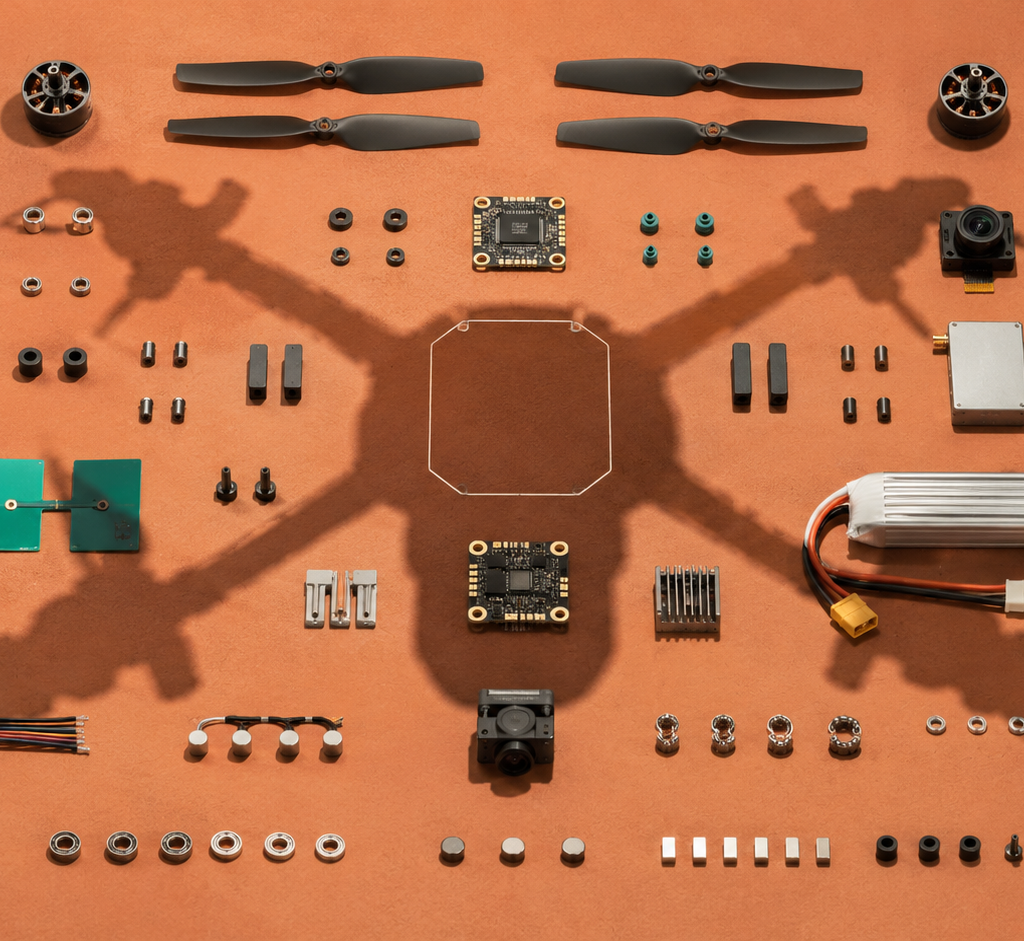
Drone motors, propellers, cameras, batteries, controllers, and connectors arranged around one missing central component beneath the shadow of a complete quadcopter.

The Cheap Drone Is a Supply-Chain Illusion: Who Controls the Age of Attritable Warfare?

Low-cost drones have transformed military economics but have not eliminated industrial power, which now lies in the complex supply chains behind components. Successful warfare requires “replenishment sovereignty,” enabling rapid replacement of lost drones. Ukraine, the U.S., Taiwan, and Iran illustrate varied strategies for managing dependency on critical inputs in attritable warfare.Drone supply-chain sovereignty is the ability to replace unmanned capability at wartime speed without unacceptable dependence on foreign-controlled components, software, materials, or production tools. It requires platform assembly, trusted component access, secure software and data paths, rapid substitution, and surge production.

The Cheap Drone Is a Supply-Chain Illusion: Who Controls the Age of Attritable Warfare? Read More »
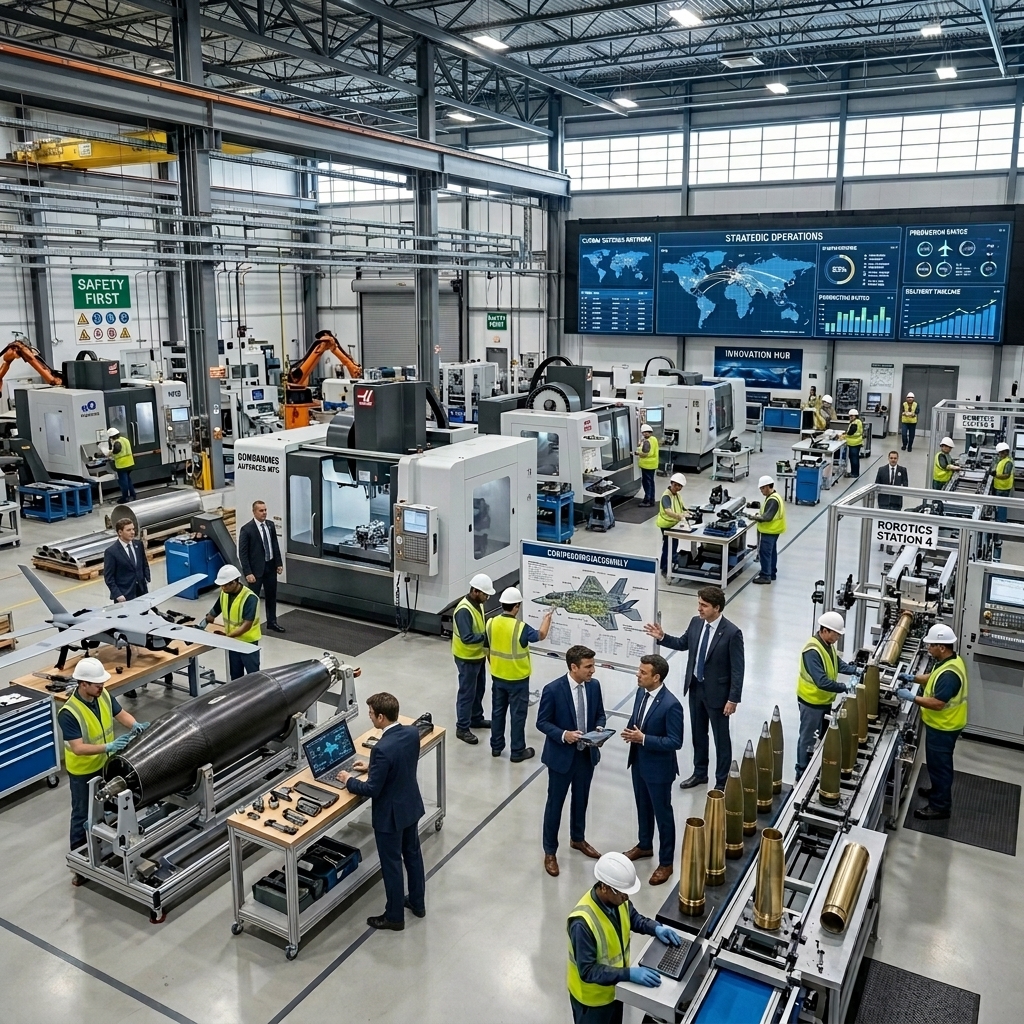
A high-angle photograph of a modern, high-tech defense manufacturing facility, showcasing a blend of industrial automation, precision engineering, and strategic corporate oversight in a clean, bright space

Defense Industrial Policy 2026: How Nations Are Rebuilding Strategic Capacity

Meta title Defense Industrial Policy 2026: How Nations Are Rebuilding Strategic Capacity Meta description Explore how governments are reshaping defense industrial policy in 2026 through procurement reform, resilient defense supply chains, stockpile rebuilding, and stronger public-private coordination. The global security environment has entered a more demanding phase, and defense planners know it. The old assumption

Defense Industrial Policy 2026: How Nations Are Rebuilding Strategic Capacity Read More »