military strategy

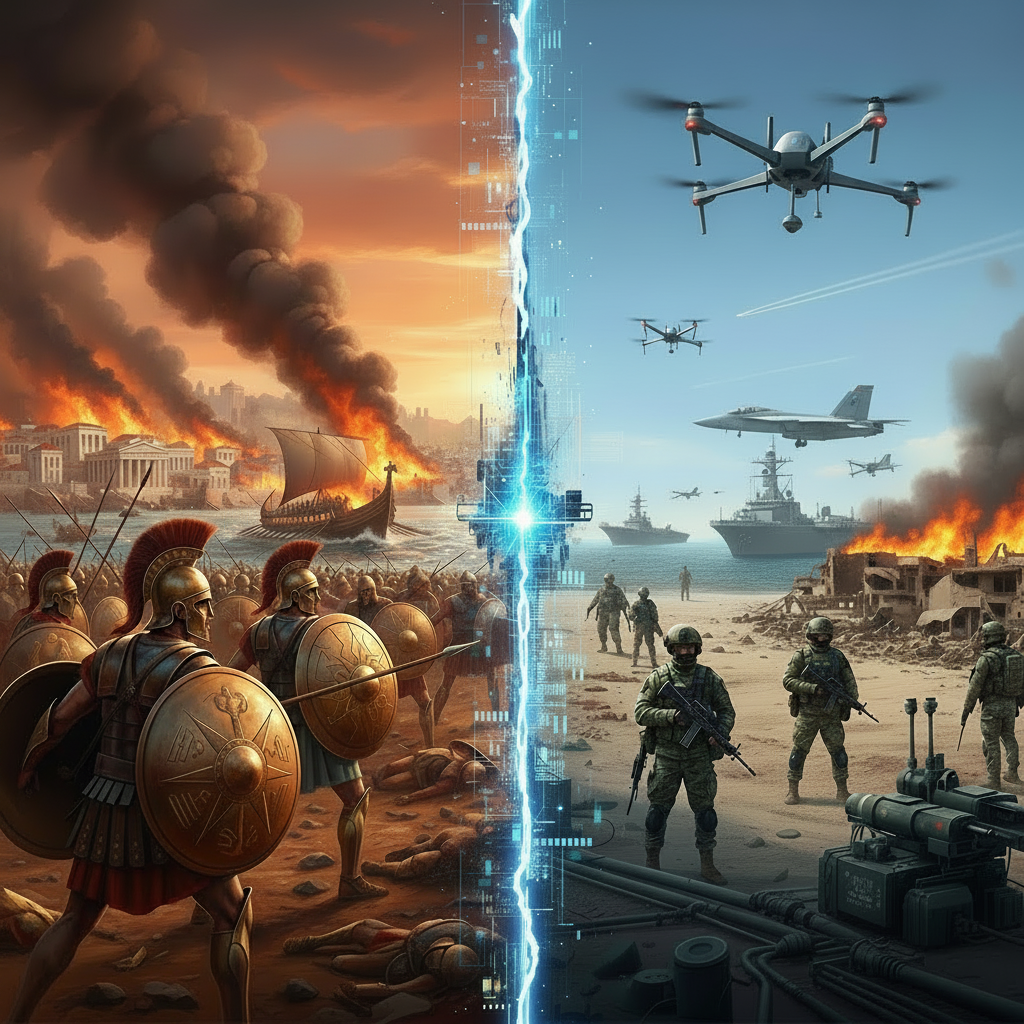
The image depicts a split composition contrasting the Peloponnesian War and the US-Iran conflict. On the left, ancient Greek warriors in detailed bronze armor are shown amidst a burning city with vivid flames and smoke. On the right, modern military forces, including the US Navy with warships, aircraft carriers, and drones, are set against a Middle Eastern desert landscape. A destroyed and burning section of Iran is depicted with realistic ruins, intense fire, and billowing smoke. The two sides are divided by a glowing digital rift, symbolizing the evolution of conflict over time

Historical Lessons for Modern Conflict: The Peloponnesian War, Great Power Rivalries, and the US-Iran Standoff

The Peloponnesian War, as recounted by Thucydides, is one of history’s most enduring case studies on the dynamics of power, rivalry, and the unintended consequences of prolonged conflict. Its lessons remain strikingly relevant today, particularly as tensions between the United States and Iran continue to simmer. This ancient conflict offers a lens through which we […]

Historical Lessons for Modern Conflict: The Peloponnesian War, Great Power Rivalries, and the US-Iran Standoff Read More »

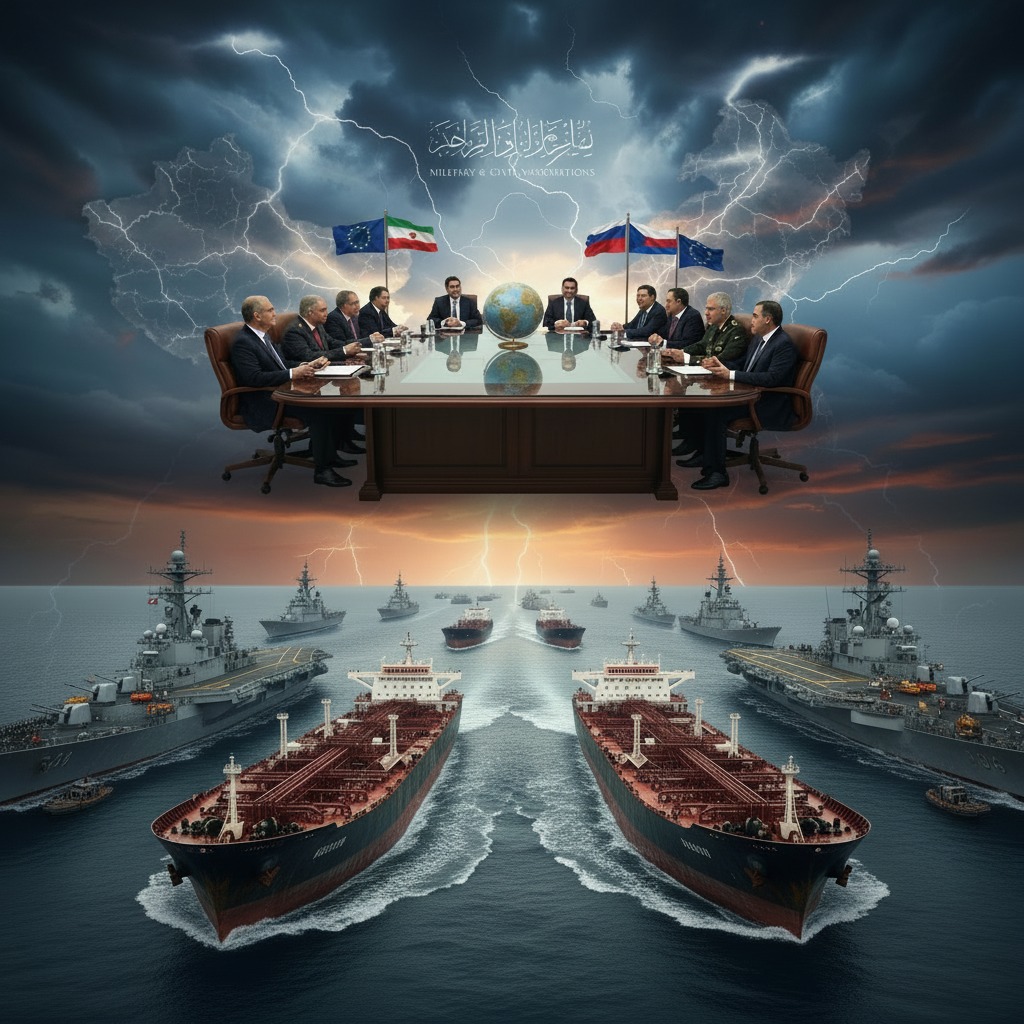
A dramatic composite image depicting high-stakes geopolitical discussions under a stormy sky, juxtaposed with a powerful naval fleet and oil tankers at sea, symbolizing global power dynamics and strategic tensions. Shadows of China and Russia loom in the background, representing their readiness to intervene with Iran

Negotiating Power and Leverage: Lessons from the Strait of Hormuz Stalemate

“Beyond the BATNA: Redefining Leverage in the Strait of Hormuz Stalemate”

This section explores how negotiators can redefine leverage even in seemingly powerless situations. It highlights strategies like cultivating partial alternatives, analyzing the counterparty’s hidden vulnerabilities, and reframing threats as warnings. For example, the text discusses how the U.S. could mitigate reliance on the Strait of Hormuz by developing alternative pipelines and renewable energy sources, thereby reducing Iran’s leverage. It also emphasizes the importance of mutual vulnerabilities, such as Iran’s dependence on the Strait for economic survival, and the use of tacit consent to create temporary solutions without formal agreements.

This approach demonstrates how creative negotiation tactics can shift power dynamics and achieve stability in high-stakes geopolitical conflicts.

Negotiating Power and Leverage: Lessons from the Strait of Hormuz Stalemate Read More »