
The Antisemitism Observatory
During the week of September 7–13, France protected Jewish worship under an exceptional security plan while a cultural venue canceled an event featuring a Jewish artist despite government assurances. The contrast captures a wider reality: institutions can defend people from immediate danger and still struggle to preserve ordinary Jewish participation in public life.
Weekly report | Coverage period: September 7–13, 2026 | Research cut-off: September 13, 2026, 8:00 a.m. CEST
Executive Summary
This week produced no new harmonized global total of antisemitic incidents—and this report does not manufacture one. Instead, it records several different forms of evidence that must not be collapsed into a single number.
- In France, a venue in Amiens confirmed the cancellation of a September 19 electronic-music event featuring the Jewish DJ Barbara Butch. The venue cited safety and audience-welcome conditions; a pro-Palestinian group said its boycott call had succeeded; the interior minister said state services had provided security assurances. The cancellation is established. Its legal characterization and the motives of every participant are not.
- Also in France, three men were reported to have been placed under formal investigation in an alleged jihadist case involving discussion of an attack against members of the Jewish community. These are allegations in an ongoing case; the suspects retain the presumption of innocence.
- Rosh Hashanah began at sundown on September 11. France, the United Kingdom, Canada, and the United States all entered the holiday period with enhanced security measures or intensified community preparation. Those measures are institutional responses to assessed risk, not proof that a specific attack was imminent at every protected site.
- In Italy, a parliamentary proposal on antisemitism continued to provoke opposition, including a Rome protest on September 9. The legislative text, the protest, and reports about symbols displayed at it are separate facts with different evidentiary status.
- In Germany, the strong electoral performance of the far-right AfD in Saxony-Anhalt drew a public warning from the NCCJ’s German counterpart, the Central Council of Jews in Germany. An election result is not an incident count, but it is relevant to the environment in which Jewish citizens assess belonging and risk.
The Week’s Central Distinction: Protection Is Not Participation
Antisemitism is usually measured through acts: assault, threat, vandalism, harassment, propaganda, or discrimination. Those categories matter because they create a record that can be compared, investigated, and sometimes prosecuted. Yet a weekly report can miss an important consequence if it looks only for completed offenses. Public life can contract before a criminal act occurs.
A synagogue may remain open because police officers, soldiers, private guards, cameras, and volunteers make attendance possible. A concert may disappear because a venue decides that the same protective equation cannot be sustained. A student may continue attending class while concealing a Jewish symbol. A cultural institution may retain a Jewish artist on paper but decide that the associated controversy exceeds its operational tolerance. None of those outcomes fits neatly into a police incident total.
This edition therefore uses a four-part evidence frame:
- Threat evidence: alleged plans, intelligence-led precautions, and reported threats. These require careful language because prevention often occurs before facts are tested in court.
- Incident evidence: conduct reported to police, community monitors, employers, schools, or venues. Reporting does not itself establish criminal guilt.
- Institutional action: patrols, funding, cancellations, disciplinary decisions, legislative proposals, and educational initiatives. These are observable responses, but their existence does not prove that they are proportionate or effective.
- Participation effects: whether Jewish people can worship, work, study, perform, and speak without exceptional burdens. This is often visible only through case evidence, surveys, or the withdrawal of an activity.
The framework is analytical, not a new statistical index. It prevents a common category error: treating more security as evidence that prejudice is being reduced. Security may reduce immediate exposure to harm. It can also be evidence that the cost of ordinary participation has risen.
France: Two Public Spaces, Two Institutional Outcomes
Amiens: What Is Established, What Is Disputed
On September 9, La Lune des Pirates, a music venue in Amiens, announced that it had canceled an electronic-music evening scheduled for September 19. The lineup included Tatie Dee, Barbara Butch, Austher, and an opening act. In its public notice, the venue said that, after reviewing the context and the access characteristics of its historic location on Quai Bélu, “the conditions necessary for the safety and reception of the public” were no longer met. The venue’s own event page now marks the evening as canceled and provides for automatic refunds. That is the primary record of the operational decision.
The context is contested. France Palestine Solidarité had called for a boycott and publicly described the cancellation as a victory. Butch is a French Jewish DJ who has previously faced hostile disruption and threats. Interior Minister Laurent Nuñez said he regretted the cancellation and maintained that state services had provided security guarantees. Amiens Mayor Hubert de Jenlis subsequently said the artist should be able to return to the stage in the city. These statements establish a political and institutional dispute over the cancellation; they do not, by themselves, establish a criminal offense or prove the private motive of each person who supported the boycott.
The distinction matters. Political advocacy for a boycott is not automatically antisemitic, and criticism of an artist’s views or associations is not automatically discrimination. At the same time, a campaign can have a discriminatory participation effect if a Jewish artist is singled out through identity-based assumptions, threats, or collective attribution. Determining that requires evidence about language, targeting, conduct, and causation—not merely the labels applied by supporters or opponents.
The verified civic outcome is narrower but still consequential: the artist will not perform, ticket holders will not attend, and a public cultural program was reduced after the venue concluded that it could not safely proceed. France’s interior minister believed the security threshold could be met; the venue did not. That gap between state assurance and institutional confidence is the week’s most revealing French development.
An Alleged Plot: Formal Investigation Is Not Conviction
On September 7, the European Jewish Congress reported that three men in France had been placed under formal investigation on suspicion of association with a terrorist organization for the purpose of preparing terrorist acts. Citing France’s National Anti-Terrorism Prosecutor’s Office, the report said investigators had identified discussions about traveling to Africa to join the Islamic State and had also gathered information about a possible violent attack against members of the Jewish community in France.
The procedural language is essential. A French mise en examen indicates that an investigating judge considers there to be serious or consistent evidence justifying formal investigation. It is not a conviction, and it is not equivalent to a finding that a detailed operational plan existed. The investigation reportedly began in July after domestic intelligence identified suspected jihadist activity in a WhatsApp group. The public reporting this week therefore concerns a judicial stage in an ongoing case, not an attack carried out during the reporting period.
The case nonetheless belongs in an antisemitism observatory because the alleged target was the Jewish community. It also explains why authorities distinguish between generalized vigilance and intelligence-led protection. The public rarely sees the underlying threat assessment. Responsible reporting must therefore avoid two opposite errors: dismissing preventive action because no attack occurred, or presenting an allegation as if guilt and operational capability were already proven.
Rosh Hashanah Under an Exceptional Security Plan
France entered Rosh Hashanah with measures ordered in a ministerial telegram dated August 31 and implemented during the current holiday period. Reporting on the directive described increased police presence at arrival and departure times, patrols around synagogues and gatherings, use of municipal police and video surveillance, coordination with local officials and Jewish community leaders, and additional support from Operation Sentinelle at especially sensitive locations.
The directive predates this report’s September 7 start date, but its operational effect falls squarely within the period: Rosh Hashanah ran from sundown on September 11 through September 13, with Yom Kippur and Sukkot to follow. It is included as a continuing institutional action, not as a newly announced event.
French press reports attributed to the National Directorate of Territorial Intelligence counted 532 antisemitic acts in the first six months of 2026, 18 percent fewer than in the first half of 2025. That number must be handled with three qualifications. First, it covers January through June, not this week. Second, it is a police/intelligence administrative count, not a prevalence survey of every antisemitic experience. Third, a six-month year-on-year reduction does not establish a durable decline. The same authorities and community institutions continue to describe the level as elevated, and the protection of worship remains exceptional.
The sharper observation is not numerical. France is simultaneously demonstrating high state capacity to protect religious observance and uneven institutional capacity to keep Jewish cultural participation ordinary. Both facts can be true.
Education as a Different Form of Response
A separate French development came from Auvergne-Rhône-Alpes. On September 7, the regional authority announced a first region-wide day against antisemitism in secondary schools, scheduled for December 10, Human Rights Day. The program is described as a partnership involving the regional authority, the Ministry of Education, and CRIF, with workshops, testimony, documentary screenings, and discussion in participating schools.
This is an announced future program, not an evaluated outcome. No evidence is yet available about participation rates, instructional quality, or effect. Its significance this week lies in institutional classification: unlike police protection or criminal investigation, the initiative treats antisemitism as a problem of civic knowledge and recognition. It should therefore be recorded as a planned educational response, not counted as an incident or credited in advance as a successful intervention.
International Overview
United Kingdom: A Named Police Operation for Religious Life
On September 7, Thames Valley Police announced increased protection for Jewish communities during the High Holy Days. The force described high-visibility neighborhood patrols, armed officers, Project Servator deployments, specialist resources, community engagement, and less-visible security measures. It said the operation would cover Rosh Hashanah, Yom Kippur, Sukkot, and Simchat Torah and would work alongside the Community Security Trust with support from the Home Office’s Protecting Jewish Communities Fund.
This is an official police statement. It confirms resources and intent; it does not disclose the intelligence behind deployment decisions, quantify a local increase in incidents, or establish that all Jewish residents perceive the measures in the same way. The statement is still revealing because it treats a religious calendar as an operational policing calendar. Security is no longer an occasional response to a specific alert. It has become planned infrastructure around communal life.
United States: Preparation, Fear, and a Funding Claim
Associated Press reporting published September 10 described U.S. Jewish congregations preparing for the High Holy Days amid fear of antisemitic threats and internal disagreement over Israel. The Secure Community Network was providing webinars and in-person training on active threats. The report cited violent attacks earlier in 2026, including incidents in Michigan, Mississippi, and New York, as background rather than as events from this week.
The report also described an advocacy campaign seeking $1 billion for the federal Nonprofit Security Grant Program. An Orthodox Union representative said annual funding had risen from $10 million in 2004 to $300 million in 2026 and that only 20 percent of more than 8,000 applicants had received grants in the previous year. Those figures are presented here as attributed advocacy figures reported by AP, not as an independently audited measure of unmet threat. Demand for grants can reflect risk, awareness, eligibility, administrative capacity, or all four.
The U.S. evidence this week is therefore primarily qualitative and institutional: congregations report unease, security networks are training communities, and organizations are pressing for more federal protection. It does not provide a weekly incident rate.
Canada: Government Recognition and Local Visibility
On September 11, Canada’s Minister of Canadian Identity and Culture issued a Rosh Hashanah statement that explicitly connected religious freedom with safety. The statement said the federal government was strengthening the Canada Community Security Program and that a new Advisory Council on Rights, Equality and Inclusion had been asked to begin work on the rise of antisemitism. This is a governmental statement of action and intent; it does not include a new national incident count or an evaluation of the programs.
In Toronto, police also increased their visible presence around Jewish institutions and neighborhoods for the holiday period, according to local reporting. These actions parallel the French and British response: a predictable period of worship produces a predictable security deployment. The comparison should not be read as proof that threat levels are identical across countries. Police mandates, intelligence thresholds, funding systems, and reporting practices differ.
Italy: A Law, a Protest, and the Risk of False Equivalence
Italy’s Senate has been considering legislation to adopt an operational definition of antisemitism and strengthen measures against antisemitic acts. On September 9, protesters gathered outside parliament in Rome to oppose the proposal. Critics argue that the bill could chill protected advocacy for Palestinian rights or criticism of Israel. Supporters argue that a clearer framework is needed to identify contemporary forms of antisemitism.
The protest itself is not evidence that its participants were antisemitic. The European Jewish Congress reported that Hamas and Hezbollah flags were displayed; because that detail comes through a community monitoring source and was not independently verified in the official parliamentary record consulted for this report, it is treated as a reported feature, not a universal characterization of the demonstration.
The legislative debate illustrates why definition disputes require unusual discipline. Criticism of Israeli government policy is not, by itself, antisemitic. Conversely, replacing “Jew” with “Zionist” does not immunize a statement that attributes collective guilt, recycles conspiracy myths, or targets Jewish people as such. A sound weekly account must preserve room for both propositions without using one to erase the other.
Germany and Central Europe: Political Environment and Reopened Doors
After the AfD won nearly 44 percent in the Saxony-Anhalt state election, the president of the Central Council of Jews in Germany, Josef Schuster, publicly expressed dismay and warned about the party’s direction. This is a representative body’s assessment of a political development, not an antisemitic incident report. The election result matters because political normalization can affect how minority communities interpret the boundaries of belonging, even when no offense is recorded.
The same week also produced evidence of continuity rather than withdrawal. Jewish community institutions reported the reopening of Dresden’s synagogue after three years of renovation and the reopening of Vienna’s Stadttempel following restoration. These are not “counterweights” that cancel threats, nor are they proof that antisemitism is receding. They are evidence that Jewish public life is not reducible to victimization. Any credible observatory should record institutional resilience as carefully as institutional retreat.
Comparative Evidence Map
| Jurisdiction | Verified development this week | Evidence type | What it does not establish |
|---|---|---|---|
| France | Amiens venue canceled a September 19 event featuring Barbara Butch; officials disputed whether security conditions justified the decision. | Confirmed institutional decision; contested interpretation | No court finding of discrimination; no proof of every campaign participant’s motive |
| France | Three men were reported under formal investigation in an alleged jihadist case involving a possible Jewish target. | Judicial/prosecutorial process reported by a recognized community institution | No conviction; no completed attack; no public proof of operational capability |
| France, UK, Canada, US | Enhanced protection, training, or funding activity accompanied the High Holy Days. | Institutional response to assessed risk | No comparable cross-country threat level or weekly incident rate |
| Italy | Public opposition continued around a proposed antisemitism law; a Rome protest took place September 9. | Legislative process and public protest | Opposition to the bill is not inherently antisemitic; reported symbols do not characterize every participant |
| Germany | Jewish community leadership warned about the implications of the AfD’s Saxony-Anhalt result. | Political environment and institutional assessment | An election result is not an incident count or proof of individual voters’ motives |
Key Evidence
- September 9: La Lune des Pirates confirmed the cancellation of its September 19 electronic-music event, citing safety and reception conditions. Venue notice.
- Three suspects: a September 7 report, citing France’s National Anti-Terrorism Prosecutor’s Office, said three men had been placed under formal investigation in an alleged case that included discussion of a Jewish target. European Jewish Congress.
- 532 acts: French media reported 532 antisemitic acts recorded in January–June 2026, 18 percent fewer than in the same period of 2025. The figure is an administrative count, not a weekly measure or a full prevalence estimate. French press report citing territorial intelligence.
- September 7: Thames Valley Police announced armed and unarmed patrols, Project Servator deployments, and specialist support for the High Holy Days. Official police statement.
- September 11: Canada said it was strengthening its Community Security Program and activating a new advisory council’s work on antisemitism. Government of Canada.
- $300 million: U.S. nonprofit-security funding in 2026, according to an Orthodox Union figure reported by AP; the organization is seeking $1 billion. The same source said only 20 percent of more than 8,000 applicants were funded the prior year. Associated Press.
What the Week Establishes—and What It Does Not
The strongest conclusion is not that antisemitism “rose” or “fell” globally this week. No common reporting system supports that claim. The week instead showed how the burden of antisemitism is distributed across institutions.
Police absorbed part of it through patrols, intelligence, and visible deterrence. Religious communities absorbed part through training and altered routines. A French venue absorbed part through cancellation. Legislatures absorbed part through disputes over definitions and speech. Jewish representative bodies absorbed part by documenting threats, interpreting political developments, and challenging institutions. Each response generates a different record.
Those records should not be added together as if they were interchangeable. A planned patrol is not an incident. A canceled concert is not automatically a hate crime. A formal investigation is not guilt. A survey response is not a police report. A political warning is not a judicial finding. But refusing false equivalence does not require ignoring the pattern that connects them: Jewish life is increasingly managed through exceptional procedures.
The France comparison is especially instructive. The state can mobilize substantial protection around synagogues while a cultural institution still withdraws an event after concluding that normal operations are no longer possible. The first preserves access through exceptional means. The second removes access. Both reveal the pressure surrounding Jewish visibility, but in different ways.
Conclusion
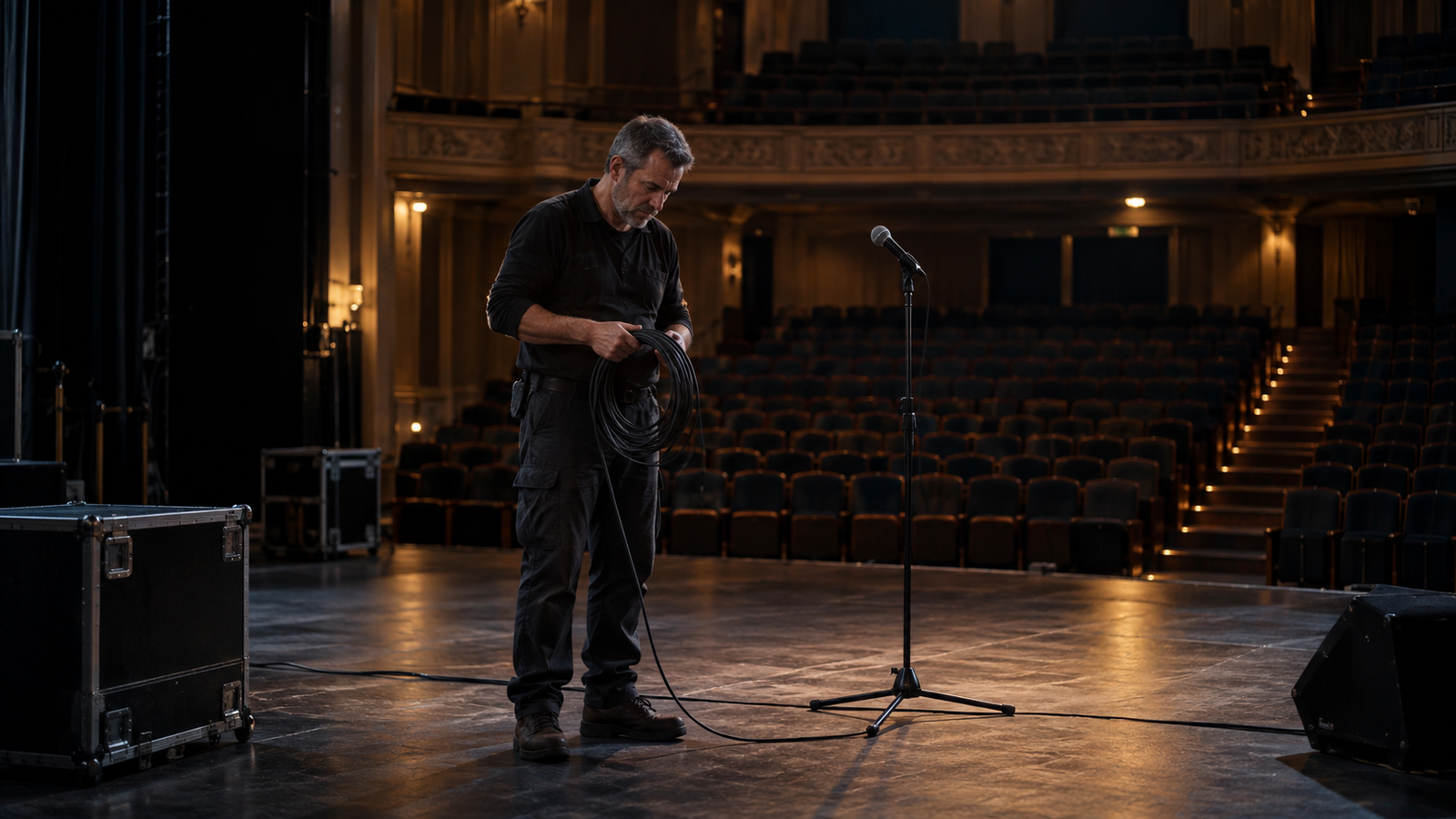
The most consequential image from September 7–13 is not necessarily a crime scene. It may be an empty stage.
France’s experience this week contains the full evidentiary spectrum: an alleged terrorist project under formal investigation, a national security posture around religious observance, a planned educational initiative, and a canceled cultural event whose meaning remains politically contested. Internationally, police and community organizations prepared for the High Holy Days, Canada announced institutional measures, Italy argued over legal definition, and German Jewish leadership responded to an electoral shift.
None of this yields a defensible global weekly rate. It yields something else: a map of the additional systems now required to keep Jewish life public—and of the moments when those systems fail to preserve participation. The purpose of an observatory is not to force every development into the same category. It is to name the category correctly, preserve what is known, mark what is disputed, and notice what disappears.
Glossary
- Antisemitic act: An administrative or monitoring category that may include threats, violence, damage, harassment, or other conduct classified as antisemitic under the relevant national methodology. Definitions differ across datasets.
- Mise en examen: A formal investigation status in French criminal procedure. It indicates serious or consistent evidence but is not a conviction.
- Operation Sentinelle: A French military deployment supporting the protection of sensitive civilian sites following the 2015 terrorist attacks.
- Project Servator: A UK policing approach combining visible and less-visible deployments, behavioral detection, intelligence, and public engagement.
- High Holy Days: The Jewish religious period beginning with Rosh Hashanah and including Yom Kippur; the broader fall festival calendar also includes Sukkot and Simchat Torah.
References and Further Reading
France: Primary and Institutional Sources
- La Lune des Pirates, “Soirée de clôture en musiques électroniques: Tatie Dee + Barbara Butch + Austher + première partie,” cancellation notice, September 2026. Direct link.
- European Jewish Congress, “Three arrested in France over alleged ISIS plot targeting Jewish community,” September 7, 2026. Direct link.
- European Jewish Congress, “Auvergne-Rhône-Alpes regional authority launches day to combat antisemitism in secondary schools across the region,” September 7, 2026. Direct link.
- French Ministry of the Interior, “Actes antireligieux: tendances 2025,” February 2026. Direct link.
- Service de Protection de la Communauté Juive, “Les chiffres de l’antisémitisme en France en 2025,” 2026. Direct link.
International Official Sources
- Thames Valley Police, “Increased protection of our Jewish communities during High Holy Days,” September 7, 2026. Direct link.
- Government of Canada, Canadian Heritage, “Statement by Minister Miller on Rosh Hashanah,” September 11, 2026. Direct link.
- Senate of the Republic of Italy, Bill S.1004, “Disposizioni per l’adozione della definizione operativa di antisemitismo, nonché per il contrasto agli atti di antisemitismo,” legislative file, accessed September 13, 2026. Direct link.
Authoritative Reporting and Community Documentation
- Le Monde with Agence France-Presse, “Un concert de Barbara Butch annulé à Amiens, l’Association France Palestine Solidarité crie ‘victoire’,” September 9, 2026. Archive link.
- TV5MONDE with Agence France-Presse, “Concert de Barbara Butch annulé: la DJ ‘doit pouvoir retrouver la scène à Amiens’, estime le maire,” September 11, 2026. Direct link.
- David Crary, “US Jews feel ‘precarious’ as High Holy Days approach amid antisemitism fears and internal divisions,” Associated Press, September 10, 2026. Direct link.
- European Jewish Congress, “Hamas and Hezbollah flags reported at Rome protest against bill to combat antisemitism,” September 10, 2026. Direct link.
- European Jewish Congress, “President of the Central Council of Jews in Germany expressed his dismay at the AfD’s strong performance in the Saxony-Anhalt state election,” September 7, 2026. Direct link.
Source and Methodology Note
This report covers developments published, confirmed, or operationally active from September 7 through the research cut-off at 8:00 a.m. CEST on September 13, 2026. It prioritizes official notices, police and government statements, legislative records, venue records, and recognized community-monitoring institutions. High-quality news reporting is used when primary documents are unavailable or when competing public statements require synthesis.
The report does not attempt to calculate a global weekly incident total. National police data, community-monitoring data, surveys, and media reports use different definitions, collection windows, geographic coverage, and verification thresholds. The French first-half figure of 532 acts is included only as context and is not extrapolated to a full year. A reported 18 percent year-on-year reduction for six months is not treated as evidence of a durable decline.
Allegations in the French terrorism investigation are identified as allegations, and the presumption of innocence is explicit. The Amiens cancellation is confirmed by the venue; claims about antisemitic motive remain contested and are not presented as adjudicated fact. Opposition to Israeli government policy, Zionism, or an antisemitism bill is not classified as antisemitic without additional evidence involving anti-Jewish targeting, collective blame, discriminatory conduct, or recognized antisemitic tropes. Community-organization reports are attributed rather than treated as equivalent to court findings.
Suggested Internal Links
- The Antisemitism Observatory: One Monthly Dip, a Larger Warning — previous edition and statistical context.
- The Court Is Now a Policy Venue: Why Public Affairs Must Plan Beyond Government — for the distinction between public controversy, legal process, and adjudicated fact.
- The Cost of Looking Away: Why Respect for Difference Is Everyone’s Job — for institutional responsibility when exclusion becomes normalized.
#TheAntisemitismObservatory #JewishLife #EvidenceBasedAnalysis
Discover more from Responsible Public Affairs
Subscribe to get the latest posts sent to your email.