nuclear

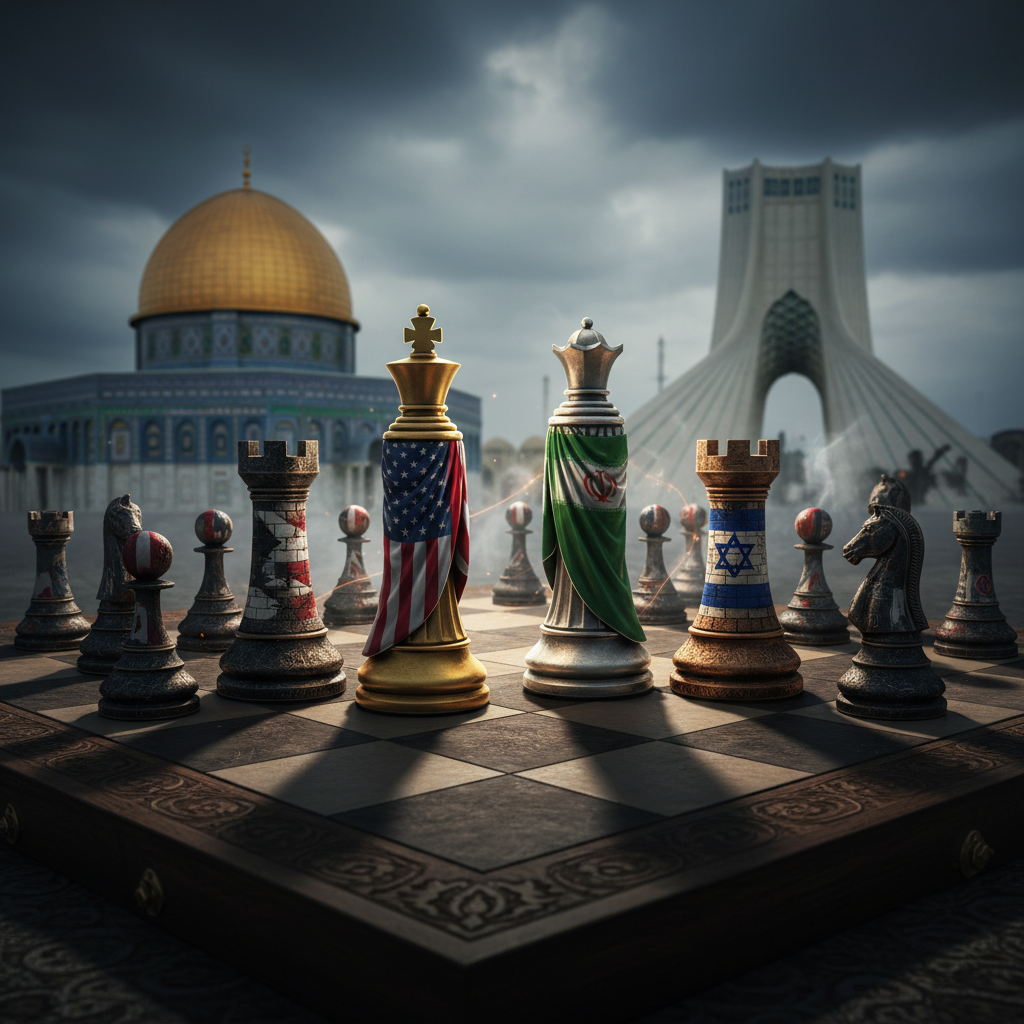
An editorial illustration depicting geopolitical tensions in the Middle East. The scene features a chessboard with symbolic chess pieces representing major powers like the United States, Iran, and Israel. Iconic landmarks and national flags are integrated into the background, while interconnected shadows symbolize Iranian proxies and regional actors. The atmosphere is serious, emphasizing high stakes and regional instability, rendered in a photorealistic style suitable for news or political analysis.

Tensions actuelles entre l’Iran, les États-Unis et Israël

Points Cles Contexte stratégique Histoire et évolution du programme nucléaire et balistique iranien Cadre juridique, conformité et régime de sanctions internationales Approches opérationnelles Dynamique régionale et rôle des groupes soutenus par l’Iran Conformité, chantage diplomatique et pressions internes La connexion Gaza : pièges tactiques et résilience du Hamas Présence et renforcement de la flotte américaine […]

Tensions actuelles entre l’Iran, les États-Unis et Israël Read More »

A high-tech command center with a large curved screen displaying a detailed world map and data visualizations. The room is dimly lit with ambient blue and white lighting, creating a focused and professional atmosphere. In the foreground, a sleek glass desk holds a tablet showcasing a digital dossier titled "Unified Geopolitical Analysis Rewrite," surrounded by minimalistic office items like a pen, notebook, and coffee cup. The scene conveys a sense of global strategy and data-driven decision-making.

The Powder Keg: Rethinking Deterrence in an Age of Strategic Chaos

Executive Overview General Pierre de Villiers’s description of our world as a “global powder keg” is more than hyperbole—it’s a stark reflection of the current security reality. The “peace dividend” of the post-Cold War years has evaporated. In its place, we see renewed great-power rivalries, fading arms control structures, and a weakening of unified political

The Powder Keg: Rethinking Deterrence in an Age of Strategic Chaos Read More »

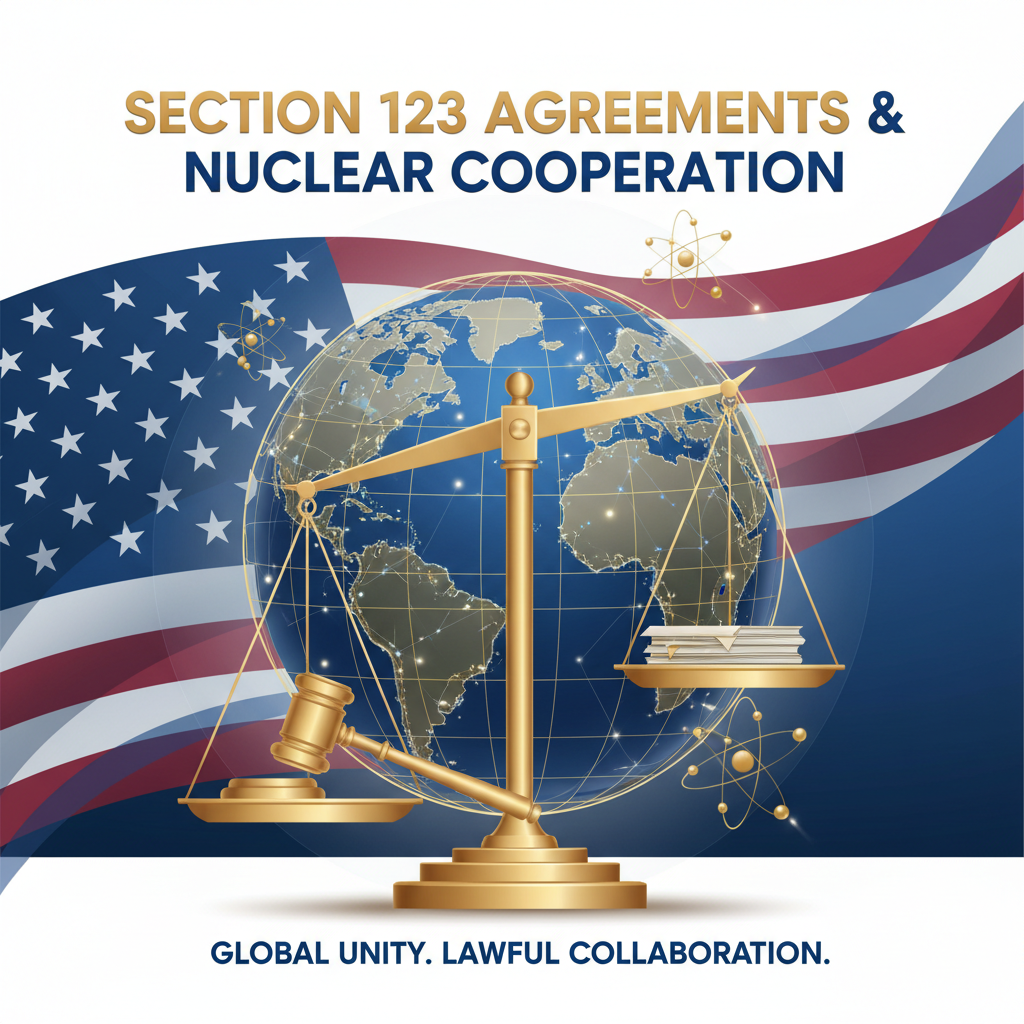
Illustration depicting global nuclear cooperation and legal agreements, symbolized by scales of justice, a globe, and the US flag, conveying balance and international law.

Section 123 Agreements and Nuclear Cooperation.

1. Introduction: The Stakes of International Nuclear Cooperation Civil nuclear partnerships are not simply commercial transactions; they represent a fusion of science, diplomacy, and global security management. As nations search for sustainable energy and technological self-sufficiency, robust international mechanisms are required to prevent the peaceful atom from fueling the spread of nuclear weapons. The U.S.

Section 123 Agreements and Nuclear Cooperation. Read More »

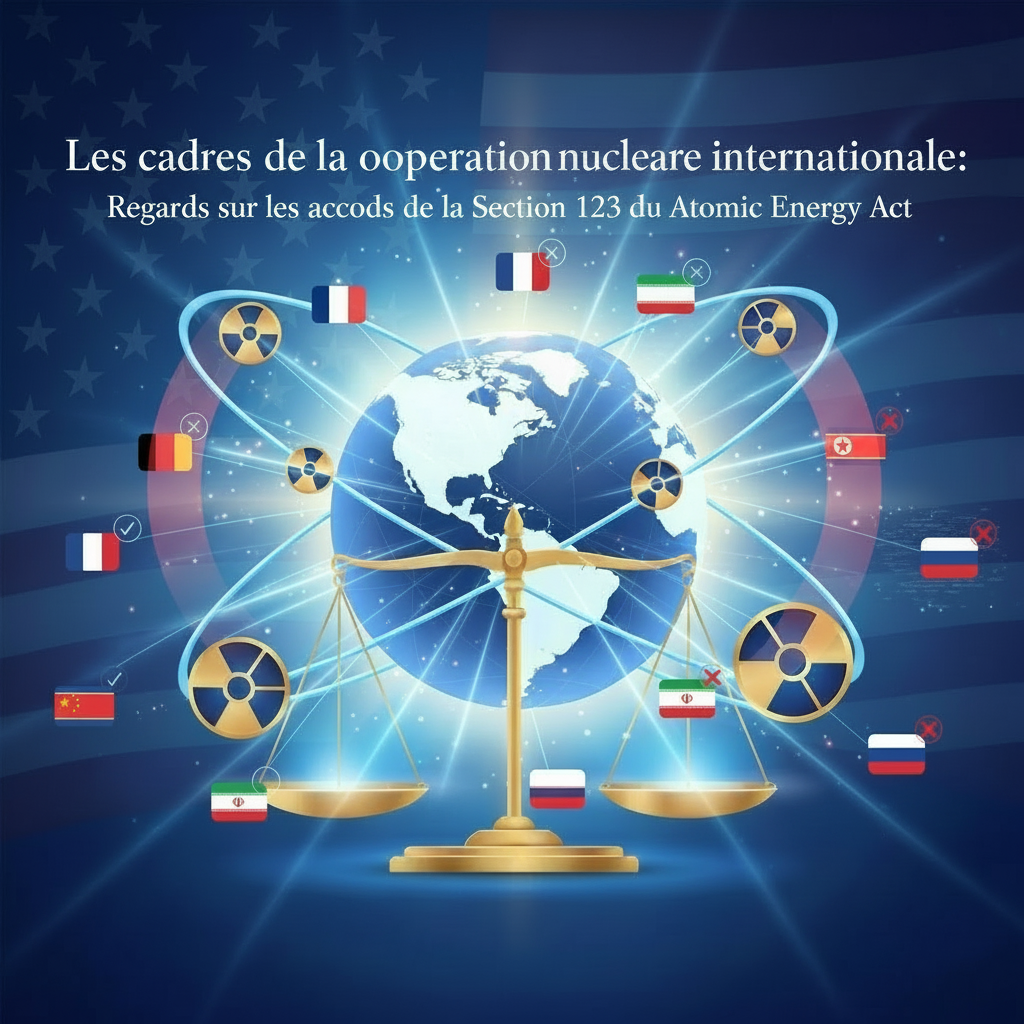
The image depicts global nuclear cooperation and regulation, symbolized by a globe on scales, national flags, and nuclear symbols, set against a US flag backdrop. It visually contrasts cooperative countries with glowing connections and non-cooperative ones with subtle barriers, emphasizing the dynamics of international nuclear agreements.

Les cadres de la coopération nucléaire internationale : Regards sur les accords de la Section 123 du Atomic Energy Act

1. Introduction aux Accords de la Section 123 — Un Enjeu Majeur pour la Gouvernance Nucléaire La coopération nucléaire civile internationale s’inscrit au cœur des enjeux de sécurité globale, de stratégie diplomatique et de développement économique. Avant que les États-Unis n’exportent un réacteur, des composants sensibles ou du combustible nucléaire à destination d’un autre pays,

Les cadres de la coopération nucléaire internationale : Regards sur les accords de la Section 123 du Atomic Energy Act Read More »