
Table of Contents
- Executive Summary
- The Iranian Perspective and Strategic Posture
- The United States Perspective and Actions
- The Israeli Perspective and Operations
- Regional and Global Implications
Executive Summary
The Middle East stands on the cusp of significant change, caught between energy shocks, evolving security alliances, and a clear shift in the historic partnership between the United States and Israel. A hard-won, two-week ceasefire between the U.S. and Iran was reached on April 7, with each side eager to frame the pause as a victory. Yet beneath the surface, especially with the ongoing contest over the Strait of Hormuz, the real issues that threaten stability remain unsettled. Diplomacy is now unfolding in Pakistan, turning the fragile ceasefire into both an opportunity and a test for regional and global powers.
This rare diplomatic pause offers a chance for leaders—from the Gulf to far-off capitals in Europe and Asia—to take stock of the rapidly changing landscape. The world is watching closely; any turbulence in the Strait of Hormuz could send oil prices soaring, disrupting economies and daily life across the planet. At the negotiating table in Pakistan, two competing visions for the region are clashing. American representatives are pushing for strict limits on Iran’s nuclear capabilities and uninterrupted trade through one of the globe’s most strategic waterways. Meanwhile, Iran is determined to protect its sovereignty and win economic relief as it feels the squeeze from sanctions and diplomatic isolation.
Conversations remain tense. While officials are quick to declare the ceasefire a diplomatic win, mistrust runs deep and the risk of renewed violence lingers in every move. Pakistan, too, plays an essential role as a bridge—not just between Washington and Tehran, but among many other regional actors eager to assert their own interests. As these talks continue, the region’s precarious balance is on full display. It’s clear that Middle Eastern stability is shaped not just by local rivalries, but by global energy dependencies and the ever-changing priorities of traditional alliances.
Big-picture, the ceasefire and ongoing negotiations underscore just how much the power dynamics in the Middle East now hinge on issues that extend far beyond simple bilateral rivalry. Energy security, shifting allegiances, and the possibility of miscalculation are all in play. How things unfold won’t just affect the region’s immediate future—they’ll help define global trade and strategic relationships for years to come.
On April 16, President Donald Trump told the world that the U.S. was closer than ever to reaching a breakthrough with Iran. He announced that Iran had agreed—at least in principle—to surrender its stockpile of highly enriched uranium. That same afternoon, a new 10-day ceasefire began between Lebanon and Israel, offering a temporary, if fragile, lull in wider hostilities. Yet, beneath these cautious steps toward peace, much deeper strategic shifts are underway.
Iran’s approach to power in the region has evolved remarkably. Instead of relying purely on military muscle, Tehran is now leveraging the financial risks involved in navigating the Strait of Hormuz. By ramping up perceived threats and driving up insurance rates, Iran has weaponized economic uncertainty. Shipping companies, insurers, and entire industries are feeling the shifts—energy-importing nations in Europe and Asia, especially, face expensive disruptions that trickle down to consumers everywhere.
Meanwhile, the relationship between the U.S. and Israel is quietly being recast. The two countries’ partnership—once an unwavering pillar of regional defense—is now being tested by diverging strategies. The United States appears increasingly open to phased diplomatic give-and-take with Iran, prompted by both international and domestic calls for more restrained engagement abroad. Israel, on the other hand, remains focused on absolute security guarantees and operational freedom, sometimes putting it at odds with Washington’s evolving calculus. As each country navigates unique domestic pressures and shifting threats, their once perfectly aligned interests now require more compromise.
Together, these shifts have made the region’s future less predictable. Iran’s grip on crucial shipping lanes adds new risk to already complicated supply chains, while doubts about the future of U.S.–Israeli defense ties have injected fresh uncertainty into both regional and global politics. Every action—whether it’s the imposition of new sanctions, changes to military posture, or bold diplomatic negotiations—carries consequences that ripple far beyond the immediate theater. The choices made in the months ahead will not only set the stage for regional stability or escalation, but also reshape the rules of power, security, and trade across the Middle East and beyond.
The Iranian Perspective and Strategic Posture
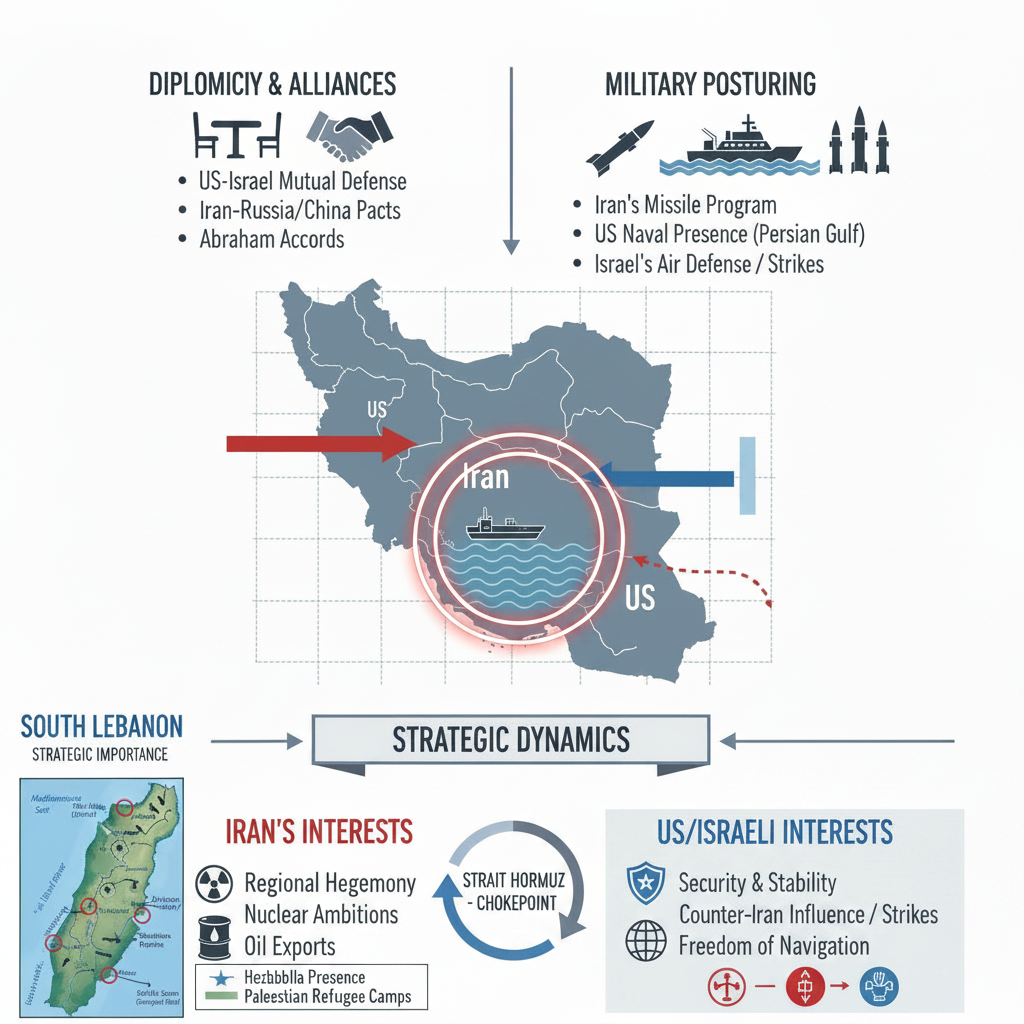
Iran’s approach to the Strait of Hormuz has become both assertive and strategic, as the country seeks to boost its bargaining power on the diplomatic and economic fronts. This crucial stretch of water serves as a gateway for about 20% of the world’s oil supply, making it the central focus of Tehran’s efforts. Rather than taking the riskier path of direct naval confrontation, Iran has carefully orchestrated a series of moves designed to raise the risks for international shipping—especially from an insurance standpoint—without crossing the line into outright war. Instead of open threats, Iranian authorities have relied on a blend of veiled warnings, selective interference with shipping, and clear demonstrations that they have the means to disrupt traffic at will, if provoked.
These methods have had a real-world impact. Ship owners and insurers are wary of sudden attacks, detentions, or merely the heightened atmosphere of tension, prompting them to change routes or refuse coverage entirely. The result is a dramatic slowdown of commercial movement in the Strait, accomplished through ambiguity and asymmetric risk rather than brute military force. This kind of tactic allows Iran to wield influence over adversaries and send shockwaves through the interconnected global economy, all while steering clear of moves that might otherwise provoke a swift and united military pushback from the United States or others.
For the global economy, Iran’s strategy is a game changer. Countries that rely on secure and predictable access to oil—from major economies in Europe and Asia to smaller importers—find themselves vulnerable to volatile prices and the possibility of shortages every time tensions rise in the Gulf. The disruption does not stop at oil; traffic of container goods, natural gas, and critical food imports is all vulnerable. For shipping companies and global logistics, the persistent uncertainty and increased costs ripple across global supply chains, raising the price of doing business and fueling broader anxieties about stability.
On a broader level, Iran’s deliberate manipulation of economic connections and geographic chokepoints highlights a new form of statecraft—one that requires as much finesse and resilience as traditional military might. By making the cost of conflict higher for its rivals while refusing to concede on key issues like nuclear research, Tehran hopes to strengthen its hand in negotiations and show that it won’t be forced into submission by sanctions or force alone. Every new incident in the Strait is a reminder to world markets that safe passage is not a given, and that perceived threats here can have very tangible consequences for the price of energy and the security of supply chains everywhere.
For Iran, however, the strategic value of Hormuz is tempered by its own dependencies. The Strait is not just a point of leverage—it is also the lifeblood of the Iranian economy. The overwhelming majority of the country’s crude, natural gas, and petroleum exports must transit these waters, and Iran has few to no realistic options for rerouting this traffic. Essential imports like wheat, corn, and soybeans also depend on shipping lanes through Hormuz; any interruption—real or perceived—translates quickly into higher domestic prices and strains on the government’s already-stretched resources.
During the pause in hostilities allowed by the ceasefire, these vulnerabilities have come into sharper focus. Higher insurance costs or restricted access can choke off both export earnings and vital incoming shipments, tightening the screws on the domestic economy and increasing the risk of social unrest. Even the occasional windfall—like those times when regional disruptions push up the price of Iran’s oil—are typically short-lived and don’t offset the enormous logistical and financial headaches caused by prolonged instability or sanctions. With few alternatives for export or import corridors, Iran has little margin for error in a prolonged maritime crisis.
Iran’s actions since the ceasefire began reflect these complex pressures. The country has remained resolute in its pursuit of nuclear capabilities, betting that the threat of closing Hormuz will keep adversaries at bay and strengthen its negotiating position. Simultaneously, Iran is using the pause to rebuild its missile stockpiles and sharpen both its naval and ground force readiness, signaling that it is prepared to defend its interests should talks break down. This position is a delicate one—projecting outward strength while managing real constraints at home—and will likely continue to shape Tehran’s calculus moving forward.
What gives Iran a strong hand in the Strait of Hormuz also exposes a significant weakness. Nearly all its vital goods—especially hydrocarbons—travel through these waters, and with no viable alternatives, the country’s economic future hinges on the uninterrupted flow of trade through this single, precarious corridor. Any sustained disruption can quickly spill over into domestic hardship, from shortages of food and fuel to increased inflation and public frustration.
Occasionally, Iran has seen brief financial boons, like when it collects extra revenue during periods of heavy disruption for its rivals. But most of these gains evaporate quickly as logistical challenges, declining storage capacity, and the ever-present risk of supply shortfalls make sustained economic advantage impossible. Blockades or even prolonged risk perception can scare off trading partners, strain long-term supply deals, and risk permanent losses in oil production should wells be forced offline.
In the longer term, Iran’s current posture may end up backfiring if global actors respond by diversifying energy sources, seeking out alternate shipping routes, or investing in supplies that can bypass the Gulf altogether. The continual game of brinkmanship heightens the risk that international partnerships and lucrative markets drift away, putting further stress on an already fragile economic model.
Even as negotiations continue and the world watches, Iran’s government is intent on preserving and demonstrating its capacity for both resistance and adaptation. The tension between maintaining leverage abroad and absorbing costs at home remains a defining trait of Iran’s strategy today, with repercussions that will echo throughout the region and the global economy for the foreseeable future.
The United States Perspective and Actions
When the United States launched its latest involvement in this conflict, decision-makers anticipated a swift, straightforward resolution. However, they didn’t fully account for Iran’s resourcefulness and relentless drive to disrupt maritime trade using unconventional tactics. As tensions escalated and security risks mounted in the surrounding waters, the U.S. responded by imposing a rigorous naval blockade. This wasn’t just about making a statement—the blockade was a carefully coordinated effort to deprive Iran’s military of resources and cripple its economic means to sustain a prolonged confrontation.
American naval forces quickly established a commanding presence throughout the Strait of Hormuz and the Persian Gulf. Their mission: monitor every chokepoint, keep a watchful eye on critical shipping routes, and intercept vessels suspected of smuggling weapons, military hardware, or sanctioned materials to Iran. Navy ships began regularly stopping, boarding, and searching ships headed to or from Iranian ports. Supported by extensive aerial surveillance and intelligence gathering, this tactic aimed to target both clear acts of military resupply and the shadowy trade routes often used to circumvent international sanctions.
These high-seas operations were just one part of a broader strategy. The blockade’s ultimate goal was to squeeze Iran’s primary revenue source—oil exports—while also restricting the country’s access to the industrial equipment and parts needed to keep its economy and military running. Washington’s hope was simple but ambitious: by combining relentless economic pressure with operational disruption at sea, Iran would feel compelled to negotiate on terms more favorable to the United States. By mid-April, the rules of engagement allowed U.S. Navy vessels broad authority to search and seize any ship suspected of carrying contraband, aiming to further tighten the economic vise around Tehran.
On the diplomatic front, U.S. officials are seeking a solution that ends hostilities, secures maritime freedom, and reopens the Strait—all at the lowest possible cost. At the heart of these talks is a lingering dispute over Iran’s nuclear program. The U.S. is pushing for a sweeping, 20-year halt of uranium enrichment and for Iran to relinquish its existing stockpile of highly enriched uranium. American negotiators see these demands as critical—both to prevent renewed nuclear escalation and to provide assurances to nervous allies in the region.
Tehran, however, remains steadfast in its resistance. Iranian negotiators are only willing to commit to a much shorter pause—roughly three to five years—arguing that a longer freeze exposes them to risks if the diplomatic process stalls. These entrenched positions reflect not just differences over numbers and timelines, but wide gaps in trust. Iran is acutely aware that, in the past, seemingly solid agreements have unravelled unexpectedly, leading to renewed isolation or sanctions. For U.S. negotiators, the stakes are equally high. They need to show domestic audiences and wary allies that any new deal is airtight and enforceable, and that Iran’s ambitions will be kept in check for the long haul.
Every negotiation is thus shadowed by past setbacks, mutual suspicion, and the knowledge that even a well-brokered settlement may not last if leadership changes or geopolitical winds shift. Further complicating the picture are the interests of other regional players—including Gulf states and European allies—each bringing their own concerns, priorities, and red lines to the table.
This tricky diplomatic context means that every inch of progress is hard-earned. Both Washington and Tehran are being pushed to make uncomfortable concessions. For the U.S., the security of the Strait of Hormuz and de-escalation of regional risk are at stake. For Iran, the fear of giving away too much too soon—without reliable guarantees in return—is ever-present.
Meanwhile, the unfolding crisis is forcing the U.S. to look inward and re-examine its approach to foreign policy. On Capitol Hill and in the American public, skepticism about the nation’s deep military ties with Israel is growing. Lawmakers from both parties are calling for a more balanced approach, questioning the costs of open-ended foreign aid and involvement overseas. As debates over prioritizing domestic needs versus international commitments intensify, policy makers face mounting demands for accountability and transparency.
Increasingly, Americans—especially younger generations—are asking whether constant military engagement abroad serves the nation’s interests. This is showing up in heated Congressional proposals, shifting campaign rhetoric, and rising calls to link foreign assistance with stricter conditions or measurable benefits at home.
Against this backdrop, the U.S. administration is confronted with the need to tread carefully, weighing the vital importance of regional alliances against the practical realities of shifting political winds and economic priorities at home. In short, America’s next move in the Middle East depends not only on what happens in distant negotiations and naval operations—it’s also shaped by the evolving aspirations, doubts, and constraints playing out in homes and halls of government across the country.
The Israeli Perspective and Operations
Israel faces an increasingly complex strategic environment as it navigates rising challenges on multiple fronts. While the Israeli military has achieved clear operational successes—shown by its decisive actions against Hezbollah and the marked reduction in threats along its northern border—these victories come at a time when diplomatic headwinds are intensifying. More voices, both in global capitals and among international organizations, are questioning the sustainability and wisdom of unilateral action, especially as the broader region grows more unpredictable and less forgiving of missteps.
Internationally, Israel finds its traditional freedom to operate militarily under growing scrutiny. Allies that once provided strong backing now seek assurances that future campaigns will balance security objectives with concern for regional stability and adherence to international norms. As a result, Israel is increasingly compelled to calibrate its tactics—still determined to defend its people and territory, but ever more conscious of the ripple effects that even targeted operations can set off in a tense regional climate.
Inside Israel, political leaders carry the dual burden of keeping the public safe while adapting longstanding doctrines to a landscape where strategic partnerships and multilateral cooperation matter more than ever. Security is non-negotiable for the Israeli government, but the days of acting entirely alone—without risking increased isolation or unintended escalation—are coming to a close. Crafting security policy now means striking a delicate balance: displaying credible deterrence, maintaining readiness for rapid response, and simultaneously rebuilding trust with old allies and forging new relationships wherever possible.
Operationally, the Israel Defense Forces have demonstrated a mix of agility and determination along the Lebanese frontier. Coordinated campaigns have successfully targeted Hezbollah’s key assets, including the destruction of much of its anti-ship missile arsenal and disruption of command networks. Notably, the Israeli military conducted a daring amphibious operation—its first of this type since 2000—signaling both a willingness to take calculated risks and a determination to send a message of deterrence far beyond its immediate neighborhood. Behind these efforts lie deep investments in intelligence, high-tech surveillance, and close cooperation with Western security partners.
But Israel’s objectives stretch beyond military containment. The ultimate goal is to alter the balance of power in the north and create durable conditions that prevent future escalations. Israel’s leadership, led by Prime Minister Netanyahu, has set clear preconditions for any enduring peace with Lebanon: meaningful disarmament of Hezbollah and a clear distancing of the group from Tehran’s influence. These are seen as essential for Israel’s long-term security and are the driving force behind its combined military and diplomatic efforts.
When the conversation turns to Iran, Israel’s position is resolute. Prime Minister Netanyahu’s statements emphasize, again and again, that barring Iran from possessing highly enriched uranium and significant nuclear infrastructure isn’t just a preference—it’s a strategic imperative that shapes every aspect of Israel’s defense posture. In Jerusalem, there remains deep skepticism toward any nuclear deal that falls short of total dismantlement and strict monitoring. Israeli officials point to past instances where loopholes or lax enforcement enabled Iran to steadily advance its nuclear program under the radar, reinforcing the belief that only uncompromising vigilance will suffice.
Despite broad agreement with the United States on the threat posed by Iran’s nuclear ambitions, there are often differences over how best to respond. While the U.S. is increasingly open to phased or conditional negotiations—sometimes considering incremental confidence-building—Israel is less willing to accept half measures or gradual compromises. For Israeli leaders, any sign of uncertainty in the international approach is a red flag, given how quickly regional dynamics can shift. Israel continues to assert its right to protect itself proactively, including retaining freedom of operation against Iranian-linked targets beyond its immediate borders.
These priorities, while understandable from a security standpoint, can sometimes create friction within the broader coalition responding to Iran and complicate coordination with Western and Gulf partners. The stakes are not only about Iran’s immediate capabilities but also the risk that ambiguous or incomplete agreements could embolden hostile actors elsewhere, from Lebanon to Syria. As negotiations proceed, Israel’s actions and positions will remain pivotal—capable of influencing whether the region moves toward real stability, lingers in fragile stasis, or spirals again into open conflict.
In short, Israel’s current approach reflects the realities of a region in flux: strong on defense, insistent on deterrence, but increasingly attuned to the need for diplomacy and coalition-building as it contends with new and evolving security dilemmas.
Regional and Global Implications
This conflict has laid bare the underlying fragility of Gulf security—showing just how much even high-tech military alliances can be rattled by unconventional threats. Iran’s move to disrupt shipping in the Strait of Hormuz, not by direct confrontation but by driving up insurance risks, has set a new bar for how vital chokepoints might be exploited going forward. For the Gulf states, who long counted on foreign military backing, it’s an uncomfortable wake-up call: their trading lifelines can be squeezed tight without a single missile being fired.
While layered air and missile defenses withstood many barrages, the sustained use of relatively cheap Iranian drones and missiles exposed a value imbalance—western systems are expensive to maintain and replenish, making any drawn-out tit-for-tat unsustainable for the region’s wealthiest militaries. The urgency to restock arsenals in countries like Saudi Arabia and the UAE is now paired with a wider realization: shiny new weapons mean little if operational coordination and intelligence sharing among Gulf allies don’t keep pace. Lingering divisions and hesitancy to share sensitive information still hamper unified responses within the Gulf Cooperation Council (GCC).
Economically, any hesitation in the Strait reverberates across global markets. Gulf states aren’t just worried about oil exports—interruptions hit everything, from imported food to manufactured goods, and can undermine domestic stability. This pressure has triggered urgent discussions about alternatives to the Strait. But piping oil overland or finding new routes is neither quick nor cheap, at least for the foreseeable future.
Another layer of anxiety rests in the shifting posture of the United States. As American domestic politics create question marks over the durability of foreign security guarantees, leaders in Riyadh, Abu Dhabi, and elsewhere are forced to seriously contemplate boosting their own defense investment, courting other partners like China or Russia, or—even if reluctantly—consider the risks and benefits of talking directly with Tehran to head off fresh clashes.
Beyond the region, the shockwaves spread quickly. Oil, gas, and container shipping rates have surged as nervous insurers hike premiums and operators reroute around the Persian Gulf, costing everyone from big manufacturers to daily commuters at the gas pump. The instability in transit points like the Strait of Hormuz deeply unsettles financial markets and supply chains—sending prices of energy, shipping, and finished goods on an unpredictable roller coaster around the globe.
Zooming out, rising powers like China—reliant on Iranian oil for a significant share of their imports—have scrambled to shore up alternative sources and deepen diplomatic engagement aimed at avoiding further shocks. European countries, already stretched by high energy prices, are accelerating the hunt for alternate fuel suppliers, investing in stockpiles, and reviewing port and pipeline security. In Asia, countries like Japan and India are reworking contingency plans, exploring new supplier relationships, and in some cases contemplating costly infrastructure adaptations to blunt future instability.
On the front lines of global commerce, insurance companies are reworking their risk calculations, shipping firms are dealing with unexpected delays, and markets have responded with volatility atypical even for these already uncertain times.
Looking ahead, it’s clear that closer security cooperation between the U.S. and the Gulf will continue—at least for now. Russia can’t fill the gap, and China, for all its economic heft, isn’t stepping up militarily. Washington is expected to double down on security partnerships and military presence, but local governments are increasingly aware that self-sufficiency is no longer a luxury, but a necessity. This means buying more defense equipment, investing in surveillance tech, and pressing the GCC to strengthen collective action—though lasting internal unity remains an uphill battle.
Yet, beneath these efforts, age-old rivalries and new tactics—such as cyberattacks, sabotage, and support for proxy groups—continue to undercut stability. The threat of escalation from ambiguous incidents, accidental encounters, or deliberate brinkmanship will hang over the region for months, if not years, to come.
Crucially, the big issues—like Iran’s nuclear ambitions, missile development, and the safety of key maritime corridors—are nowhere near solved. Temporary ceasefires are just that: temporary. Leaders across the Gulf know they must remain on high alert and ready to recalibrate their strategies as events unfold, knowing full well that the path to genuine stability is as complicated and urgent as ever.
#Iran; #US; #Israel; #MiddleEast; #SouthLebanon; #StrategicDynamics; #GeopoliticalTensions; #MilitaryPostures; #Alliances; #StraitOfHormuz; #Diplomacy; #RegionalSecurity; #StrategicInterests; #Infographic; #InternationalRelations
@UnitedNations; @NATO; @EuropeanUnion; @EuropeanCommission; @USStateDepartment; @IAEAorg (International Atomic Energy Agency); @MiddleEastInstitute; @CouncilOnForeignRelations; @BrookingsInstitution; @ChathamHouse (The Royal Institute of International Affairs); @AtlanticCouncil; @CarnegieEndowment; @ICRC (International Committee of the Red Cross); @UNESCO; @WHO (World Health Organization); @WorldBank; @IMFNews (International Monetary Fund); @AmnestyInternational; @HumanRightsWatch; @CrisisGroup (International Crisis Group); @UNHumanRights; @UNPeacekeeping; @UNDP (United Nations Development Programme); @UNICEF; @WorldEconomicForum; @RANDCorporation; @WilsonCenter; @StimsonCenter; @QuincyInstitute; @MEI_DC (Middle East Institute); @ForeignPolicy; @TheElders; @GenevaDiplomacy; @GlobalPolicyForum; @TransparencyIntl; @OpenSociety; @FreedomHouse; @CarnegieRussia; @CarnegieMEC (Middle East Center); @ProjectSyndicate; @GlobalSecurityOrg; @PeaceDirect; @ConflictArm; @SmallArmsSurvey; @SIPRIorg (Stockholm International Peace Research Institute); @AtlanticCouncilFP; @BrookingsFP; @CarnegieEndowFP; @CSIS (Center for Strategic and International Studies); @CNASdc (Center for a New American Security); @NewAmerica; @AspenInstitute; @BelferCenter (Harvard Kennedy School Belfer Center); @HooverInst (Hoover Institution); @Heritage; @HudsonInstitute; @AEI (American Enterprise Institute)@ba107
Discover more from Responsible Public Affairs
Subscribe to get the latest posts sent to your email.