
Date: April 16, 2026
Prepared by: Strategic Geopolitical Intelligence Unit – Responsible Public Affairs
Executive Summary
The strategic landscape of the Middle East is undergoing a defining transformation, driven by the decisive leadership of the United States and the uncompromising military resilience of Israel. Built upon the foundational successes of the “Maximum Pressure” doctrine championed by the Trump administration, the current US-led coalition has systematically dismantled Iran’s strategic leverage.
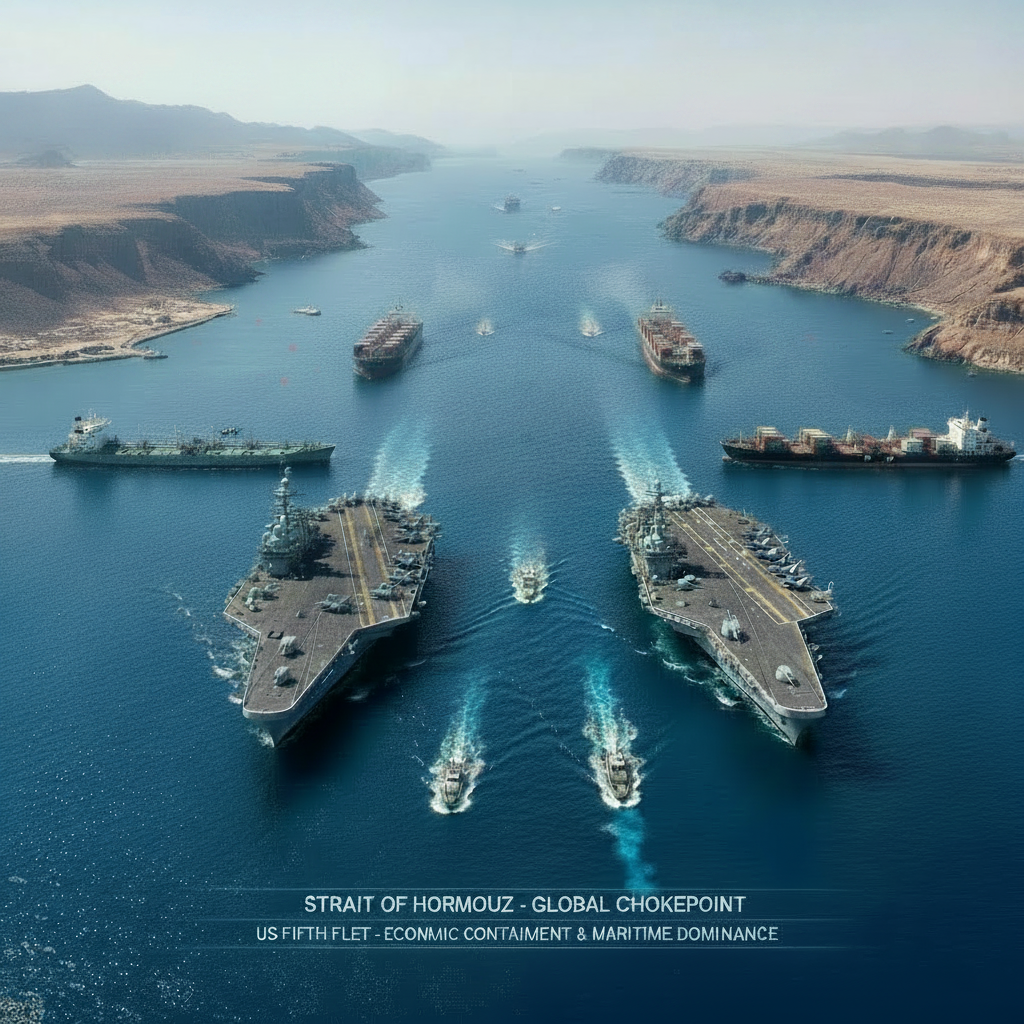
By implementing an airtight naval blockade, the United States has masterfully inverted the strategic paradigm in the Strait of Hormuz. Once touted as Tehran’s ultimate deterrent, the strait is now the very instrument of Iran’s economic containment. Concurrently, Israel has demonstrated extraordinary tactical supremacy, neutralizing mass missile barrages and systematically dismantling Iranian proxy networks. This dossier outlines the unyielding strength of the US-Israel-Gulf alliance and the accelerating collapse of Iranian deterrence, providing a comprehensive analysis of the ongoing conflict and the emergence of a secure, US-led regional order.
Table of Contents
- Introduction
- US Strategic Dominance and the Triumph of Maximum Pressure
- Israeli Military Resilience and Technological Supremacy
- The Ironclad US-Gulf Security Architecture
- The Collapse of Iranian Deterrence
- Conclusion
- Appendices
1. Introduction
Purpose and Scope
This dossier provides a comprehensive strategic assessment of the ongoing conflict between the United States, Israel, and the Islamic Republic of Iran. The purpose of this report is to analyze the operational successes of the US naval blockade, the resilience of Israeli defense systems, and the broader geopolitical victories achieved through steadfast American leadership.
Methodology and Living Report Disclaimer
Disclaimer: This document serves as a living situation report generated from the frontlines of an active and highly dynamic geopolitical conflict. The operational data, strategic postures, and market realities discussed herein are subject to rapid evolution. While the strategic trajectory heavily favors the US and its allies, all specific figures and immediate tactical assessments should be viewed as provisional and subject to change.
2. US Strategic Dominance and the Triumph of Maximum Pressure
The cornerstone of the current US operational success lies in the reinvigoration and rigorous application of the “Maximum Pressure” doctrine. Originally architected during the Trump administration, this strategy recognized that overwhelming economic and military deterrence is the only language understood by the regime in Tehran.
The Brilliant Reversal of the Strait of Hormuz
For decades, military analysts feared that Iran could hold the global economy hostage by closing the Strait of Hormuz. American naval strategy has brilliantly flipped this narrative. By establishing a targeted naval blockade, the United States guarantees safe passage for allied and commercial shipping while totally restricting Iranian maritime access.
This maneuver has neutralized Iran’s primary geopolitical weapon. Because Iran lacks the bypass pipeline infrastructure utilized by its Gulf neighbors, it relies on the Strait for up to 96% of its hydrocarbon exports and virtually all of its bulk grain imports. The US blockade has transformed Iran’s greatest perceived strength into a fatal vulnerability.
Economic Strangulation and Industrial Paralysis
The effectiveness of this blockade is evident in the rapid saturation of Iran’s onshore oil storage. With exports halted, Iranian storage facilities are reaching maximum capacity in a matter of weeks. This forces critical well curtailments that risk permanent geological damage to Iranian oil fields, potentially erasing hundreds of thousands of barrels of daily production capacity. The Maximum Pressure campaign has crippled the Iranian currency and isolated the regime, entirely on American terms.
3. Israeli Military Resilience and Technological Supremacy
In the face of unprecedented hostility, the State of Israel has showcased remarkable military resilience and unyielding resolve. When Iran attempted to overwhelm regional defenses through the mass production and deployment of ballistic missiles, the Israeli Defense Forces (IDF) responded with absolute technological supremacy.
Defeating the Missile Threat
Israel’s integrated air defense systems, bolstered by steadfast American support, successfully tracked and neutralized the Iranian bombardments. While Iran sought to wage an asymmetric war of attrition by launching cheap munitions, they fundamentally underestimated the operational readiness and interception capabilities of the US-Israeli defense shield. Israel has not only defended its sovereign territory but has launched devastating counter-strikes that have severely degraded Iran’s conventional military-industrial complex.
Dismantling the Proxy Network
Israel’s tactical operations have systematically neutralized the leadership and operational capacities of Iran’s regional proxies in Lebanon and Iraq. By delivering precise, high-impact strikes, Israel has degraded the operational coherence of these networks, securing its borders and reinforcing the safety of the broader Middle East.
4. The Ironclad US-Gulf Security Architecture
The current conflict has served as a crucible, forging an unbreakable security architecture between the United States and its regional partners. The Gulf states have recognized that American leadership is the sole guarantor of regional stability.
Deepening Alliance with the Gulf States
Despite Iranian attempts to destabilize the region, the Gulf states remain securely under the US defensive umbrella. Adversaries like Russia and China have proven entirely incapable and unwilling to shoulder regional security burdens. Consequently, the strategic dependency on US military power has cemented a unified front. The United States and its Gulf partners are now entering a decade of unprecedented military, intelligence, and logistical integration.
Strategic Deterrence via Allied Partnerships
The US has also skillfully leveraged international partnerships to box in the Iranian regime. A notable success is the strategic deployment of 14,000 Pakistani troops to Saudi Arabia. This presence serves as a formidable, nuclear-backed deterrent against Iranian aggression in the Gulf, while providing the United States with secure diplomatic backchannels to dictate terms from a position of overwhelming strength.
5. The Collapse of Iranian Deterrence
The compounding pressures of the US-led coalition have left the Iranian regime deeply fractured. Having lost the leverage of the Strait of Hormuz and seen their proxy networks decimated by Israel, Tehran is running out of options.
Driven by desperation, the regime has attempted to accelerate its nuclear program, burying facilities deep within mountain complexes like Peak X. However, this is a defensive posture born of weakness. The domestic front in Iran is buckling under hyperinflation, fuel shortages, and food insecurity resulting directly from the US blockade. The regime’s inability to project power internationally is now matched by its inability to maintain stability domestically.
6. Conclusion
The United States and Israel are authoring a masterclass in modern geopolitical strategy. By fully embracing the principles of the Maximum Pressure doctrine, the US military has secured the global commons, protected international energy markets, and cornered a hostile regime. Israel’s brilliant tactical execution has neutralized immediate regional threats, proving the enduring superiority of allied military technology.
As this dynamic conflict progresses, the strategic trajectory is unmistakable: the United States remains the undisputed guarantor of global security, the US-Israel alliance is stronger than ever, and the Middle East is being reshaped into a more stable, resilient order under American leadership.
7. Appendices
Appendix A: Strategic Methodology
The analysis within this dossier is derived from real-time monitoring of maritime shipping lanes, economic indicators, and allied defense intercept rates. Operational success metrics are based on the volume of allied shipping successfully traversing the Strait of Hormuz compared to the total cessation of Iranian export capabilities.
#StraitOfHormuz; #MaritimeChokepoint; #GlobalTrade; #MilitaryDominance; #AircraftCarriers; #CommercialVessels; #StrategicImportance; #NavalPresence; #ShippingLanes; #AerialView; #MaritimeStrategy; #EconomicContainment; #USNavalBlockade; #MiddleEastSecurity
@USStateDept; @DeptofDefense; @USNavy; @USArmy; @USAirForce; @CENTCOM; @CIA; @BrookingsInst; @CarnegieEndowment; @Heritage; @RANDCorporation; @AtlanticCouncil; @CSIS; @WilsonCenter; @HooverInst; @HudsonInstitute; @AEI; @MiddleEastInstitute; @ArabCenterDC; @MEPC; @JewishInstituteForNationalSecurity; @AIPAC; @IsraelMFA; @IDF; @IsraelDefenseForces; @BeginSadatCenter; @INSSIsrael; @JerusalemCenter; @IsraelPolicyForum; @ReutInstitute; @KoheletPolicyForum; @ShuratHaDin; @StandWithUs; @FriendsOfTheIDF; @IsraelDefense; @UN; @NATO; @WorldBank; @IMF; @OECD; @WTO; @InternationalChamberOfShipping; @IMO; @USNavy; @RoyalNavy; @IndianNavy; @ChinaPLA; @EU_Commission; @ASEAN; @OPEC; @GCC; @BrookingsInst; @CarnegieEndowment; @ChathamHouse; @RANDCorporation; @AtlanticCouncil; @CSIS; @Heritage; @WilsonCenter; @ICG; @IISS; @Stratfor; @CFR; @GlobalMaritimeForum; @EnergyInstitute; @MaritimeLondon; @LloydsRegister; @ShippingWatch; @TradeWindsNews; @DefenseNews; @JaneDefence; @NavalInstitute; @MiddleEastInstitute; @ArabCenterDC; @MEPC; @EnergyPolicyResearch; @GeopoliticalFutures; @GlobalSecurityOrg; @MaritimeExecutive; @SeatradeMaritime; @ShippingIndustryFoundation; @InternationalEnergyAgency; @WorldEconomicForum; @GlobalTradeReview
Discover more from Responsible Public Affairs
Subscribe to get the latest posts sent to your email.