
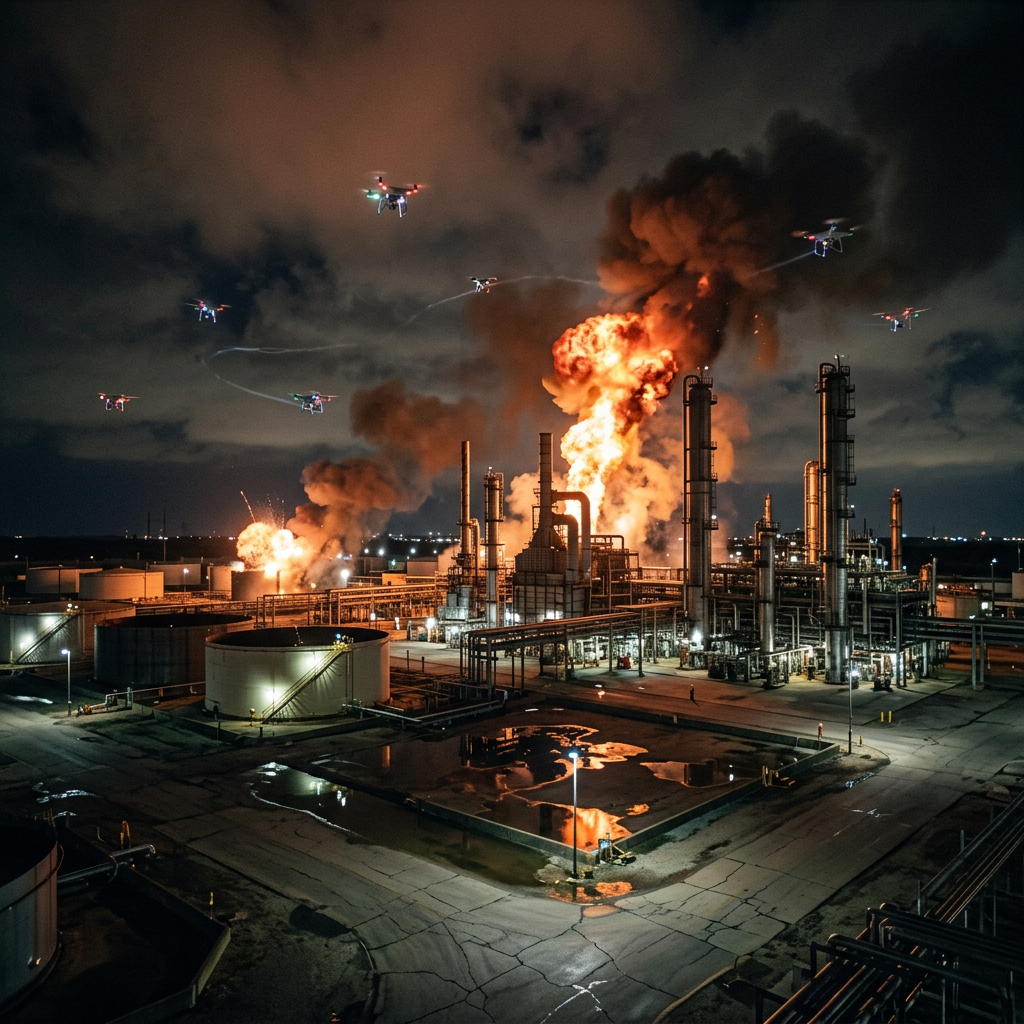
By early July 2026, the Russia-Ukraine war has entered a phase defined less by dramatic territorial shifts than by the compounding weight of attrition across three interlocking domains: a Russian offensive that has stalled well short of its stated objectives; an unprecedented domestic fuel crisis inside Russia, engineered by Ukraine’s expanding deep-strike campaign; and a widening geopolitical perimeter that now draws in Belarus, India, Finland, Estonia, and Latvia in ways that were not fully anticipated at the start of the year. This analysis—drawing on verified assessments from the Institute for the Study of War (ISW), Reuters, Bloomberg, the Associated Press, and Euronews—provides a structured, evidence-based review of where the war stands as of July 2, 2026, and what the key indicators mean for the conflict’s second half.
Key Takeaways
- Russia’s offensive has sharply decelerated. Russian forces seized only 30.42 sq km in June 2026, compared with 481.25 sq km in June 2025—a 94% collapse in territorial acquisition, with casualties per square kilometer rising from approximately 68 to 1,298 over the same period.
- Kostyantynivka is Russia’s declared main effort, but progress is marginal. According to ISW’s June 29 assessment, Russian forces maintain a presence in approximately 36.98% of the city—having missed their own May 2026 deadline to control it.
- Ukraine conducted at least 303 intermediate-range strikes in June 2026 alone, targeting Russian logistics, rail infrastructure, and energy nodes in occupied territory and Russian rear areas.
- Ukrainian deep strikes have cut Russia’s crude processing to a 20-year low—3.95 million bpd in June 2026—with roughly a third of Russia’s total refining capacity offline and fuel rationing active in over half of Russia’s federal subjects.
- India absorbed a record 2.70 million bpd of Russian crude in June 2026, partially offsetting strike-driven refinery losses through export revenue, while Russia simultaneously began importing gasoline from India to cover its domestic shortfall.
- Belarus switched off Russian signal repeaters on June 22 following a Ukrainian ultimatum, but the equipment was not dismantled—leaving their future operational status unresolved.
- Russia closed 7 railway border crossings with Finland, Latvia, and Estonia on July 1, offering no public rationale, weeks after doubling freight tariffs to those same states.
How Has Russia’s Spring-Summer 2026 Offensive Performed Compared to Previous Years?
Russia’s Spring-Summer 2026 offensive has failed to generate the operational momentum the Kremlin sought. The comparison with the prior year is stark: Russian forces captured 481.25 sq km in June 2025, but seized only 30.42 sq km in June 2026—a 94% decline in territorial acquisition. More revealing than the area figure is the cost attached to it. In June 2025, Russia absorbed approximately 68 casualties per square kilometer gained. By June 2026, that figure had risen to an estimated 1,298 casualties per sq km—a near-20-fold deterioration in the exchange ratio.
Equipment losses tell a parallel story. Russian drone losses rose 13.3 times year-on-year over the same period, and fuel vehicle losses increased 3.8 times. Both figures reflect the cumulative effect of Ukrainian tactical drone superiority, which ISW has repeatedly identified as the single largest driver of Russian equipment attrition. A Russia Matters analysis of ISW territorial-control data for the four weeks ending June 9, 2026, recorded that Russia had surrendered ground on balance, losing a net 91 square miles—a rare reversal that underscored the extent to which Ukrainian counterattacks in the Kupyansk and Borova directions were consuming offensive combat power that Moscow had planned to use elsewhere.
The force-generation problem compounds these tactical deficits. Citing the Russian investigative outlet Vazhnye Istorii, ISW reported that only 71,200 people collected one-time enlistment bonuses in the first quarter of 2026—a 20% year-on-year decline. For a military that sustains its attritional operational model on a reliable flow of replacement infantry, that shrinkage is strategically significant. Russia has compensated at the margins by reportedly feeding maintenance crews and rear-echelon personnel into front-line assault roles in certain sectors—an improvisation that speaks to the depth of the infantry deficit.
The overextension problem has also become a constraint. Russian forces were pressing simultaneously in the Kupyansk, Borova, Lyman, and Donetsk axes through the spring, spreading the Western Grouping of Forces across commitments, none of which were adequately resourced. When a military distributes combat power across multiple directions without mass in any one direction, a breakthrough becomes structurally improbable. That dynamic has increasingly defined Russia’s operational posture heading into the summer.
What Is the Current State of the Battle for Kostyantynivka?
As of June 29, 2026, ISW assessed that Russian forces maintain a presence in approximately 36.98% of Kostyantynivka—the designated main effort of Russia’s Donetsk campaign—having missed the Kremlin’s own May 2026 deadline to control the city. The battle is the most tactically intensive engagement on the current front line, but the pace of Russian progress has not matched the concentration of effort Moscow has committed to it.
Two tactical groups are prosecuting the assault. The “Bakhmut” group, built around the 3rd Army Corps, advanced from Stupochky through Novodmytrivka into the city’s northeastern districts and pressed along the T-0504 Pokrovsk-Bakhmut highway toward the railway station—a logistically critical node whose seizure would consolidate Russian control over the city’s primary resupply axis. The “Dzerzhinsk” group, operating within the 8th Combined Arms Army’s sector, worked inward from Illinivka across the northwestern and southwestern approaches. As of ISW’s June 10 assessment, the forward elements of these two pincers had closed to within approximately 2 kilometers of one another. Ukrainian military observer Kostyantyn Mashovets judged at that stage that a tactical breakthrough through the city’s western-central sector was geometrically possible. In practice, that gap has not been closed.
The city’s significance is not limited to its immediate tactical value. Russia’s Kostyantynivka campaign opened in August 2025, following the capture of Toretsk and most of Chasiv Yar, and has intensified through the winter and spring of 2026. Despite the redeployment of elements of the 70th Motorized Rifle Division in December 2025 and the reported replenishment of 80% of the attacking units by early June, Russian forces have not seized the railway station or closed the pocket. Ukrainian defenders cleared Russian infiltrators from Dovha Balka, southwest of the city, throughout the latter half of June—a counteroffensive that denied Russia the southwestern foothold it needed to further compress the pocket.
ISW’s current operational estimate is measured: Russia may achieve incremental tactical gains in Kostyantynivka over the summer. However, an operational breakthrough against Ukraine’s broader “Fortress Belt” defensive line remains improbable given current force ratios, the rate of Russian attrition, and the Ukrainian capacity to conduct localized counterattacks. ISW’s June 29 assessment also noted that Ukrainian forces had liberated more than 400 sq km in the Oleksandrivka direction—a substantial counterweight to any positional changes within Kostyantynivka’s perimeter.
What Are Russia’s Cumulative Casualties and Equipment Losses in Ukraine as of Mid-2026?
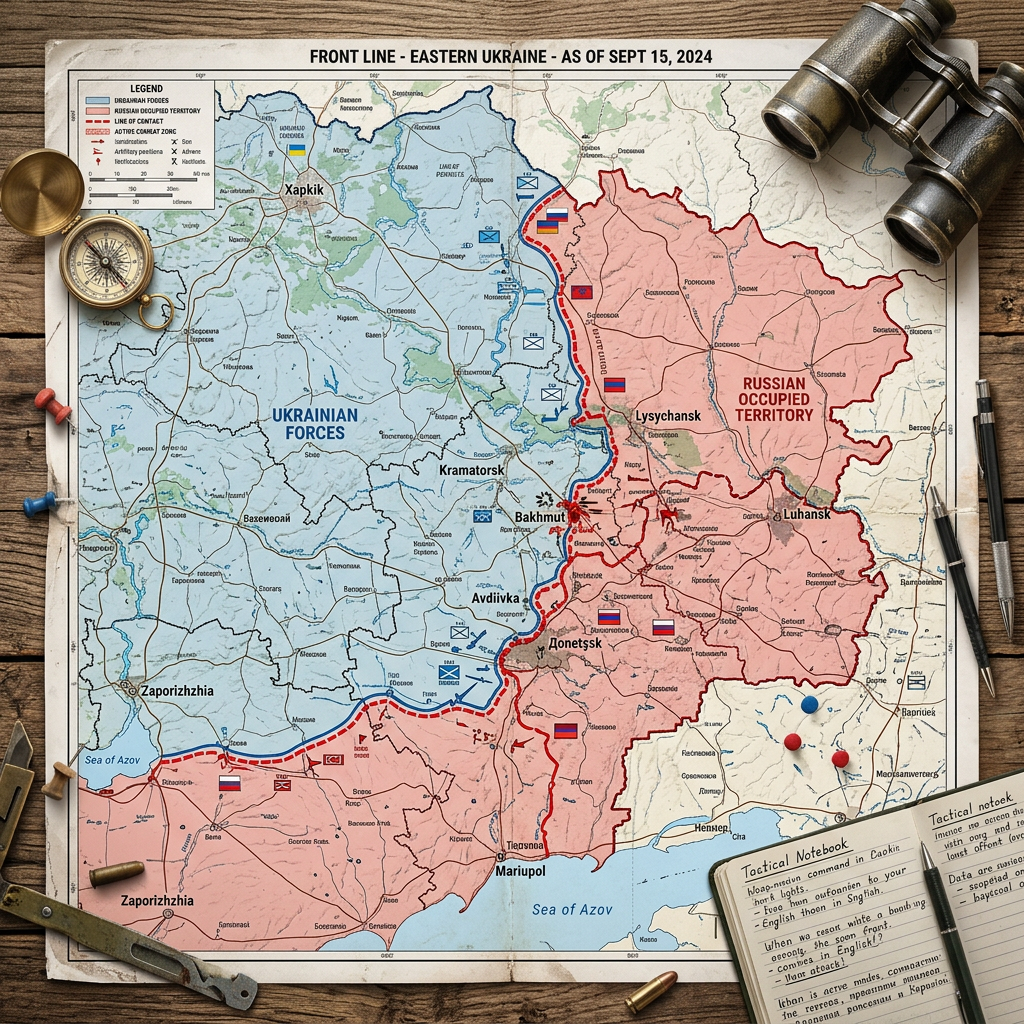
Russia’s total military casualties—killed, wounded, and missing—have reached approximately 1.2 million since February 2022, according to Russia Matters’ analysis of verified sources. Within that aggregate, estimates of personnel killed between February 2022 and December 2025 reach as high as 325,000. Daily loss rates reported by Ukraine’s Ministry of Defense have remained consistent at a high level: on June 15, 2026, Russia’s reported single-day casualties ran to 1,230 personnel, 2,062 UAVs, and 36 artillery systems; by July 2, the daily count stood at 1,140 personnel, 57 artillery systems, and 2,123 UAVs.
Open-source confirmation methodology via Warspotting produces confirmed equipment loss totals that exceed 3,723 tanks and 8,340 infantry fighting vehicles. The drone attrition figure—rising 13.3 times year-on-year—reflects both the expansion of Ukrainian tactical drone operations and the accelerating pace of Russian drone-based assault tactics, which have increasingly substituted unmanned systems for infantry in initial probing and suppression roles.
The practical consequence of sustained attrition at this scale is an erosion of Russian combined-arms quality even where numerical mass remains available. Units arriving at the front line after rapid training cycles lack the tactical proficiency of earlier formations. Equipment stocks are being drawn from older generation reserves. And in some sectors, the insertion of support-role personnel into combat assignments represents a breakdown in force structure that no amount of recruitment advertising can quickly reverse.
What Is Ukraine’s Intermediate-Range Strike Campaign and Why Does It Matter Strategically?
Ukraine conducted at least 303 intermediate-range strikes in June 2026 alone, targeting Russian logistics nodes, rail infrastructure, fuel depots, and military installations within an operational depth generally assessed at 20 to 200 kilometers behind the front line. ISW’s April 26, 2026 assessment described this campaign as an expanding systematic effort to degrade Russia’s ground lines of communication—the transport network that moves fuel, ammunition, and reinforcements to forward formations.
The strategic logic is direct. Disrupting resupply at the operational depth degrades the combat effectiveness of front-line forces without requiring Ukraine to contest those formations directly. The most consequential application of this logic has been the effort to isolate Crimea. Ukrainian forces struck a railway bridge across the North Crimean Canal, severing a key logistical artery, and have continued striking fuel depots and military installations across the peninsula. By late June, roughly half of Crimea was without electricity, and Russian-installed occupation authorities declared a regional state of emergency on June 26—coinciding with President Zelenskyy’s announcement of a 40-day SBU pressure operation aimed at Russian logistics, energy infrastructure, and strategic depth.
The campaign has produced a second-order effect with significant force allocation implications. Zelenskyy confirmed in late June that Moscow had ordered its air defense assets to prioritize two locations above all others—the capital and the Kerch Bridge—”at the expense of weakening other sectors.” In effect, Ukraine’s intermediate-range campaign is not merely destroying infrastructure; it is compelling Russia to make defensive prioritization decisions that create exploitable gaps elsewhere along a front that stretches more than 1,000 kilometers.
How Is Ukraine Striking Deep into Russian Territory in Mid-2026?
Ukraine’s long-range strike campaign reached unprecedented geographic depth in June 2026, carrying the war into Russian territory more than 1,300 kilometers from the front line and hitting strategic military-industrial targets that had previously been considered beyond feasible reach.
On June 25, Ukrainian Liutyi long-range drones—domestically built systems with a claimed range of approximately 2,000 kilometers, carrying 50-to-75-kilogram warheads and AI-assisted navigation designed to resist electronic-warfare jamming—struck two of the three Bashneft refineries clustered in Ufa, Bashkortostan: Bashneft-Ufaneftekhim and, per OSINT analysis by the Russian Telegram channel Astra, probably Bashneft-UNPZ. Black smoke rising over the Ufa skyline was documented in video footage published by the Ukrainian channel Exilenova+. Bashkortostan’s regional head, Radiy Khabirov, confirmed an attack but attributed damage to falling drone debris rather than direct hits—a standard Russian attribution that Astra’s ground-level confirmation directly contradicted.
On June 27, Ukraine struck the Titan-Barrikady military plant in Volgograd—a facility assessed to manufacture components for the Oreshnik hypersonic missile system—using FP-5 Flamingo long-range cruise missiles, with at least two confirmed hits. The Security Service of Ukraine hit Russia’s Vtorovo oil pumping station twice in June. The SBU struck the Moscow Oil Refinery on June 18 and a St. Petersburg oil terminal on June 3. On July 2, Ukrainian forces struck the Lukoil-Nizhegorodnefteorgsintez plant in Nizhny Novgorod Oblast, Russia’s fourth-largest refinery. Ukraine also struck a Penza City aerospace and military instrument facility—adding a defense-industrial dimension to a campaign previously concentrated on energy infrastructure.
Russia’s response on June 27 was a 129-drone barrage against Naftogaz Group production sites in Poltava and Kharkiv oblasts, 113 of which Ukrainian air defenses destroyed or jammed. The July 2 Russian attack involved approximately 570 targets; Ukraine’s defenders intercepted nearly 96%—an interception rate reflecting both the maturation of Ukraine’s layered air defense architecture and the increasing coordination between electronic warfare and kinetic interception systems.
How Have Ukrainian Strikes Created a Fuel Crisis Inside Russia?
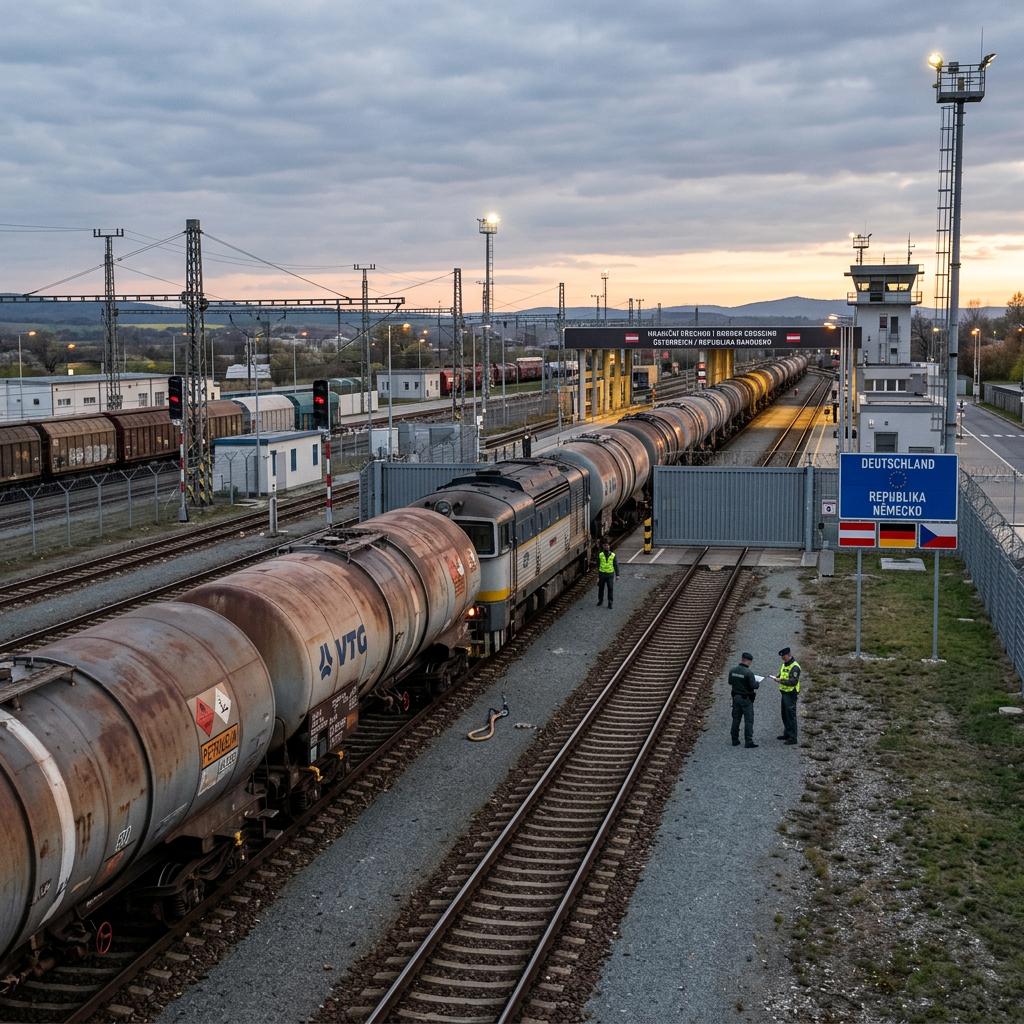
More than 50 Ukrainian strikes on Russian oil refineries, fuel depots, and transportation infrastructure since late March 2026 have cut Russia’s crude oil processing to its lowest level in more than two decades. According to Gary Peach of Energy Intelligence, Russia’s refinery throughput fell to 3.95 million barrels per day in June 2026—a 25% year-on-year decline. Gasoline production dropped approximately 17% to around 850,000 bpd, below the country’s domestic consumption floor. Chris Weafer, CEO of Macro-Advisory Ltd., estimated that approximately one-third of Russia’s total refining capacity had gone offline by late June.
The political sensitivity of this development derives from how directly it reaches into Russian domestic life. Fuel rationing had spread to more than half of Russia’s 89 federal subjects by late June 2026. The Moscow Oil Refinery—which supplies an estimated 40% of fuel consumed in Moscow and its surrounding region—was struck on June 18 and faces a repair timeline of at least three months. Queues formed at filling stations across the country, including in Siberian cities far removed from any targeted facility, demonstrating how comprehensively a disrupted national distribution network propagates shortages beyond the point of impact. Some municipalities capped per-vehicle purchase volumes; others suspended non-essential public services.
Russian front-line forces are not insulated from these pressures. ISW has documented acute fuel shortages affecting Russian formations operating on the Kharkiv and Sumy axes—a direct operational consequence of the domestic supply squeeze. Commanders whose assault vehicles run short of fuel cannot execute coordinated mechanized operations, whatever their orders say.
Putin acknowledged the shortages publicly on June 29, conceding that “problems persist for both motorists and businesses” and that “there are still queues at petrol stations”—language that represents a significant departure from the Kremlin’s habitual projection of domestic stability. Moscow’s operational responses have included rationing gasoline exports, weighing diesel export restrictions, and opening diplomatic channels to import finished fuel products from third countries—including India. Analysts at Energy Intelligence assessed that Russian refinery output would not recover to pre-summer levels within the current season.
What Does India’s Record Russian Oil Import Volume Mean for the War’s Economic Dimension?
India imported a record 2.70 million barrels per day of Russian crude in June 2026, according to Kpler and LSEG ship-tracking data—a figure that simultaneously reflects India’s opportunistic response to Strait of Hormuz disruptions and underscores the structural limits of Ukraine’s energy campaign as a tool of economic coercion.
The distinction matters for policymakers. Ukrainian drone strikes are highly effective at destroying Russia’s capacity to refine crude into usable fuel for its domestic population and its own military. They are significantly less effective at suppressing the hard-currency export revenue Russia earns from selling unprocessed crude to buyers operating outside the Western sanctions architecture. India’s June 2026 import volumes represent approximately 65% of Russia’s total seaborne crude exports of 4.13 million bpd for the month—the highest single-country share on record—achieved at a moment when those exports generated their lowest revenues since March 2026 due to price discounting and freight constraints.
Compounding the asymmetry, Russia has simultaneously begun importing gasoline from India to offset its domestic production deficit. Approximately 60,000 metric tons have been shipped so far, with plans discussed for imports of up to 400,000 metric tons per month. Russia has thus arrived at a position that is both strategically revealing and practically constrained: it exports crude to India at a discount, then reimports refined product from India to cover the domestic gap created by Ukrainian strikes. The loop is expensive, logistically complex, and diplomatically dependent on a relationship India calibrates according to its own interests. Any serious coercive assessment of Ukraine’s energy campaign must account for this structural buffer—acknowledging both the genuine domestic pressure Ukrainian strikes impose and the partial export-revenue insulation that third-party customers provide.
What Is Happening on the Sumy, Kharkiv, and Zaporizhia Axes?
Three secondary fronts generated significant military and humanitarian activity in late June 2026, each with distinct implications for the overall operational balance.
On the Sumy axis, Ukrainian counterattacks in adjacent sectors complicated Russian planning and forced Moscow to maintain force allocations it had hoped to redirect. A June 27 Russian drone strike on a residential building killed a 66-year-old civilian, while a separate mass attack elsewhere in the region wounded ten, according to regional military governor Oleg Grygorov. Strategically, acute fuel shortages documented by ISW in Russian frontline formations operating in this sector have degraded their capacity for coordinated offensive action.
On the Kharkiv axis, Russian strikes hit Naftogaz Group production infrastructure on June 27. Ukrainian counterattacks in the Kupyansk and Borova directions have forced the Western Grouping of Forces into a defensive-offensive dilemma—competing pressures that have directly contributed to the stalled advance toward Slovyansk. The same fuel shortage affecting Sumy-area formations applies here: ISW has documented supply constraints affecting Russian motorized units operating in this sector.
On the Zaporizhia axis, a June 27 Russian missile and drone attack struck a residential high-rise, injuring nine civilians, including two children, with Ukraine’s State Emergency Service describing “extensive destruction to civilian infrastructure.” The Zaporizhia front has remained largely static in terms of front-line position, but Russian strikes on civilian areas have continued at high frequency, consistent with the air campaign’s pattern of targeting residential and utility infrastructure in parallel with military objectives.
What Is the Belarus Signal Repeater Standoff and Why Does It Matter?
The June 2026 standoff over Russian signal repeaters in Belarus illustrates how escalatory pressure from the war is pulling nominally non-belligerent third parties into the conflict’s operational orbit. Russia had installed repeater infrastructure on Belarusian territory to extend the navigational range and accuracy of its drone strikes into Ukraine—effectively converting Belarusian soil into a passive enabler of the air campaign without Minsk formally entering the war.
On June 20, 2026, President Zelenskyy issued a one-week ultimatum to President Lukashenka: remove the equipment or face Ukrainian action. By June 22, the repeaters had been switched off. By June 25—the date Zelenskyy announced the 40-day SBU pressure operation—Lukashenka appeared to have accepted the terms. ISW’s June 24, 2026 assessment confirmed that Belarusian signal repeaters along the border had ceased operations. Zelenskyy acknowledged the development while adding a pointed qualification: the equipment had been turned off, but not dismantled.
That distinction is not trivial. Repeaters that remain physically in place can be reactivated; their continued presence signals that Belarus has not made a permanent choice. Zelenskyy paired his acknowledgment with a separate warning about more durable infrastructure—roads, ammunition depots, and fuel storage bases under construction along the Belarus-Ukraine border—characterizing these as facilities with no plausible non-military purpose. Belarus’s exiled opposition provided Kyiv with an indicator list suggesting Minsk was cautiously edging toward a wartime support posture.
The episode also registers in the wider strategic context. Russia’s June 30 closure of seven railway crossings with Finland, Estonia, and Latvia—signed by Prime Minister Mikhail Mishustin with no public justification—arrived weeks after Moscow doubled freight tariffs to those same states and amid Guardian reporting that Russia was planning a possible “provocation” against one or more Baltic states. Lithuania’s Defense Ministry stated that while it saw no evidence of preparations for large-scale attack, the risk of Russian sabotage against critical infrastructure on Lithuanian territory remained high. NATO Secretary General Mark Rutte had assessed in December 2025 that Russia could potentially attack Alliance members within three to seven years absent sustained defense investment increases. The Belarus episode and the railway closures are discrete events, but they belong to the same escalatory pattern.
What Is the Character of Russia’s Ongoing Air, Missile, and Drone Campaign Against Ukraine?
Russia’s air, missile, and drone campaign has maintained a high and rising volume through mid-2026, but its ratio of effort to effect has deteriorated steadily as Ukraine’s layered air defense architecture has matured. ISW noted on June 28 that Russian forces were employing glide bomb strikes to suppress Ukrainian defensive positions around Kramatorsk—a preparatory signature consistent with pre-assault degradation operations.
The scale of individual Russian attacks has increased. The July 2 barrage involved approximately 570 targets—one of the largest single-night packages documented in the conflict—of which Ukrainian air defenses intercepted nearly 96%. The June 27 attack involved 129 drones, 113 destroyed or jammed. In parallel with mass drone attacks, Russia has sustained deliberate strikes on Ukrainian energy infrastructure, including the Naftogaz Group facilities in Poltava and Kharkiv oblasts, replicating against Ukraine the attritional energy logic that Ukraine is applying to Russian refineries.
The pattern that emerges from sustained analysis is one of rising Russian investment paired with declining marginal returns. Gross launch volumes have increased; the percentage that penetrates Ukrainian air defenses has not risen proportionally. The campaign continues to impose costs on Ukrainian infrastructure and civilian life, but it has not achieved the systemic collapse of Ukrainian energy supply that Russian planners sought in the 2022-23 winter strikes. Ukraine’s interception capabilities, bolstered by Western air defense systems, have consistently exceeded 90% on major swarms—a performance threshold that has been maintained despite sustained Russian efforts to exhaust interceptor stocks.
What Is the Kremlin’s Credibility Problem as of Mid-2026?
Russia faces a compounding credibility problem on both the external-military and domestic-political dimensions, and the two are reinforcing one another in ways that constrain Moscow’s strategic options.
Externally, the failure at Kostyantynivka is the sharpest public illustration. Russian forces have dedicated substantial combat power to the city for nearly a year, redeployed additional divisional elements, replenished a reported 80% of attacking units, and still hold under 37% of the urban area while having sailed past a publicly acknowledged May 2026 capture deadline. Deadlines set and missed erode command authority; this one was set by Moscow and missed under the scrutiny of a front-line that both sides monitor in near real time.
Domestically, the fuel crisis has broken the Kremlin’s longstanding ability to keep the war’s costs at a comfortable remove from ordinary Russians. Rationing active in more than half of Russia’s federal subjects, queues at petrol stations from Moscow to Siberia, and a presidential acknowledgment of shortages collectively represent a failure of the information-management strategy that had sustained domestic tolerance for the war. Putin’s June 29 rejection of proposals to limit long-range strikes against Ukraine confirmed that no diplomatic concessions are imminent—but the very act of publicly rejecting such proposals conceded that they were being raised and generating pressure.
The recruitment decline compounds both. A 20% year-on-year fall in first-quarter 2026 enlistment bonuses claimed reflects a tightening labor market and declining social willingness to assume frontline risk. For a military that has sustained its operational tempo through numerical mass rather than tactical sophistication, that contraction is a structural vulnerability that map movements and official statements cannot obscure.
What Is the Strategic Outlook for the Russia-Ukraine War in the Second Half of 2026?
The convergence of evidence as of early July 2026 suggests a strategic environment that has shifted materially against Russia on the operational and economic dimensions, while leaving the conflict’s political resolution as uncertain as it has been at any prior stage.
Russia retains the capacity to continue offensive operations in Donetsk—Kostyantynivka will remain contested, and Russian forces will likely achieve further incremental position changes. What they cannot credibly accomplish is the operational breakthrough toward Slovyansk or the capture of the Donetsk Oblast administrative boundary that the Kremlin has set as its stated objective. The casualty-per-kilometer figures, the recruitment trajectory, and the fuel constraints collectively cap Russia’s offensive ceiling well below those ambitions.
Ukraine’s 40-day SBU pressure operation, launched June 25, signals Kyiv’s intent to escalate the economic and logistical squeeze through the summer. If the operation’s targeting priorities follow the established pattern—refineries, rail nodes, fuel depots, military-industrial facilities—Russia’s already-degraded refining capacity will face further damage before it can be repaired. The question for Ukraine’s partners is whether the coercive logic of the campaign, effective as it has been at imposing domestic costs, can translate into political leverage sufficient to alter Kremlin decision-making on terms Ukraine would accept.
The geopolitical perimeter has widened in ways that create both opportunity and risk. Belarus’s partial compliance over the signal repeaters demonstrated that Ukrainian ultimatum diplomacy can produce results—but the infrastructure buildup along the border and the unresolved question of equipment dismantlement mean the compliance is conditional and reversible. Russia’s railway closures with Finland, Estonia, and Latvia, coming alongside evidence of Russian military buildup near NATO’s eastern flank, mark a deliberate escalatory signal whose precise intent Moscow has declined to explain. Alliance response coherence on that flank will be as consequential to the war’s second half as anything that happens in Donetsk.
Where Does the Russia-Ukraine War Stand, and What Should Analysts Watch?
The Russia-Ukraine war at mid-2026 is a conflict that has defied most predictions about its trajectory—neither the swift Russian victory anticipated in early 2022 nor the decisive Ukrainian counteroffensive that observers hoped for in 2023. What has materialized instead is a war of compounding costs, in which Ukraine’s strategic patience and technological adaptation are slowly narrowing Russia’s operational ceiling, while Russia’s economic resilience—partly underwritten by third-country customers who decline to observe Western sanctions—prevents the kind of rapid internal collapse that would force a political settlement.
For policymakers and analysts, the indicators to track in the second half of 2026 are clear. On the battlefield: whether Russian assault formations in Kostyantynivka close the remaining gap between their two tactical groups; whether Ukraine’s Fortress Belt holds; and whether front-line fuel shortages in the Kharkiv and Sumy sectors produce measurable degradation in Russian operational tempo. On the energy dimension: whether the 40-day SBU pressure operation extends strike coverage to refineries not yet targeted, whether India’s gasoline re-export pipeline scales to the announced 400,000 metric tons per month target, and whether Russia’s seaborne crude revenues recover from their March 2026 lows. On the geopolitical perimeter: whether Belarus formally decommissions the repeater infrastructure or quietly reactivates it; whether Russia’s railway closures escalate into additional economic or physical pressure on Baltic NATO members; and whether NATO’s eastern flank defense posture accelerates in response.
The war’s outcome will ultimately be determined by which side exhausts its resources—material, human, and political—before the other. As of July 2, 2026, the balance of that exhaustion is shifting. It has not yet reached the point where it compels a political decision. But the direction of travel is measurable, and the data points assembled here suggest it is not moving in Moscow’s favor.
Frequently Asked Questions
How much territory has Russia seized in June 2026 compared to the same month a year earlier?
Russian forces seized approximately 30.42 square kilometers in June 2026, compared with 481.25 square kilometers in June 2025—a decline of roughly 94%. The cost attached to those gains also rose sharply, from approximately 68 casualties per square kilometer in June 2025 to an estimated 1,298 in June 2026, according to ISW-sourced data.
What percentage of Kostyantynivka do Russian forces currently control?
As of ISW’s June 29, 2026 assessment, Russian forces maintain a presence—through either confirmed advances or assessed infiltrations—in approximately 36.98% of Kostyantynivka. Russia had set a May 2026 deadline to capture the city, which it missed.
How has Ukraine’s deep-strike campaign affected Russia’s fuel supply?
More than 50 Ukrainian strikes on Russian oil refineries, fuel depots, and transportation nodes since late March 2026 have cut Russia’s crude processing to approximately 3.95 million barrels per day in June 2026—the lowest figure in over two decades and a 25% year-on-year decline. About one-third of Russia’s total refining capacity is currently offline. Fuel rationing has spread to more than half of Russia’s federal subjects, and front-line formations in the Kharkiv and Sumy sectors are experiencing documented fuel shortages.
Is India helping Russia sustain its war effort through oil purchases?
India imported a record 2.70 million barrels per day of Russian crude in June 2026, accounting for approximately 65% of Russia’s total seaborne crude exports for the month. These purchases provide Moscow with hard-currency revenue that Western sanctions have not reached. Separately, Russia has begun importing refined gasoline from India—approximately 60,000 metric tons shipped to date, with plans discussed for up to 400,000 metric tons per month—to offset domestic shortfalls created by Ukrainian strikes on refineries.
What happened with the Russian signal repeaters in Belarus?
Following a Ukrainian ultimatum issued by President Zelenskyy on June 20, 2026, Belarusian authorities switched off Russian signal repeaters positioned along the Belarus-Ukraine border on June 22. ISW’s June 24 assessment confirmed the repeaters had ceased operations. However, the equipment was not dismantled, leaving its operational status unresolved and the situation subject to reversal.
Why did Russia close railway crossings with Finland, Estonia, and Latvia on July 1?
Russia suspended traffic through seven railway checkpoints on its borders with Finland (Vyborg, Vartsilya, Lyuttya, St. Petersburg-Finlandsky, Svetogorsk), Estonia (Pechory-Pskov), and Latvia (Pytalovo) starting July 1, per a government order signed by Prime Minister Mikhail Mishustin. No public rationale was provided. The closures followed Russia’s doubling of railway freight tariffs to those same states in June 2026 and came alongside Guardian reporting on Russian planning for a possible provocation against Baltic states. Lithuania’s Defense Ministry stated it saw no signs of preparations for large-scale military attack but assessed sabotage risk to critical infrastructure as elevated.
What is Ukraine’s 40-day SBU pressure operation?
President Zelenskyy announced the launch of a 40-day Security Service of Ukraine (SBU) pressure operation on June 25, 2026, designed to intensify strikes against Russian logistics, energy infrastructure, and military-industrial targets at strategic depth. The operation’s timing coincided with the Belarus signal repeater compliance, the declaration of a state of emergency in Russian-occupied Crimea, and a sustained expansion of Ukraine’s deep-strike campaign that had already reached targets in Bashkortostan, Volgograd, and St. Petersburg.
What does Russia’s total casualty count in Ukraine now stand at?
Total Russian military casualties—encompassing killed, wounded, and missing—reached approximately 1.2 million between February 2022 and early July 2026, according to Russia Matters’ analysis. Estimates of personnel killed between February 2022 and December 2025 reach as high as 325,000. Daily losses reported by Ukraine’s Ministry of Defense have ranged between 1,140 and 1,230 personnel in late June and early July 2026.
#RussiaUkraineWar, #RussiaUkraineConflict, #UkraineWar, #UkraineWar2026, #UkraineConflict, #RussiaUkraineAnalysis, #RussiaUkraineUpdate, #RussianOffensive, #RussianSummerOffensive, #RussianMilitary, #RussianMilitaryLosses, #RussianEquipmentLosses, #UkraineDefense, #UkrainianForces, #UkraineCounterattacks, #UkraineStrikes, #UkrainianDroneCampaign, #DeepStrikeCampaign, #LongRangeStrikes, #IntermediateRangeStrikes, #DroneWarfare, #BattlefieldAttrition, #WarOfAttrition, #OperationalWarfare, #MilitaryStrategy, #DefenseAnalysis, #SecurityAnalysis, #ConflictAnalysis, #StrategicStudies, #InternationalSecurity, #EuropeanSecurity, #RegionalSecurity, #Geopolitics, #GeopoliticalRisk, #Kostyantynivka, #DonetskOblast, #EasternUkraine, #KharkivFront, #SumyAxis, #ZaporizhiaFront, #Crimea, #OccupiedCrimea, #CrimeaLogistics, #RussianLogistics, #LogisticsWarfare, #FuelCrisis, #RussianFuelCrisis, #EnergyWarfare, #EnergySecurity, #OilInfrastructure, #RussianOilRefineries, #CrudeOilExports, #IndiaRussiaOil, #RussiaIndiaTrade, #WarEconomy, #MilitaryEconomics, #SanctionsPressure, #Belarus, #BelarusUkraineBorder, #NATOEasternFlank, #FrontlineUpdate, #StrategicOutlook, #DefenseIntelligence, #ConflictMonitoring, #MilitaryGeography
Discover more from Responsible Public Affairs
Subscribe to get the latest posts sent to your email.