
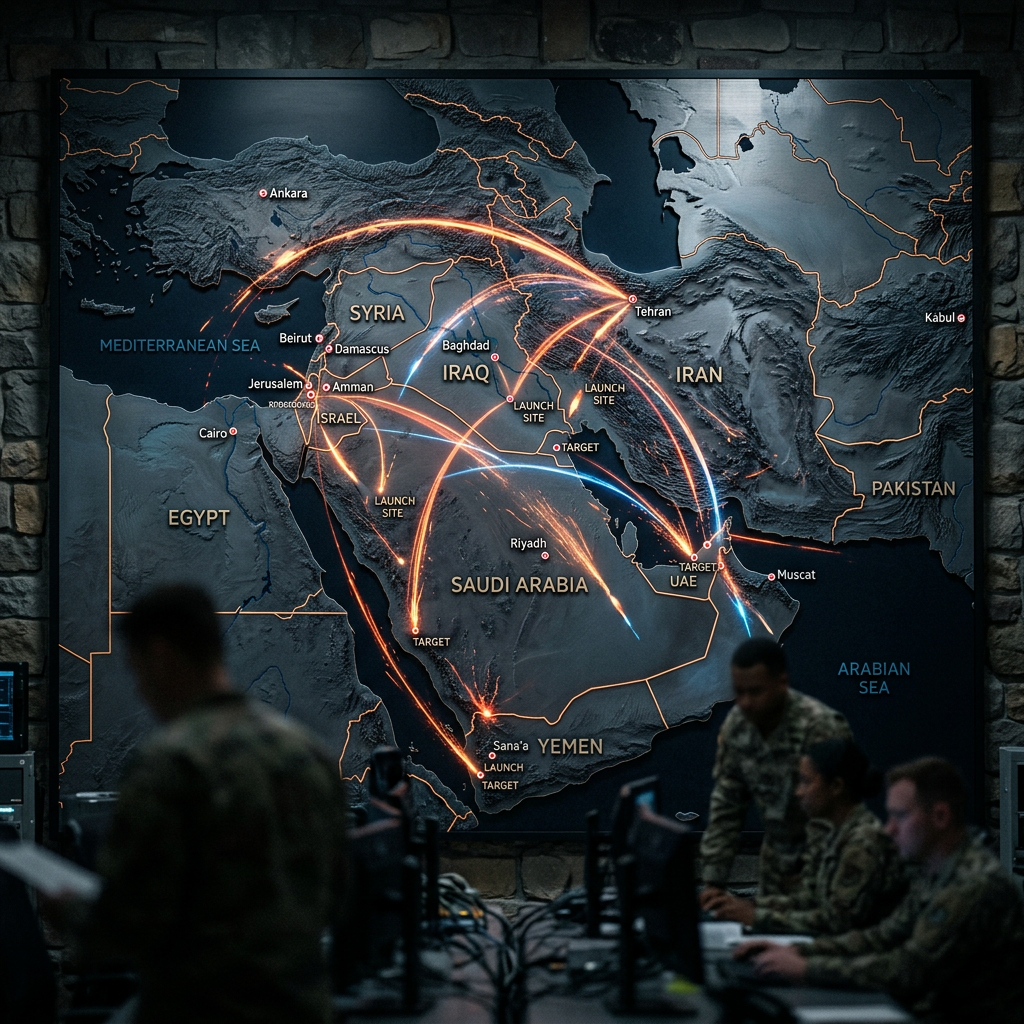
When the United States and the Islamic Republic of Iran signed the 14-point Islamabad Memorandum of Understanding (MoU) on June 17, 2026, it looked, at least on paper, like the most consequential diplomatic breakthrough in decades of confrontation between the two adversaries. Yet the optimism was short-lived. Within days, missiles were again flying near the Strait of Hormuz, asset negotiations in Doha had stalled, and Tehran’s inner circle had begun openly debating whether to push its missiles far beyond their long-standing range limit. The gap between the agreement’s promise and the reality on the ground made one thing clear: the road to a final deal remains anything but smooth.
This article offers a structured, source-based examination of every major dimension of the current US-Iran dynamic. We walk through the architecture of the MoU itself, the increasingly tense fight over frozen assets, Iran’s insistence on sovereignty over the Strait of Hormuz, the deepening fractures inside the regime, the missile program’s quiet leap past the 2,000-kilometer threshold, the state of Iran’s nuclear posture, and the shifting condition of the Axis of Resistance across Lebanon and Iraq. Taken together, these threads reveal a fragile framework held together as much by mutual exhaustion as by mutual agreement.
Key Takeaways
- The June 17, 2026 Islamabad MoU sets a 60-day window to finalize a comprehensive deal. Yet as of July 1, 2026, the US and Iran still had not held direct, face-to-face negotiations on most core issues—including, most strikingly, Iran’s nuclear program.
- Iran’s chief negotiator, Mohammad Bagher Ghalibaf, is walking a tightrope: managing hardline opposition at home while pressing Washington to recognize Iranian sovereignty over the Strait of Hormuz, a demand the US has so far refused.
- IRGC Commander Ahmad Vahidi has reportedly floated using unfrozen Iranian financial assets to rebuild Iran’s military—directly contradicting US claims that the funds will be limited to civilian purposes.
- Iran fired two Khorramshahr-4 ballistic missiles at Diego Garcia on March 20, 2026—roughly 3,700 kilometers from its southern border—effectively shattering its self-imposed 2,000-kilometer range moratorium, even as it publicly denied the attack.
- The Trilateral Framework Agreement of June 26, 2026, between the US, Israel, and Lebanon envisions a phased IDF withdrawal through designated pilot zones. But that withdrawal has already been postponed pending the creation of a joint monitoring mechanism.
- Iraqi Prime Minister Ali al-Zaydi’s anti-corruption campaign is running into a wall: Shia Coordination Framework leaders have refused to authorize the arrest of senior Iranian-backed militia figures.
Background: The Roots of US-Iran Tensions
To understand where things stand now, it helps to trace how they got here. The US-Iran confrontation entered its most kinetic phase on February 28, 2026, when open conflict erupted across multiple theaters at once. This was not a sudden rupture but the culmination of years of escalating nuclear brinkmanship, each side convinced the other could not be trusted.
By mid-2025, the warning signs were flashing red. A Congressional Research Service (CRS) report updated in June 2025 concluded that Iran’s enrichment program had grown so advanced that Tehran could produce enough weapons-grade highly enriched uranium (HEU) for a single nuclear weapon in “probably less than one week.” That same month, the US and Israel struck Iranian nuclear facilities, setting back Iran’s enrichment capacity while pushing the standoff firmly into the military domain.
The diplomatic scaffolding around the program then began to buckle. On August 28, 2025, the E3—France, Germany, and the United Kingdom—triggered the UN Security Council’s snapback mechanism, reimposing sanctions on Iran as of September 27, 2025 (Congressional Research Service, February 9, 2026). Iran responded by suspending cooperation with the International Atomic Energy Agency (IAEA) and withdrawing its inspectors by early July 2025. By the time the MoU was signed in June 2026, the picture was stark: Iran’s nuclear program had been badly degraded but not destroyed, and the international monitoring regime that once governed it had all but disappeared. The MoU, in other words, was an attempt to rebuild trust from the rubble of a collapsed order.
What Are the 14 Points of the US-Iran Islamabad MoU?

The Islamabad MoU was signed digitally by President Donald Trump, Vice President JD Vance, and Iranian parliamentary speaker Mohammad Bagher Ghalibaf, and formally released on June 17, 2026 (CNN, June 17, 2026). Rather than a finished peace treaty, it functions as a roadmap—a set of mutual commitments meant to guide the two sides toward a comprehensive final deal. Its 14 points cover the following key provisions:
- Point 1: An immediate and permanent halt to military operations on all fronts, Lebanon included.
- Point 4: The US will begin lifting its naval blockade immediately and complete removal within 30 days; US forces will pull back from proximity to Iran within 30 days of the final deal.
- Point 5: Iran will permit free passage of commercial vessels through the Strait of Hormuz for 60 days only. After that, future administration and maritime services fall to negotiation with Oman and other Persian Gulf littoral states “in line with applicable international law and the sovereign rights of coastal states.”
- Point 6: The US commits to developing a $300 billion reconstruction and economic development plan for Iran, in partnership with regional players.
- Point 7: The US undertakes to terminate all sanctions on Iran—including UNSC resolutions, IAEA Board of Governors resolutions, and unilateral US measures—on an agreed schedule tied to the final deal.
- Point 8: Iran reaffirms that it will neither procure nor develop nuclear weapons; its enriched material stockpiles are to be down-blended on site under IAEA supervision, treated as a minimum methodology.
- Point 11: The US undertakes to make all frozen or restricted Iranian funds and assets fully available, with the Central Bank of Iran designating the ultimate beneficiaries.
- Point 14: The final deal will be sealed by a binding UNSC resolution.
A 60-day deadline—extendable by mutual consent—was set for finalizing the comprehensive agreement (BBC, June 18, 2026). That clock, as we’ll see, has become one of the defining pressures shaping every negotiation that follows.
The Battle Over Frozen Assets: What Is Iran Demanding and Why Does It Matter?
Money, unsurprisingly, sits at the heart of the current impasse. As of July 1, 2026, the indirect talks in Doha revolved primarily around Iran’s demand to unfreeze at least $6 billion in Iranian financial assets held abroad. Iranian Deputy Foreign Minister for Legal and International Affairs Kazem Gharibabadi confirmed on July 1 that the Doha discussions aimed to accelerate MoU implementation, lift the US blockade, and release those frozen assets (ISW/CTP Iran Update, July 1, 2026). Gharibabadi went further, claiming that Iranian and Qatari officials had reached an agreement to unfreeze $6 billion for the purchase of goods Iran needs—a claim a US official flatly denied to Israeli media that same day.
But the dispute carries strategic weight far beyond its headline dollar figure. Ghalibaf has publicly argued that the MoU entitles Iran to reclaim half of roughly $24 billion in total frozen assets, and that the Iranian Central Bank will use the funds “to purchase any goods it needs, at any price, and in any currency in the world” (ISW/CTP, July 1, 2026, citing Fars News). The real concern for Washington lies in what happens next. IRGC Commander Ahmad Vahidi—whom intelligence sources and mediators speaking to the New York Times (June 13, 2026) assess as currently wielding dominant influence over Iranian decision-making—has reportedly considered channeling unfrozen funds toward military spending. That prospect runs directly against Vice President JD Vance‘s June 22 assertion that Iran would spend unfrozen assets on US agricultural products, a claim Iranian media promptly rejected.
The gap between the American and Iranian readings of Point 11 is not a matter of semantics. It is a matter of consequence. If even a fraction of these assets flows into IRGC military reconstitution, it would reshape the entire strategic calculus of the final deal—and it would almost certainly erode the fragile congressional support Washington needs to see any agreement through. In short, the frozen assets question is less about $6 billion than about who ultimately controls what Iran does with it.
The Strait of Hormuz: Who Controls the World’s Most Critical Chokepoint?
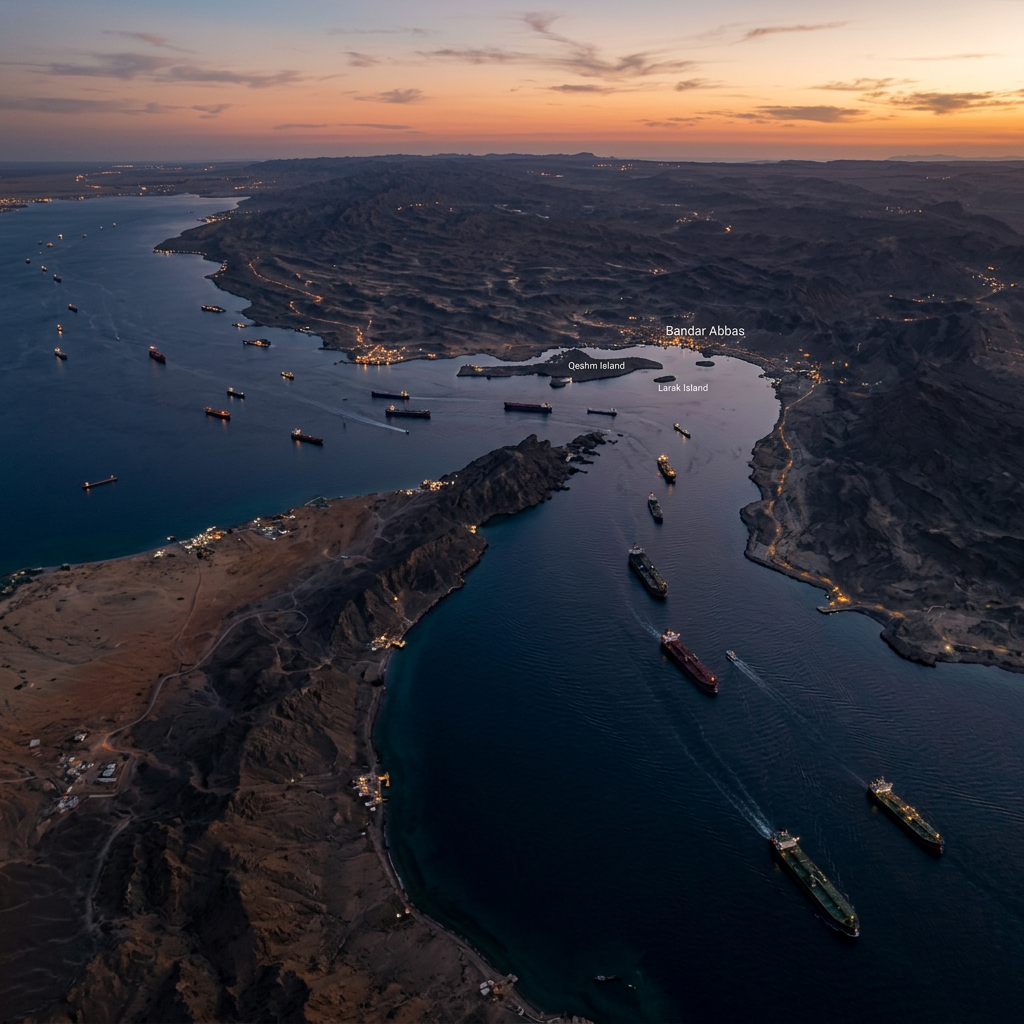
Few stretches of water carry as much economic weight as the Strait of Hormuz. Before the 2026 conflict, this narrow chokepoint handled roughly 20% of the world’s petroleum liquids—which is precisely why Iran’s decision to close it sent shockwaves through oil-dependent economies across the region and beyond. Iraq offers a sobering illustration: its oil exports collapsed from about 3.3 million barrels per day to roughly 600,000 barrels per day in March 2026, a devastating drop for a country where oil revenues make up more than 90% of the state budget (Al Jazeera, June 12, 2026).
Iran’s stance on the strait leaves little room for interpretation. On June 30, Ghalibaf declared: “The sovereignty of the strait of Hormuz lies with Iran and Oman, and traffic in the strait is subject to arrangements determined by Iran” (The Guardian, June 30, 2026). And the MoU itself gives Tehran a foothold for that argument. Point 5 guarantees free passage for commercial vessels for just 60 days, explicitly leaving the door open for Iran to impose fees once that window closes.
The US delegation, led by Special Envoy Steve Witkoff and Jared Kushner, has been pressing for specifics—how Iran’s toll proposals would work and how they square with Oman’s competing idea of voluntary fees tied to specific navigational services (The Guardian, June 30, 2026). According to an Axios report from July 1, 2026, a US official said Witkoff and Kushner had warned the Iranian side that toll demands could “disrupt the whole MoU,” making the case that a broader diplomatic agreement would ultimately put far more money in Iran’s pocket than collecting tolls ever could.
Meanwhile, the situation on the water stayed dangerously fluid. On June 26, the two sides traded fire near the strait—Iran struck a cargo ship, and the US retaliated against Iranian targets. Around the same time, the IMO suspended an alternative sea route it had briefly established, after Iran attacked two vessels while that route was active (The Guardian, June 30, 2026). The chilling effect on shipping was unmistakable: as of June 29, only about 40 vessels were transiting the strait each day, compared to the several hundred that passed through before the war, according to maritime tracking firm Kpler.
Iran’s Internal Divisions: How Fragmented Is the Regime’s Support for the MoU?
Behind the negotiations lies a regime pulling in different directions. The MoU has stirred acute tension inside Tehran, and much of the recent public messaging can only be understood as a domestic balancing act. Ghalibaf‘s statements since June 30, for instance, appear aimed less at Washington than at his own political base—an effort to build cover for a deal that hardline factions regard with deep suspicion (ISW/CTP, July 1, 2026).
The push to project unity has come from the top. Iranian President Masoud Pezeshkian stressed on July 1 that his administration has faithfully followed Supreme Leader Mojtaba Khamenei‘s guidance and remains aligned with the IRGC and Vahidi (ISW/CTP, July 1, 2026). In a similar vein, an adviser to Pezeshkian published the names of 11 of the 12 Supreme National Security Council members who voted for the MoU on June 30—a calculated gesture designed to reassure the ultra-hardline camp by showcasing the breadth of institutional backing. Notably, that list included hardline leader Saeed Jalili, whose support carries symbolic weight with skeptics.
Yet the opposition from within the system remains real and vocal. On June 28, 60 of the 88 members of the Assembly of Experts—the body constitutionally charged with appointing and supervising the Supreme Leader—issued a 10-point warning cautioning negotiators not to cross Mojtaba Khamenei’s “red lines” (ISW/CTP, July 1, 2026). Adding to the pressure, 85 Iranian parliamentarians had by May 31 written to the Supreme Leader urging the development of missiles capable of reaching the United States. And the strain is not merely institutional: earlier reporting by the Institute for the Study of War, dated April 24, 2026, indicated that Ghalibaf had grown so frustrated with the internal infighting that he considered stepping down from the negotiating team altogether.
The deeper dynamic here is structural. The Pezeshkian administration leans toward making a deal, while Vahidi‘s IRGC-centered vision prioritizes rebuilding Iran’s military capacity after the war. That tension means even agreements struck at the negotiating table remain exposed to sabotage from within—a reminder that Iran’s negotiators do not speak with a single voice.
How Has Iran Broken the 2,000-Kilometer Missile Range Moratorium?
For years, Iran held to a self-imposed ceiling on its ballistic missiles: 2,000 kilometers, a limit attributed to the late Supreme Leader Ali Khamenei. Its three longest-range acknowledged missiles—the Emad, Sejjil, and Shahab-3—all top out at exactly that figure (CSIS Missile Threat database, cited in ISW/CTP, July 1, 2026). That cap became a fixture of Western strategic planning, a comforting boundary that kept European capitals technically out of reach.
That boundary appears to have quietly fallen. On March 20, 2026, Iran launched at least two Khorramshahr-4 ballistic missiles toward Diego Garcia, the US-UK military base in the British Indian Ocean Territory sitting roughly 3,700 to 4,000 kilometers from Iran’s southern border (Wikipedia, “2026 Iranian Strike on Diego Garcia”; WSJ). The attack failed in operational terms—one missile fell apart in flight, and a US Navy SM-3 interceptor took out the other, so neither reached its target. Iran, for its part, denied any involvement, dismissing the episode as a “false flag” operation (Al Jazeera, March 23, 2026). But the failure to hit the target hardly diminishes the significance of the attempt.
Experts have been careful to separate the technical reality from the strategic message. SIPRI Associate Senior Researcher Dr. Markus Schiller assessed on April 1, 2026, that the Khorramshahr could theoretically reach about 3,800 kilometers if fitted with a very light warhead and drawing on propellant reserves for extra range. He also flagged some ambiguity around Israeli Chief of General Staff General Eyal Zamir’s claim that a “two-stage intercontinental ballistic missile” had been used. In Schiller’s view, the military value of the strike was limited—the missiles missed, and Diego Garcia’s geography makes a precise hit extremely difficult. The symbolic value, however, was another matter entirely: Iran had demonstrated that it can now credibly threaten European capitals, London among them.
The politics inside Tehran only deepen the concern. Brigadier General Rasoul Sanaei Rad, a senior political adviser to the late Supreme Leader Ali Khamenei, revealed on July 1, 2026, that Khamenei had earlier issued “phased” guidance—first to extend missile range, then to sharpen missile accuracy (ISW/CTP, July 1, 2026). That this admission came in the middle of active ceasefire negotiations is telling. It signals to hardliners at home and adversaries abroad alike that Iran views long-range missile development not as a bargaining chip but as a strategic imperative it intends to pursue regardless of how the MoU turns out.
Iran’s Nuclear Program: What Is the Current Proliferation Risk?
Iran’s nuclear posture today bears little resemblance to the one that existed when the JCPOA was signed in 2015. The threat environment has shifted dramatically. A Defense Intelligence Agency assessment from May 2025 concluded that Iran would need “probably less than one week” to produce enough weapons-grade HEU for a single nuclear weapon—a breakout timeline measured in days rather than months. A November 2024 ODNI report went further, judging that Iran already held enough fissile material to build “more than a dozen nuclear weapons” if it chose to enrich further (CRS, Iran and Nuclear Weapons Production, June 24, 2025).
The June 2025 US and Israeli strikes did buy some time. IAEA Director General Rafael Grossi acknowledged that the program “has been significantly set back,” but “set back” is not the same as “eliminated.” Iran responded to the strikes by suspending cooperation with the IAEA, pulling out its inspectors, and issuing directives to install advanced sixth-generation centrifuges at Fordow—hardly the behavior of a state winding down its capabilities.
The MoU tries to address this through Point 8, under which Iran reaffirms that it will not develop nuclear weapons and agrees to down-blend its enriched uranium stockpile on site under IAEA supervision as a “minimum methodology.” Here, though, is where the fragility of the whole arrangement becomes most apparent. As of July 1, 2026, nuclear talks had not even begun—despite the ticking 60-day clock. Reaching consensus on enrichment levels, verification procedures, and the future scope of Iran’s civilian program is enormously complex, and it is precisely this dimension of the final deal that carries the highest risk of unraveling everything else.
Iran’s Axis of Resistance: What Is the Current State of Its Regional Networks?
Iran’s regional influence has long flowed through its Axis of Resistance—the web of state and non-state partners aligned with Tehran across the Middle East. Entering the post-MoU period, that network finds itself in a curious condition: badly weakened militarily, yet still organizationally intact and capable of resisting pressure. Nowhere is this dual reality clearer than in Lebanon and Iraq.
Lebanese Hezbollah and the Trilateral Framework Agreement
On June 26, 2026, the US, Israel, and Lebanon signed the Trilateral Framework Agreement in Washington, laying out a sequenced, conditional path for IDF withdrawal from Lebanese territory. The trade-off is straightforward in principle: Israel pulls back its forces in exchange for verified Hezbollah disarmament and the Lebanese Armed Forces (LAF) reasserting sovereign control (State Department, June 26, 2026).
The mechanics, however, are anything but simple. The Framework’s Security Annex sets up a four-stage disarmament process across designated “pilot zones”—a design ISW analysts have likened to a “clear-hold-build” counterinsurgency strategy (ISW/CTP, July 1, 2026). Two initial pilot zones have been agreed upon: the area around Zawtar el Gharbiyeh in Nabatieh District, and the territory around Ghandouriyeh and Froun in Bint Jbeil District.
But agreement on paper has not translated into movement on the ground. As of June 29, 2026, the IDF had postponed its withdrawal from both pilot zones. Israeli sources confirmed there was no timetable for redeployment, tying any pullback to two conditions: the establishment of the Military Coordination Group for Lebanon (MCG4L)—a US-vetted, virtual command center linking the IDF and LAF—and the LAF actually beginning verified Hezbollah disarmament inside the zones (ISW/CTP, July 1, 2026). Israeli officials have said, repeatedly and without ambiguity, that the IDF will stay in its southern Lebanon security zone until Hezbollah no longer poses a threat.
For all that, Hezbollah’s capacity to fight has been gutted. As DW News noted, the organization has not fired a single missile since Israel’s attacks on Iran began—a striking measure of just how far its operational reach has been degraded.
With the MoU’s 60-day clock running from June 17 to roughly August 16, 2026, and no direct face-to-face talks held as of July 1, both government leaders and corporate risk managers face a compressed window in which several concrete indicators will signal whether the framework holds or fractures. On the diplomatic front, the decisive markers are whether Doha produces a documented US commitment on the $6 billion asset release and the conditions attached to it, and whether the parties finally open the long-deferred nuclear negotiations before the deadline lapses. On sanctions, businesses should track the pace and sequencing of relief under Point 7—premature exposure to Iranian counterparties carries real compliance risk if snapback provisions are retriggered or if unfrozen funds are shown to flow toward IRGC military reconstitution. For energy markets and shipping firms, the Strait of Hormuz remains the flashpoint: transit volumes have already collapsed from several hundred vessels a day to roughly 40, and any renewed Iranian toll demands, attacks on commercial shipping, or the expiration of the 60-day free-passage window could send insurance premiums and oil prices sharply higher, with knock-on effects for oil-dependent economies like Iraq. Corporations with regional operations should also weigh the militia dimension—whether Baghdad moves against Kataib Hezbollah and Harakat al-Nujaba financial networks, and whether Iran-aligned factions escalate in response—alongside the missile threat, where any test exceeding 2,000 kilometers would confirm that Tehran’s “phased” range-expansion doctrine is being actively implemented and would widen the set of cities and facilities exposed to potential strikes. Taken together, these signals—negotiation progress, sanctions sequencing, Hormuz stability, energy-price volatility, militia activity, and missile escalation—form a practical watchlist that will tell strategists and business leaders alike whether the region is converging toward a durable settlement or sliding back toward open confrontation.
What Policymakers and Corporations Need to Watch
Iraqi Militias and Ali al-Zaydi’s Anti-Corruption Campaign
Iraq presents a more tangled picture. Prime Minister Ali al-Zaydi—named PM designate on April 28, 2026—used his first parliamentary address in mid-May to pledge sweeping reform of the security apparatus, promising to bring about “restricting weapons to state control.” His campaign has produced some genuine movement. On May 27, the influential Shia leader Muqtada al-Sadr announced that his Saraya al-Salam group would break away from the Sadrist political movement and fold into Iraq’s state armed forces. Separately, the head of the Popular Mobilisation Forces (PMF), Faleh al-Fayyad, committed to a “complete disengagement” between the PMF and political factions (Al Jazeera, June 12, 2026).The most powerful players, however, are refusing to budge. Iran-aligned heavyweights Kataib Hezbollah and Harakat al-Nujaba have rejected the government’s call to place weapons under state control. And the resistance runs deeper still. By July 1, 2026, Shia Coordination Framework leaders had turned down al-Zaydi’s request to arrest senior militia-affiliated figures, warning of “security tensions” if he pressed ahead (ISW/CTP, July 1, 2026, citing Qatari media). Despite well-documented corruption ties, not a single Iranian-backed militia figure had been arrested. The one apparent exception was an arrest warrant reportedly issued for an unnamed militia-linked official, along with the departure of Hussein Moanes, a member of Kataib Hezbollah’s political wing, who fled Iraq to an unknown country on or around June 30.What makes this standoff so consequential is the economic backdrop. Iraq’s oil export revenues, which account for more than 90% of the state budget, cratered when the Strait of Hormuz closed—falling from 3.3 million barrels per day to roughly 600,000 barrels per day in March 2026. That fiscal squeeze has reshaped the stakes of disarmament. As political analyst Mujashaa Altimimi told Al Jazeera, tackling the militia question had become “more of an economic necessity than a security one” for al-Zaydi. In other words, Baghdad may be forced to confront the militias not out of strategic ambition, but simply to keep the state solvent. And therein lies the paradox at the heart of Iran’s regional position: the very economic crisis triggered by the Hormuz closure is now pushing one of Tehran’s most important partners to dismantle the armed networks that have long anchored Iranian influence in Iraq.
Frequently Asked Questions
What should policymakers watch next in the US-Iran negotiations? With the 60-day window running from June 17 to roughly August 16, 2026, and no direct face-to-face talks held as of July 1, the near-term indicators will reveal whether the MoU holds or unravels. Four signals deserve close attention. First, watch whether the Doha talks produce a documented US commitment on the $6 billion asset release and, crucially, the conditions attached to how those funds can be used—the gap between civilian purchases and IRGC military reconstitution is where the deal is most likely to fracture. Second, track whether the Military Coordination Group for Lebanon is established with functioning verification procedures before any IDF withdrawal from the pilot zones, since a premature pullback without monitoring would signal a weakening of the disarmament framework. Third, monitor how quickly Iraqi federal authorities move—if at all—against Kataib Hezbollah and Harakat al-Nujaba financial networks, a test of Baghdad’s willingness to confront Iran-aligned militias under economic duress. Fourth, and most consequential, watch for any Iranian missile test exceeding 2,000 kilometers, which would confirm that the “phased” range-expansion guidance is being actively implemented and that Tehran sees long-range missile development as non-negotiable. Together, these markers will tell strategists whether the framework is converging toward a comprehensive deal or sliding toward collapse.
What role do Hezbollah and Iraqi militias play in Iran’s regional strategy, and how has that changed? Hezbollah in Lebanon and the Shia militias in Iraq have long formed the backbone of Iran’s Axis of Resistance—the network of state and non-state partners that projects Tehran’s influence and deterrence across the Middle East. Today, that network is in a paradoxical state: militarily degraded yet organizationally resilient. Hezbollah has not fired a single missile since Israel’s attacks on Iran began, and it now faces a phased disarmament process under the June 26, 2026 Trilateral Framework Agreement, though IDF withdrawal from Lebanese pilot zones remains stalled pending a functioning monitoring mechanism. In Iraq, powerful factions like Kataib Hezbollah and Harakat al-Nujaba have openly refused Prime Minister Ali al-Zaydi’s call to place weapons under state control, and Shia Coordination Framework leaders have blocked arrests of senior militia figures. For policymakers, the key takeaway is that Iran’s regional leverage is being squeezed from two directions at once—military degradation from the war and economic pressure from the Strait of Hormuz closure—yet the underlying networks remain intact enough to resist disarmament and preserve Tehran’s ability to reconstitute influence over time.
What does Iran’s move beyond the 2,000-kilometer missile range limit mean for policymakers? For years, Iran observed a self-imposed 2,000-kilometer ceiling on its ballistic missiles—a boundary that kept European capitals technically out of range and served as a fixture of Western strategic planning. That ceiling has now effectively fallen. On March 20, 2026, Iran fired two Khorramshahr-4 missiles at the US-UK base on Diego Garcia, roughly 3,700 to 4,000 kilometers from its southern border; both missiles failed to hit the target, but the attempt alone shattered the moratorium in practice. What worries policymakers most is not a single failed strike but the direction of travel: senior officials, including a political adviser to the late Supreme Leader Ali Khamenei, have openly described “phased” guidance to first extend missile range and then improve accuracy, while 85 parliamentarians have urged the development of missiles capable of reaching the United States. Taken together, these signals suggest Iran views long-range missile development as a strategic imperative it intends to pursue regardless of the MoU’s fate—expanding the set of allied cities and bases within reach and complicating missile-defense calculations from Europe to the Indian Ocean.
Why is the Strait of Hormuz so central to the US-Iran conflict? The Strait of Hormuz is the single most important oil transit chokepoint in the world, carrying roughly 20% of global petroleum liquids before the 2026 conflict—which is exactly why Iran’s ability to close or restrict it gives Tehran outsized leverage over global energy markets and the economies of its neighbors. When Iran shut the waterway, oil prices spiked and export-dependent states like Iraq saw revenues collapse almost overnight, turning the strait into both a weapon and a bargaining chip. The current dispute cuts even deeper: Iran insists it holds sovereignty over the strait, alongside Oman, and the right to charge transit fees once the MoU’s 60-day free-passage window expires, while the US treats it as an international waterway whose management requires Gulf-wide endorsement. Because any concession on this point would set a lasting precedent for freedom of navigation and global shipping, the strait has become one of the most likely issues to unravel the entire agreement.
The Islamabad Memorandum of Understanding is a 14-point framework signed on June 17, 2026, that commits the United States and Iran to a permanent ceasefire, the phased removal of the US naval blockade, sanctions relief, the release of frozen Iranian assets, and a reaffirmed Iranian pledge not to develop nuclear weapons—all within a 60-day window meant to guide both sides toward a comprehensive final deal. It matters because it represents the first serious diplomatic opening between the two adversaries in decades, yet its many interpretive gaps—over Strait of Hormuz sovereignty, the end-use of unfrozen funds, and the sequencing of nuclear talks—have already turned it into a source of friction rather than resolution. For policymakers and strategists, the MoU is best understood not as a settled agreement but as a fragile roadmap whose success or collapse will shape regional security, global energy flows, and the trajectory of Iran’s nuclear program in the months ahead.
#USIranConflict, #USIranNegotiations, #USIranDiplomacy, #USIranTensions, #IranNuclearProgram, #IranNuclearNegotiations, #IranNuclearCompliance, #IranNuclearEscalation, #IranEnrichmentProgram, #UraniumEnrichment, #FordowFacility, #NatanzFacility, #IAEA, #IAEAInspections, #IAEANoncompliance, #JCPOA, #NuclearNonproliferation, #UNSanctionsOnIran, #SnapbackSanctions, #Resolution2231, #IranMissileProgram, #IranianMissiles, #BallisticMissileThreat, #StraitOfHormuz, #HormuzShippingRisk, #MaritimeSecurity, #GulfEnergyRoutes, #GlobalOilMarkets, #EnergySecurity, #MiddleEastSecurity, #RegionalEscalation, #RegionalStability, #AxisOfResistance, #IranianProxyNetwork, #Hezbollah, #IraqiMilitias, #PopularMobilizationForces, #MilitiasInIraq, #BaghdadSecurityPolicy, #IraqiStateCapacity, #IranRegionalInfluence, #USMiddleEastPolicy, #IsraelIranTensions, #IranDeterrenceStrategy, #IranRegimeStability, #SanctionsEnforcement, #GeopoliticalRisk, #PoliticalRiskAnalysis, #SecurityRiskAssessment, #StrategicForecasting, #Policymakers, #PolicyPlanning, #GovernmentStrategy, #CorporateRiskPlanning, #MultinationalCorporations, #SupplyChainRisk, #CommodityRisk, #OilPriceVolatility, #InternationalSecurity, #CrisisMonitoring, #DiplomaticStrategy, #DefenseAnalysis, #ForeignPolicyAnalysis, #NuclearRisk, #ProliferationRisk, #ConflictOutlook, #MiddleEastGeopolitics, #StrategicAffairs, #GlobalEnergyFlows, #StateSolvency, #EconomicPressureOnMilitias, #RiskIntelligence, #ScenarioPlanning, #ExecutiveBrief, #PolicyBrief, #CorporateIntelligence, #StrategicImplications, #WhatPolicymakersNeedToWatch, #WhatCorporationsNeedToWatch
Discover more from Responsible Public Affairs
Subscribe to get the latest posts sent to your email.