china

Oil tanker and naval destroyer cross the Strait of Hormuz beneath imagery of diplomacy, finance, ports and global trade routes.

Global Public Affairs & Government Relations Weekly Brief

The U.S.–Iran tensions have intensified with military actions and sanctions impacting regional stability. Meanwhile, the U.S.–Venezuela oil agreement raises governance concerns, and China faces pressure at the G20 over trade practices. Europe responds to Russian threats, while the U.S. political landscape shifts ahead of midterm elections.

Global Public Affairs & Government Relations Weekly Brief Read More »

Global Public Affairs & Government Relations Weekly Brief

Since August 22, 2026, U.S. sanctions on Iran have intensified, targetting various sectors. A notable oil agreement with Venezuela could shift energy dynamics, while U.S.-Canada trade tensions escalate into retaliatory tariffs. China modifies property financing, and regulatory changes affect tech companies. Europe boosts support for Ukraine and revisits Russian assets discussions.

Global Public Affairs & Government Relations Weekly Brief Read More »

Drone motors, propellers, cameras, batteries, controllers, and connectors arranged around one missing central component beneath the shadow of a complete quadcopter.

The Cheap Drone Is a Supply-Chain Illusion: Who Controls the Age of Attritable Warfare?

Low-cost drones have transformed military economics but have not eliminated industrial power, which now lies in the complex supply chains behind components. Successful warfare requires “replenishment sovereignty,” enabling rapid replacement of lost drones. Ukraine, the U.S., Taiwan, and Iran illustrate varied strategies for managing dependency on critical inputs in attritable warfare.Drone supply-chain sovereignty is the ability to replace unmanned capability at wartime speed without unacceptable dependence on foreign-controlled components, software, materials, or production tools. It requires platform assembly, trusted component access, secure software and data paths, rapid substitution, and surge production.

The Cheap Drone Is a Supply-Chain Illusion: Who Controls the Age of Attritable Warfare? Read More »

A sculptural network of brass rails passing through glass gates and ceramic counterweights on dark stone

When Access Becomes Conditional: Global Public Affairs and Government Relations Weekly Report

This week’s report highlights significant developments in public affairs, notably the fallout from failed U.S.–Canada trade negotiations that resulted in new tariffs. It emphasizes the increasing trend of conditional market access influenced by national security and regulatory frameworks, affecting trade, procurement, and foreign investments across multiple regions.

When Access Becomes Conditional: Global Public Affairs and Government Relations Weekly Report Read More »

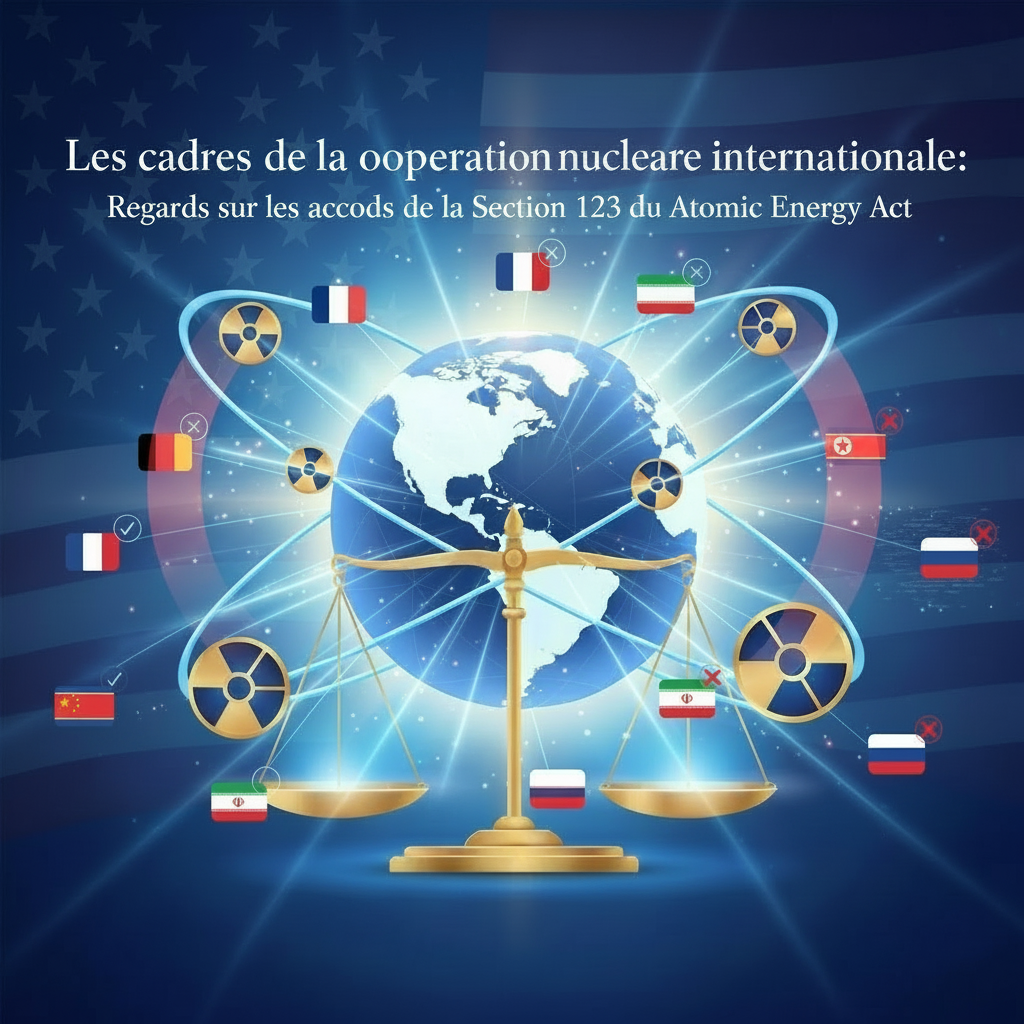
The image depicts global nuclear cooperation and regulation, symbolized by a globe on scales, national flags, and nuclear symbols, set against a US flag backdrop. It visually contrasts cooperative countries with glowing connections and non-cooperative ones with subtle barriers, emphasizing the dynamics of international nuclear agreements.

Les cadres de la coopération nucléaire internationale : Regards sur les accords de la Section 123 du Atomic Energy Act

1. Introduction aux Accords de la Section 123 — Un Enjeu Majeur pour la Gouvernance Nucléaire La coopération nucléaire civile internationale s’inscrit au cœur des enjeux de sécurité globale, de stratégie diplomatique et de développement économique. Avant que les États-Unis n’exportent un réacteur, des composants sensibles ou du combustible nucléaire à destination d’un autre pays,

Les cadres de la coopération nucléaire internationale : Regards sur les accords de la Section 123 du Atomic Energy Act Read More »