Frank Farnel

Oil tanker escorted through a strategic maritime chokepoint beneath an illuminated world map, representing geopolitical conflict, energy security and global trade tensions.

Global Public Affairs & Government Relations Weekly Brief

The content discusses escalating geopolitical tensions affecting global shipping, trade relations, and economic policies. Key developments include heightened U.S.-Iran conflicts threatening Gulf shipping routes, a referral of Iran’s nuclear noncompliance to the UN, a trade dispute between the U.S. and Canada, and political challenges in Germany due to the far-right AfD’s electoral gains.

Global Public Affairs & Government Relations Weekly Brief Read More »

A skilled candidate repairs an electromechanical control unit while two evaluators observe the practical assessment in a bright technical laboratory.

The Last Mile of Skills-Based Hiring: From Removing Degree Requirements to Changing Who Gets Hired

Skills-based hiring is gaining traction as employers remove unnecessary degree requirements, shifting focus to candidates’ capabilities. However, many organizations struggle to change their hiring practices effectively, with studies showing limited actual progress in hiring non-degree candidates. Proper implementation involves redefining access, assessment, selection, and advancement processes to ensure measurable success.

The Last Mile of Skills-Based Hiring: From Removing Degree Requirements to Changing Who Gets Hired Read More »

A fictional municipal infrastructure engineer stands between an unmarked data center campus and a neighboring residential area while a resident and facility engineer speak nearby.

The Cloud Has Neighbors: Why Data Centers Have Become a Local Public Affairs Test

Data centers are essential infrastructure with significant local impacts regarding electric demand, water use, and land. Successful projects must establish credible, verifiable local bargains addressing resource distribution and long-term responsibilities. The lessons from France, Ireland, Virginia, and South Africa highlight the importance of local engagement and transparency in maintaining community trust.

The Cloud Has Neighbors: Why Data Centers Have Become a Local Public Affairs Test Read More »

A fictional ground-crew chief directs an unmarked fighter aircraft and a small support team on a forest highway converted into a temporary airstrip at dawn.

The Runway Is No Longer the Base: How Dispersion Is Rewriting Airpower and Deterrence

The effectiveness of modern airpower relies on resilience rather than inventory numbers. Lessons from Ukraine, Finland, Taiwan, and the U.S. show that dispersed operations, rapid logistics, and mobile command structures are vital for strategic survival post-attack. A networked approach with multiple support layers is essential for sustained combat effectiveness.

The Runway Is No Longer the Base: How Dispersion Is Rewriting Airpower and Deterrence Read More »

Two senior executives walk side by side through the backstage corridor of a performing-arts venue as production and audience operations converge around them.

Two CEOs, One Center of Gravity: The Architecture of Shared Leadership

The co-CEO model is gaining traction among major companies like Spotify, Oracle, and Comcast, with Netflix serving as a case study since 2023. While shared leadership could enhance effectiveness, success hinges on designing authority structures that prevent conflicts. Effective co-CEOs need well-defined roles, a resolution protocol for disagreements, and strong board oversight. The model presents advantages, allowing diverse leadership but also risks creating ambiguity in authority. Companies like SAP and Salesforce highlight potential pitfalls, indicating that clarity in governance, alignment in leadership, and strategic need must drive dual appointments, ensuring accountable and cohesive leadership.

Two CEOs, One Center of Gravity: The Architecture of Shared Leadership Read More »

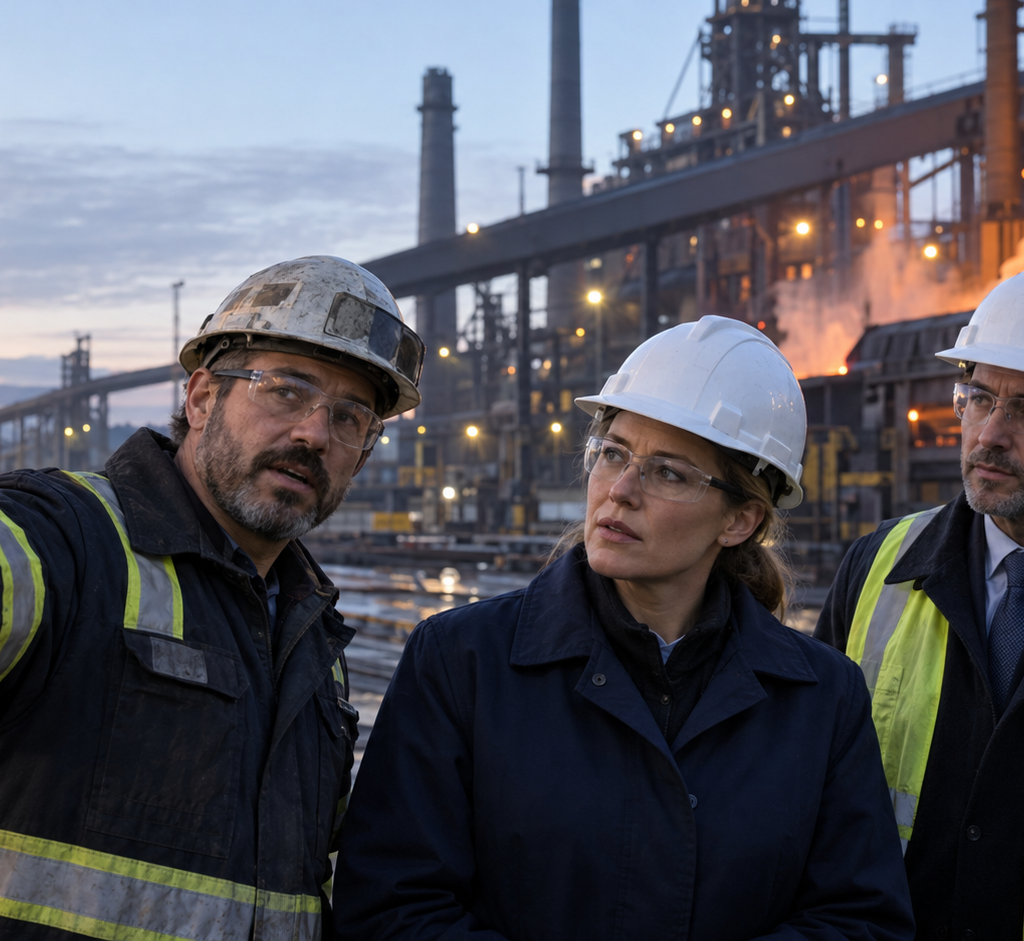
An international executive listens to a steelworker during an early-morning visit to an operating steel plant, accompanied by an engineer and a local representative

The Deal Needs a Political License: Lobbying in the Age of Investment Screening

In cross-border transactions, securing a political license has become essential, shifting focus from legal permits to addressing public and governmental concerns. Successful lobbying involves reshaping deals to showcase local benefits and manage security risks through enforceable commitments. Companies must engage early and integrate public affairs throughout the deal process to achieve acceptance. Foreign-investment lobbying is the coordinated effort to explain and, where necessary, redesign a cross-border transaction so that legitimate security risks are addressed through verifiable commitments on ownership, governance, technology, data, production and local economic continuity

The Deal Needs a Political License: Lobbying in the Age of Investment Screening Read More »

The Antisemitism Observatory: One Monthly Dip, a Larger Warning

New York recorded fewer anti-Jewish hate crimes in August, but the broader evidence does not establish a decline in antisemitism. Year-to-date cases increased, while developments in France, Britain, and Australia showed continuing violence and security pressures. The Antisemitism Observatory examines what the latest figures reveal—and what they do not.

The Antisemitism Observatory: One Monthly Dip, a Larger Warning Read More »

Oil tanker and naval destroyer cross the Strait of Hormuz beneath imagery of diplomacy, finance, ports and global trade routes.

Global Public Affairs & Government Relations Weekly Brief

The U.S.–Iran tensions have intensified with military actions and sanctions impacting regional stability. Meanwhile, the U.S.–Venezuela oil agreement raises governance concerns, and China faces pressure at the G20 over trade practices. Europe responds to Russian threats, while the U.S. political landscape shifts ahead of midterm elections.

Global Public Affairs & Government Relations Weekly Brief Read More »

Morning commuters, cyclists, delivery vehicles, and a freight train move through a European city framed by construction cranes and mixed-use buildings.

Why a quiet economic rebalancing changes the public affairs agenda

Europe’s economy is exhibiting resilience, driven by increased domestic demand and intra-EU trade, despite external market declines. While growth forecasts improve slightly, challenges remain, such as high energy costs and varying national recovery trajectories. Public affairs must adapt strategies to focus on localized narratives and distinct economic realities across member states.

Why a quiet economic rebalancing changes the public affairs agenda Read More »

A manager pulls an empty chair into a diverse team’s working circle as colleagues make room for another participant

The Cost of Looking Away: Why Respect for Difference Is Everyone’s Job

A diverse workforce relies not just on hiring policies but also on maintaining respect among employees. Disrespect can lead to severe consequences, such as high turnover, legal issues, and even suicidal ideation. Organizations must actively manage respect to prevent individual harm and reputational damage, ensuring shared responsibility in fostering a respectful work environment.

The Cost of Looking Away: Why Respect for Difference Is Everyone’s Job Read More »