
Executive Summary
Iran finds itself in a strategically constrained position, in part of its own making. After warning that an Israeli strike on Hezbollah in Beirut’s Dahiyeh would draw retaliation, Tehran saw Israel act following renewed Hezbollah fire on northern Israeli communities—and Israel has since struck military targets inside Iran in response to an Iranian missile barrage. The broader shift is in Israel’s posture: a post–October 7 Israel that increasingly declines the deterrence formulas its adversaries seek to impose and instead sets its own terms for protecting its border towns, signaling that attacks on its population will be answered at their source. This leaves Tehran with limited options. It can absorb the strike, at the cost of credibility for its deterrent threats, or it can escalate into a confrontation in which the balance of power—reduced missile stocks, weakened air defenses, Israel’s intelligence reach, and its demonstrated resolve—appears to run against it. A central risk now is miscalculation: continued pressure on Hezbollah, fresh missile launches from Yemen, and a face-saving gesture that could draw the region toward a wider war. A further variable is Washington, which appears to have had advance awareness of the Dahiyeh strike but whose response to a direct Iran–Israel clash remains unclear. The structure of the confrontation is largely set, the parties have stated their positions, and a significant risk is that Iran, seeking to save face, miscalculates and escalates further.
Key Takeaways
- Iran’s constrained position: Tehran’s own threats and actions have narrowed its options, leaving it to choose between absorbing a strike that undercuts its deterrent credibility or escalating into a confrontation for which it appears poorly positioned.
- Israel’s shifting posture: Since October 7, Israel has increasingly declined adversary-imposed deterrence formulas and now responds to attacks on its north with direct strikes, citing the defense of its civilians, from Dahiyeh to Iran.
- The military balance: Reduced missile stockpiles, weakened air defenses, and Israeli intelligence and aerial reach appear to tilt any direct confrontation toward Israel.
- Escalation risks: Continued Hezbollah fire and missile launches from Iran’s Yemeni-linked allies widen the front, raising the risk that a face-saving move by Tehran could trigger a broader war.
- The American variable: Washington appears to have had advance awareness of the Dahiyeh strike but distanced itself from the strikes on Iran, leaving its response to a direct Iran–Israel clash a significant and still-unknown factor.
Abstract
The current escalation has unfolded across three fronts—Hezbollah rockets on northern Israel, Israeli strikes on Beirut’s Dahiyeh, and Israeli airstrikes on military targets inside Iran following an Iranian missile barrage—bringing the region to its most dangerous threshold since the April 8 ceasefire. The underlying development is a shift in posture: a post–October 7 Israel that is less willing to accept the limits its adversaries seek to impose, and that asserts a right to respond to attacks on its population, from Dahiyeh to Iran. That shift leaves Iran with constrained choices—absorb the strike, at a cost to the credibility of its threats, or escalate into a confrontation in which depleted missiles, weakened air defenses, and Israeli intelligence and aerial reach appear to tilt the balance against it. A central risk is miscalculation: a face-saving gesture that could trigger a wider war. A significant constraint now comes from Washington, where President Trump has reportedly pressed Prime Minister Netanyahu to hold his fire and protect U.S.–Iran negotiations he describes as close to a deal, even as his administration distanced itself from the strikes on Iran. That makes the American role a double-edged factor—at once a possible brake on an Israeli response and an uncertain force that could be drawn in—since a widening conflict could disrupt the diplomacy, draw U.S. bases into the fighting, and pull Washington into a regional war, leaving the American posture a decisive and still-unknown factor. The central dynamic of this escalation is that Iran’s options have narrowed, in large part through its own actions, while Israel asserts a right to respond to attacks on its population. What began with Hezbollah rockets on northern Israel and Israeli strikes on Beirut’s Dahiyeh district reached its most dangerous threshold yet on Monday, when Israel struck military targets inside Iran in response to an Iranian missile barrage—its first strike on Iranian soil since the April 8 ceasefire. Behind that strike lies a shift building since October 7, 2023: Israel is less willing to accept the limits its adversaries seek to impose, and now sets and enforces its own terms, from Dahiyeh to Iran. That leaves Iran with two difficult paths, both shaped by its own choices. It can hold back, at a cost to the credibility on which its deterrent posture depends—or it can escalate into a contest where its depleted missile stockpiles, weakened air defenses, and Israel’s intelligence and aerial reach appear to tilt the balance against it. A central danger is that Tehran, seeking to save face, misjudges the line and escalates into a war it would struggle to sustain. And the stakes reach beyond the two adversaries: a widening conflict could disrupt U.S.–Iran negotiations, draw American bases into the line of fire, and pull Washington into a regional war—making the American posture a decisive, and still-unknown, variable. For years, Iran exercised considerable influence through its network of regional proxies. On Monday morning, Israel struck directly at Iranian territory. The Israeli Air Force hit military targets in central and western Iran, the Israel Defense Forces announced—a response to an Iranian missile barrage, and the first Israeli strike on Iranian soil since the April 8 ceasefire. The sequence escalated quickly: Hezbollah rockets on northern Israeli communities one morning, Israeli strikes on Beirut’s Dahiyeh district within hours, and from there an exchange that widened until it reached Iran itself. The deeper shift behind it had been building since October 7, 2023: Israel is less willing to accept the limits its adversaries seek to set, and increasingly defines its own. Iran, having warned of missile retaliation if Israel struck its principal proxy in the Lebanese capital, now faces a narrow set of choices. That, at least, is how security analyst Yaakov Lappin, host of the Ross Handler Report, read the moment in conversation with senior Middle East correspondent Ariel Osseran. His argument was less a forecast than a methodological caution: in moments like these, he suggested, it is wiser to resist guessing Iran’s next move, or that of its allied groups. Recent history is full of such predictions, and many of them failed. What can be assessed more soberly is the balance of power and the facts on the ground—and by that measure, Lappin argued, Tehran’s position looks weak. The sections that follow trace that logic in turn: how Iran’s options narrowed, how Israel shifted its posture, why the military balance appears to favor Israel, and where the United States fits into a confrontation it may not control.
A Narrowing Set of Options
Iran’s predicament is shaped largely by its own decisions. By threatening direct retaliation if Israel struck Hezbollah in Dahiyeh, Tehran drew a line in advance to protect a key proxy. Israel crossed it, citing Hezbollah’s fire on communities in the north. When Iran responded with a missile barrage, it committed to the course it had threatened—leaving two paths open, both costly. The first is restraint. If Iran chooses not to respond in any meaningful way, its threats risk appearing hollow. For a regime that has cultivated an image of reach and resolve across the region, that loss of credibility carries a strategic cost. Deterrence rests on the belief that warnings will be honored. The second path is escalation. Here the risk is physical rather than reputational. By firing missiles at Israeli targets to follow through on its rhetoric, Iran entered a contest in which, by most assessments, the odds run against it. The Israeli strikes that followed offered an early measure of that imbalance—and a glimpse of the dynamic now shaping the conflict, in which Israel sets its own terms of response.
The Shift in Israel’s Posture
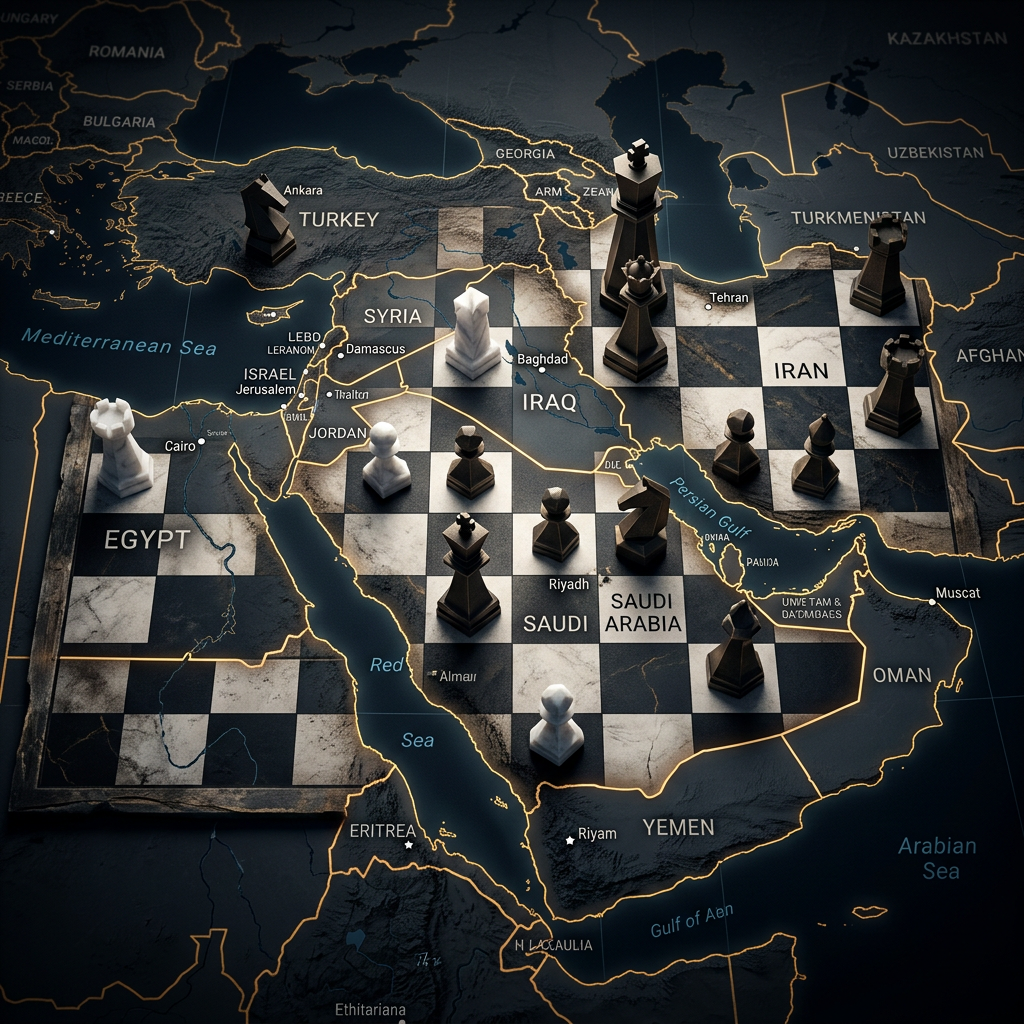
If Iran’s choices have narrowed, it is in part because Israel has redefined the rules around them. What distinguishes this moment from earlier rounds is Israel’s changed posture. For years, its adversaries shaped the terms of engagement—seeking to dictate where and how Israel could respond, and counting on its reluctance to bear the costs of a wider war. That dynamic, which left Israeli communities exposed to attack, has shifted. The stakes are concrete: Hezbollah alone is estimated to hold an arsenal of some 150,000 rockets and missiles within range of Israeli population centers, and the cross-border fire that has displaced tens of thousands of Israelis from the north since October 2023 has turned a number of communities into evacuated zones. For Israel, leaving its citizens under sustained fire is increasingly seen as untenable. Post-October 7 Israel, in Lappin’s reading, rejects the equations sought by Iran, Hezbollah, and Hamas—the last of which now functions as a marginal actor outside Gaza. Beyond refusing those terms, Israel is asserting its own right to respond in defense of its citizens. The message of the Dahiyeh strike was direct: fire on northern communities, and the response will land where the attack originates. Israel frames this logic in terms of established international law. Article 51 of the United Nations Charter preserves “the inherent right of individual or collective self-defence if an armed attack occurs,”1 and the International Court of Justice, in Nicaragua v. United States (1986), affirmed that this right also exists in customary international law, bounded by the requirements of necessity and proportionality.2 That customary right exists independently of the Charter—an inherent norm binding on states regardless of treaty, as the Court noted—so that the legal basis for self-defense does not rest on any single instrument alone. Whether a given strike meets those requirements, however, turns on its application to the facts, a question on which observers differ. Israel presents its strikes on Iran as an extension of that logic, directed at the state that arms, funds, and directs the proxies involved. The targeting, Israeli officials say, reflected an effort to act proportionately. Yechiel Leiter, Israel’s ambassador to the United States, said Iran had fired eleven ballistic missiles at Israel and that Israel was striking Iranian surface-to-surface missile launch sites, along with infrastructure unrelated to the energy sector. The focus on launch sites and military infrastructure—rather than civilian or economic targets—is consistent, in Israel’s account, with a response aimed at degrading the means of attack. Leiter drew a line between the two fronts, warning that if Hezbollah fired on Israel, the group’s command center in Dahiyeh “will be hit hard”—and adding that “this has nothing to do with Iran.” The distinction reflected Israel’s stated intent to hold each actor accountable separately, rather than merge the fronts. The scope of the operation appeared bounded. Iranian state media reported explosions in Tehran, Karaj, Isfahan, Tabriz, and Kermanshah, and Iran closed its airspace around Tehran’s Imam Khomeini International Airport. A U.S. defense official described the strikes as “relatively limited”—apparently designed to impose a cost and reassert deterrence without forcing Tehran into a position from which it could not retreat. Israeli officials contrast that with Iran’s barrage of ballistic missiles toward Israeli population centers—weapons with limited precision. Critics of Iran’s conduct argue the comparison underscores the difference between targeted and indiscriminate fire, while questions about the proportionality of any military response remain contested. The result is a reversal of the deterrence logic that prevailed before the war, with the burden of restraint now falling more heavily on whoever opens fire. And that burden weighs particularly on Iran because, beneath the rhetoric, its capabilities appear weaker than it projects.
Footnotes
- https://www.un.org/en/about-us/un-charter/full-text ↩2. https://casebook.icrc.org/case-study/icj-nicaragua-v-united-states ↩## Why the Balance Appears to Favor Israel
The case that Iran would fare worse in any escalation rests on the gap between its projection of strength and its present condition. By several measures, the regime appears militarily weaker today than it was before this war—in part the result of Israel’s campaign against the network Tehran built. Its missile stockpiles have been drawn down. Its air defenses have been degraded. Israeli intelligence appears to have penetrated Iranian and proxy networks deeply, and Israel has demonstrated both aerial reach and a readiness to act when it judges the stakes warrant it. The reach of Monday’s strikes—across cities from the capital to the country’s far west—put that reach on display. Each of these factors compounds the others. The risk for Tehran lies in believing its own rhetoric. A regime that takes its projection of strength at face value may convince itself that an escalation sequence is survivable, or even advantageous, only to find that the reality of the confrontation differs from the image it has projected. That is the essence of miscalculation—and it is the route by which Iran has drawn itself into a direct exchange it appears unlikely to win. The widening front, fueled in part by Iran’s allies, deepens the hazard for Tehran. An hour after the Israeli strikes, a ballistic missile was launched from Yemen toward central Israel and intercepted, the IDF said, with sirens sounding in Tel Aviv—the first such attack from Yemen since the April 8 ceasefire. It was a reminder that the Iranian-linked network can still generate fire across multiple theaters even as its center erodes. The open question is whether that fire shifts the balance, or merely lengthens the list of targets Israel is prepared to strike. The answer may rest less with Tehran or Jerusalem than with Washington.
The American Question
Over all of this hangs the role of the United States, and here much remains unknown. According to a senior U.S. official and an Israeli source familiar with the call, President Trump telephoned Prime Minister Benjamin Netanyahu on Sunday and pressed him not to retaliate against Iran’s missile attack, urging more time for diplomacy. The appeal was not improvised: Trump had told Axios beforehand that he intended to counsel restraint, and his administration stressed that it had given no “green light” to the Israeli strike in Beirut that Tehran cited as a pretext for its barrage. The aim appeared to be to keep the escalation from derailing the negotiations Washington was pursuing with Tehran. “We are close to doing something good in terms of a deal,” Trump told Netanyahu, by the official’s account, framing the moment as the fourth quarter of a three-month effort he was determined to finish. Netanyahu, citing Israel’s security interests, pushed back but ultimately “pseudo agreed” to stand down, the official said, and Trump went further in public, telling the Financial Times that the prime minister “won’t have any choice” but to accept whatever deal the United States secured. “I call the shots. I call all the shots. He doesn’t call the shots,” Trump said. Whether that confidence holds remains uncertain, and a U.S. defense official has said the American military took no part in the strikes Israel ultimately carried out. That distancing matters. It suggests Washington’s alignment with Israel’s action in Dahiyeh did not extend to the strikes on Iran, and that the United States is wary of being drawn into a direct Iran–Israel exchange. How far that caution would hold if Iran widened the confrontation remains, in Lappin’s words, a large unknown. The ambiguity of the American posture shapes the calculations of both Jerusalem and Tehran, and neither can be certain of its contents. The stakes of that uncertainty reach beyond the battlefield. Further escalation could unravel the negotiations between the United States and Iran and risk a resumption of full-scale war. Tehran has threatened to widen its attacks to U.S. bases in the region should Israel retaliate—a step that would risk drawing Washington directly into the fight and raise the prospect of a broader regional conflict.
Conclusion
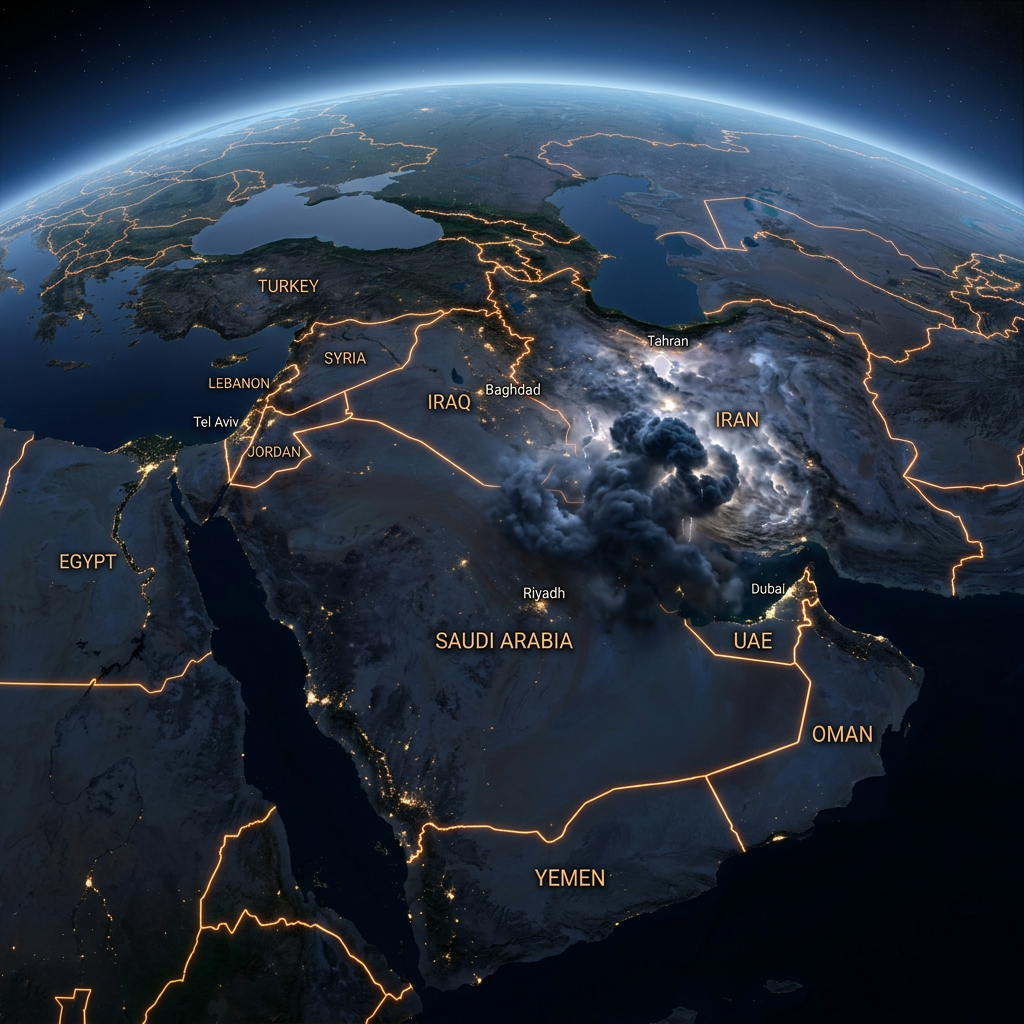
The events of the past day have not resolved the contest between Israel and Iran so much as sharpened its terms and carried it onto Iranian soil. Iran has reached a position where every option carries a cost: restraint erodes its credibility, while the escalation it chose has exposed military weaknesses its rhetoric long sought to obscure. Israel, through both the Dahiyeh and the Iran strikes, has signaled that the old constraints no longer hold—and that it intends to respond to attacks on its citizens and territory on terms of its own. Israel grounds that position in international law: Article 51 of the UN Charter affirms the inherent right of self-defense against armed attack, and Israel argues that Iran’s eleven ballistic missiles fired toward Israeli population centers—weapons with limited precision—constitute the kind of armed attack that triggers it. The question of whether and how that right applies to specific strikes remains a matter of legal debate. What is clear is that few states would accept leaving their communities exposed to sustained rocket and missile fire without responding. The facts on the ground are concrete: Hezbollah’s estimated arsenal of some 150,000 rockets and missiles within range of Israeli towns, the cross-border fire that has displaced tens of thousands of Israelis from the north since October 2023, and the communities turned into evacuated zones reflect a sustained threat to civilian life. The honest conclusion is not a prediction of what comes next, but an assessment of the structure now in place. The balance of power appears to favor Israel, both parties have stated and acted on their positions, and a central danger is that Tehran, seeking to save face, misjudges the line and escalates into a war it would struggle to sustain. The consequences would not stay contained. A wider confrontation could strain the fragile U.S.–Iran negotiations, draw American bases across the region into the line of fire, and pull Washington into a conflict it has so far worked to avoid. That is the weight resting on the decisions now being made. How the United States would respond if Iran widened the fighting remains the open variable, and the one most likely to determine whether this escalation is contained or spreads across the region.
IsraelIran, #MiddleEast, #Geopolitics, #InternationalLaw, #SelfDefense, #Article51, #RegionalSecurity, #Deterrence, #ConflictAnalysis, #ForeignPolicy, #StrategicAffairs, #IranIsraelAnalysis
@CarnegieMiddleEastCenter, @WashInstitute, @MiddleEastInst, @CrisisGroup, @ChathamHouse, @CFR_org, @BrookingsInst, @RANDCorporation, @AtlanticCouncil, @CSIS, @RUSI_org, @IISS_org, @StimsonCenter, @ArabCenterWDC, @AJCS, @DayanCenterTAU, @INSSIsrael, @BESA_Center, @BelferCenter, @Kennedy_School, @ColumbiaSIPA, @GeorgetownSFS, @SAISHopkins, @PrincetonSPIA, @SOAS, @KingsCollegeLon, @Oxford_MEC, @TheNationalNews, @AlMonitor, @MiddleEastEye, @ForeignAffairs, @ForeignPolicy, @RStatecraft, @WarOnTheRocks, @The_NewArab, @Haaretz, @Jerusalem_Post, @skynewsarabia
Discover more from Responsible Public Affairs
Subscribe to get the latest posts sent to your email.