
Executive Summary: AI Transformation as a People Strategy
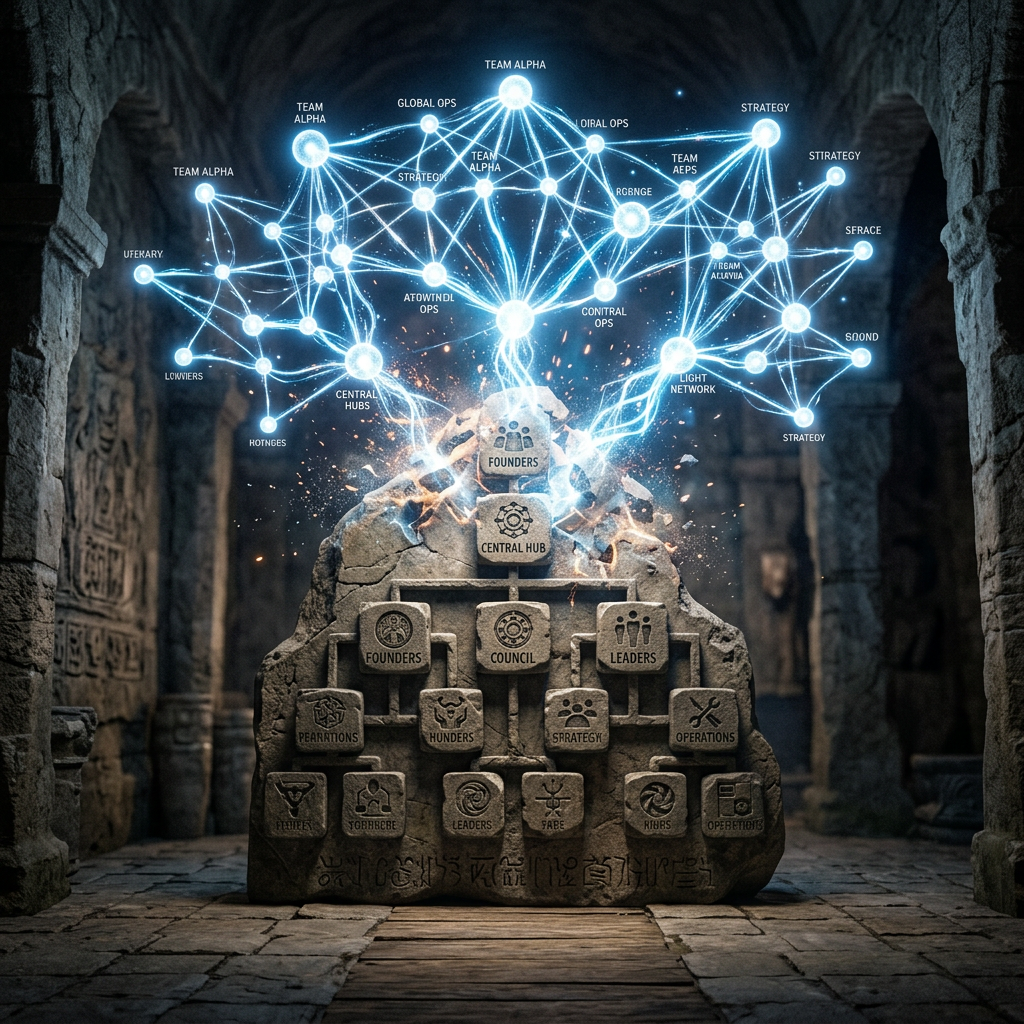
This article reframes AI transformation as a workforce and leadership challenge rather than a technology rollout, positioning a learning mindset as the core operating model for organizational strategy. Most AI programs are funded and governed like software deployments, yet they fail on the human side—on culture, on talent that cannot keep pace, and on leadership that mistakes tool adoption for transformation. As AI compresses the useful life of skills from years to months, the deepest risk is not automation but organizational stagnation, which makes learning velocity—how fast teams build skills they don’t yet know they’ll need—the decisive source of competitive advantage. The piece argues that HR, not IT, should own and architect this shift: replacing static training catalogs with continuous, work-embedded learning ecosystems; treating psychological safety as critical infrastructure rather than a cultural afterthought; cultivating distinctly human competencies such as curiosity, imagination, empathy, and judgment under ambiguity; redesigning careers and teams around cross-functional range; and modeling the leadership behaviors—tolerance for challenge and treating mistakes as data—that set the ceiling for organizational learning. The implication for executives is clear: organizations that embed learning as an operating model compound durable advantage, while those that defer face stagnation and wasted technology investment.
Abstract: Reframing AI Transformation as a Learning and Leadership Mandate
AI transformation programs are routinely funded, governed, and measured as technology initiatives, yet they most often falter on the human side—on culture, talent readiness, and leadership. This article argues that AI transformation is fundamentally a workforce, leadership, and organizational design challenge, and that a learning mindset must become the core operating model for organizational strategy rather than a trait reserved for a few high-potential employees. As artificial intelligence shortens the useful life of skills from years to months, the central risk shifts from automation to organizational stagnation, making learning velocity—how quickly teams acquire and apply new capabilities—the decisive source of competitive advantage. The piece examines how HR, not IT, is best positioned to lead this shift: by replacing static training catalogs with continuous, work-embedded learning ecosystems; treating psychological safety as critical infrastructure rather than a cultural afterthought; cultivating distinctly human competencies such as curiosity, imagination, empathy, and judgment under ambiguity; redesigning careers and teams around cross-functional range; and architecting deliberate human-AI collaboration. It also shows how leadership behavior—tolerance for challenge and treating mistakes as data—sets the ceiling for organizational learning. The implication for executives is clear: organizations that embed learning as an operating model compound durable advantage, while those that defer face stagnation and wasted technology investment.
Most AI transformation programs are budgeted as technology projects. They are funded like software rollouts, governed by IT steering committees, and measured by adoption rates. Yet the ones that fail rarely fail on the technology. They fail on the people side—on culture that resists change, on talent that cannot keep pace, and on leadership that mistakes a tool deployment for a workforce transformation.
This is the uncomfortable truth for CHROs and transformation executives: the hardest part of AI is not the model. It is the human operating system around it.
Here is the argument this piece makes. A learning mindset is no longer a nice personal trait to develop in high-potential employees. It must become the core operating model for your entire workforce strategy. And HR—not IT—is the function best positioned to build it.
We’ll cover why workforce strategy must change, how to redesign talent development for an AI economy, why psychological safety is the real bottleneck, and what HR and senior leaders must do differently to make human-AI collaboration work.
The Real Risk Isn’t Automation—It’s Stagnation
The dominant anxiety about AI is displacement: which roles disappear, which tasks get automated, how many headcount lines vanish. That framing is too narrow, and it leads HR to the wrong response.
The deeper risk is organizational stagnation. When AI compresses the useful life of any given skill from years to months, the most dangerous employee is not the one whose role is automated. It is the one—often senior, often respected—who has stopped learning because the culture rewards them for already knowing.
This reframes the workforce challenge entirely. Your competitive position no longer depends on the skills your people have today. It depends on how fast they can build the skills they don’t yet know they’ll need.
So what for people leaders: Stop planning workforce strategy around a fixed skills inventory. Plan it around learning velocity—how quickly teams can acquire, apply, and discard capabilities as the work changes.
From Training Catalogs to Learning Ecosystems

For years, HR has equated “learning” with “training”: a catalog of courses, a completion rate, a compliance checkbox. That model is now actively counterproductive.
Training assumes you can predict what people need to know and package it in advance. In a stable environment, that works. In an AI-driven one, the destination keeps moving before the course is built.
There’s a useful distinction here:
- Training is structured, time-bound, and built around a known answer. It ends.
- Learning is self-directed, curiosity-led, and continuous. It doesn’t.
The most valuable learning in any organization is largely invisible. It happens through observation, experimentation, and pattern recognition on the job—the analyst who senses a flawed assumption, the manager who reads a stalled project before the metrics confirm it. None of that comes from a course.
So what for CHROs: Audit how much of your “learning and development” spend is actually training spend. Then redirect investment toward the conditions that enable continuous learning—time, autonomy, exposure to new problems, and access to AI tools as part of daily work.
Redesign reskilling as an operating function
Reskilling cannot be an event you run once when a transformation lands. It has to become a permanent capability, embedded in how work happens.
Practical moves for HR:
- Make capability development continuous, not project-bound. Build reskilling into the operating rhythm, not the change program.
- Tie learning to real work. People retain what they apply. Pair upskilling with live projects, not isolated modules.
- Give AI tools to employees early. Fluency comes from use, not from a slide deck about the technology.
The organizations that treat reskilling as infrastructure—not as a reaction to disruption—will compound an advantage their competitors keep deferring.
Psychological Safety Is the Bottleneck Nobody Funds
Here is a fact most transformation plans ignore at their cost: people do not learn well when they feel threatened.
Curiosity and interest widen attention and strengthen retention. Fear and anxiety do the opposite—they narrow focus to self-protection and shut down the very behaviors learning requires. An employee worried about looking incompetent will not experiment with a new AI tool, will not ask the obvious question, and will not flag the skill gap that matters most.
This is why psychological safety belongs at the center of any AI transformation, not at the edges as a “culture” afterthought. When people fear that automation makes them expendable, they hide what they don’t know. That instinct is rational—and it quietly sabotages every reskilling investment you make.
The fear of looking foolish—a close cousin of impostor syndrome—is one of the largest hidden taxes on organizational learning. It keeps capable people from trying, and it keeps mistakes buried until they become expensive.
So what for leaders: The fastest way to accelerate learning is often not to add content but to remove fear. Reward the person who says “I don’t know yet” as visibly as the person who delivers the answer. In an AI transition, name the anxiety directly—then make it safe to be a beginner again.
Rethinking Organizational Design Around Range

For a generation, careers and org charts rewarded the specialist: deep expertise in a single lane, climbing a narrow ladder. AI is rewriting that logic.
When machines perform narrow expertise faster and cheaper, the premium shifts to people who move fluidly across domains—who connect what others keep separate. Think of it as a shift from a “T-shaped” profile to an “M-shaped” one: multiple areas of working competence, linked by the ability to translate between them.
This has direct implications for how HR designs roles, careers, and teams.
- Career paths: Rigid ladders that funnel people into ever-narrower specialties are becoming a structural liability. Lateral moves, project-based roles, and deliberate cross-functional rotation build the adaptability AI rewards.
- Team composition: Cross-functional teams—where data fluency sits next to domain judgment and customer empathy—produce insight no single specialty can.
- Talent mobility: Internal movement should be a feature of your operating model, not an exception requiring three approvals.
So what for transformation leaders: Build cross-functional capability on purpose. The most resilient workforce five years out is the one you let move productively across boundaries today.
The Human Competencies That Outlast Automation
If skills are increasingly automatable, HR must get sharper about what remains distinctly human—and build talent strategy around it.
A cluster of competencies blends knowledge, attitude, and character in ways current AI cannot replicate:
- Curiosity — asking better questions, not just retrieving answers.
- Imagination — envisioning what doesn’t yet exist.
- Empathy — reading and responding to other people’s reality.
- Judgment under ambiguity — making sound calls when data is incomplete and stakes are high.
These aren’t skills you certify in an afternoon. They are competencies cultivated over time—and they’re exactly what should drive hiring, promotion, and leadership selection in an AI-enabled organization. A model can draft the message. Only a person can build the relationship that makes it land.
So what for CHROs: Embed these competencies into your talent frameworks—into how you assess potential, promote leaders, and define great performance. They’re harder to measure than technical skills, which is precisely why most competitors will neglect them.
Leadership Behavior Sets the Ceiling
Culture change in an AI transformation does not cascade from a town hall. It is set, daily, by what leaders model and tolerate.
Two leadership behaviors matter most.
First, tolerance for being challenged. Learning cultures don’t come from consensus; they come from productive friction. Every organization has divergent thinkers who question the accepted approach and see what others have stopped noticing. Most cultures quietly suppress them. The strongest ones protect them—because that’s where breakthroughs originate.
Second, treating mistakes as data. An organization that punishes honest errors will optimize for caution and stagnation. One where people own and learn from mistakes will compound learning quarter after quarter. In an AI transition full of unfamiliar tools and unproven workflows, error tolerance isn’t softness—it’s the price of speed.
Mechanisms help: internal hackathons, structured dissent in decisions, open forums for challenge. But mechanisms only work when leaders model the behavior first.
So what for senior leaders: Your visible willingness to say “I was wrong” or “I don’t know this yet” sets the ceiling for your organization’s capacity to learn. Lower your defenses, and learning rises everywhere below you.
HR’s New Mandate: Architecting Human-AI Collaboration
The endgame is not choosing between human capability and machine intelligence. It’s designing an environment where each does what it does best—and HR is uniquely positioned to lead that design.
This reframes the HR function itself. People leaders move from administering programs to architecting the conditions for transformation: a culture where curiosity is rewarded, AI is treated as a genuine teammate rather than a threat, and human competencies are developed deliberately alongside technical fluency.
The concrete dimensions of that mandate:
- Make reskilling permanent infrastructure, owned and measured by HR, not improvised per project.
- Design AI into workflows thoughtfully, assigning machines the work of scale and speed while reserving judgment, relationship, and imagination for people.
- Build trust as deliberately as you build systems. Without it, people hoard knowledge and hedge contributions; with it, social learning and honest experimentation flourish.
- Translate vision into clarity, so teams navigating constant change have a stable sense of direction.
- Develop leaders for authenticity and empathy, because the human side of leadership grows more important, not less, as the technical side gets automated.
When HR owns this agenda, the learning mindset stops being a personal attribute scattered across a few high-potentials. It becomes an operating model—a repeatable way the whole organization adapts.
The Mandate for People Leaders
AI transformation is a workforce transformation wearing a technology costume. Treat it as a software rollout and you’ll get adoption metrics and disappointment. Treat it as a people strategy and you build durable advantage.
The core takeaways for executives navigating this shift:
- Plan for learning velocity, not a fixed skills inventory.
- Convert training catalogs into living learning ecosystems tied to real work.
- Fund psychological safety as seriously as you fund tools.
- Redesign careers and teams around range and cross-functional capability.
- Select and develop leaders for the human competencies machines can’t copy.
The Choice in Front of You: Lead the Learning, or Fall Behind
The question on your leadership agenda is no longer what do our people need to know? It is how fast can our people learn what they don’t yet know they’ll need—and is HR built to enable that?
Your next step: Choose one team entering an AI-enabled workflow. Replace a scheduled training with a structured, hands-on experiment—give them the tools, the time, and explicit permission to fumble. Then measure how fast they adapt. That single move is where workforce transformation actually begins.
The companies that struggle with AI won’t lose because they chose the wrong platform. They’ll lose because they treated a workforce transformation as a technology purchase—and discovered too late that culture, capability, and leadership were the real variables all along. The durable advantage belongs to organizations whose people can learn faster than the technology changes, whose leaders make it safe to be a beginner again, and whose talent strategy is built around range, trust, and the human competencies machines cannot copy. That advantage compounds quietly, and so does the cost of delay: every quarter you defer is a quarter your people fall further behind a curve that only steepens. So stop budgeting AI as an IT line and start owning it as a people strategy. Hand HR the mandate, fund learning and psychological safety as seriously as the tools, and pilot one hands-on experiment this quarter. The learning organization isn’t something you buy—it’s something you decide to become.
AITransformation, #PeopleStrategy, #HRStrategy, #WorkforceTransformation, #Leadership, #LearningMindset, #Reskilling, #Upskilling, #PsychologicalSafety, #OrganizationalDesign, #HumanAI, #ChangeManagement, #TalentStrategy, #FutureOfWork, #LeadershipDevelopment, #ContinuousLearning, #LearningVelocity, #LearningCulture, #DigitalTransformation, #EmployeeDevelopment, #CHRO, #TalentManagement, #CrossFunctionalTeams, #AIAdoption, #OrganizationalLearning, #HumanCompetencies, #CapabilityBuilding, #WorkforcePlanning, #LearningEcosystems, #TransformationalLeadership
@WEF, @McKinsey, @BCG, @Deloitte, @Microsoft, @LinkedIn, @LinkedInLearning, @Coursera, @Udacity, @degreed, @SHRM, @HarvardBiz, @MITSloan, @MIT_CSAIL, @Stanford, @StanfordHAI, @OpenAI, @Google, @IBM, @Accenture, @PwC, @Gartner_inc, @Josh_Bersin
Discover more from Responsible Public Affairs
Subscribe to get the latest posts sent to your email.