Uncategorized

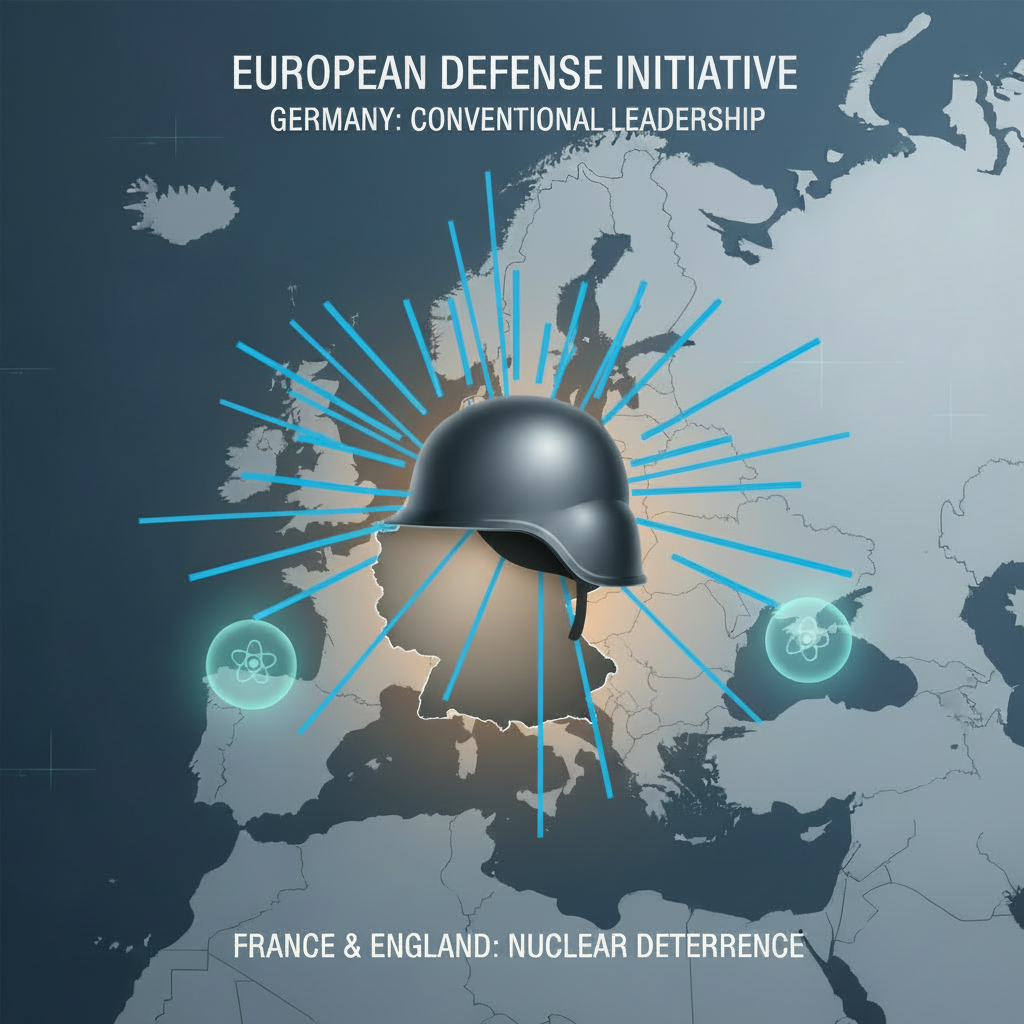
"An infographic illustrating Germany's leadership in European conventional rearmament, represented by a modern military helmet positioned slightly off-center on a glowing Europe. The globe features stylized outlines of European countries, with subtle nuclear symbols near France and England to signify their nuclear capabilities. The composition uses a professional, minimalist style with muted grays, blues, and metallic tones, emphasizing Germany's strategic role in European defense."

Le prochain hégémon de l’Europe : Les implications stratégiques et géopolitiques d’une Allemagne réarmée

Résumé analytique Le 27 février 2022, les plaques tectoniques de la sécurité européenne ont bougé. Lors d’une session extraordinaire du Bundestag, le chancelier Olaf Scholz a annoncé un Zeitenwende — un tournant décisif. Ce n’était pas une simple réaction à l’invasion de l’Ukraine par la Russie ; c’était l’abandon de près de huit décennies de […]
Le prochain hégémon de l’Europe : Les implications stratégiques et géopolitiques d’une Allemagne réarmée Read More »

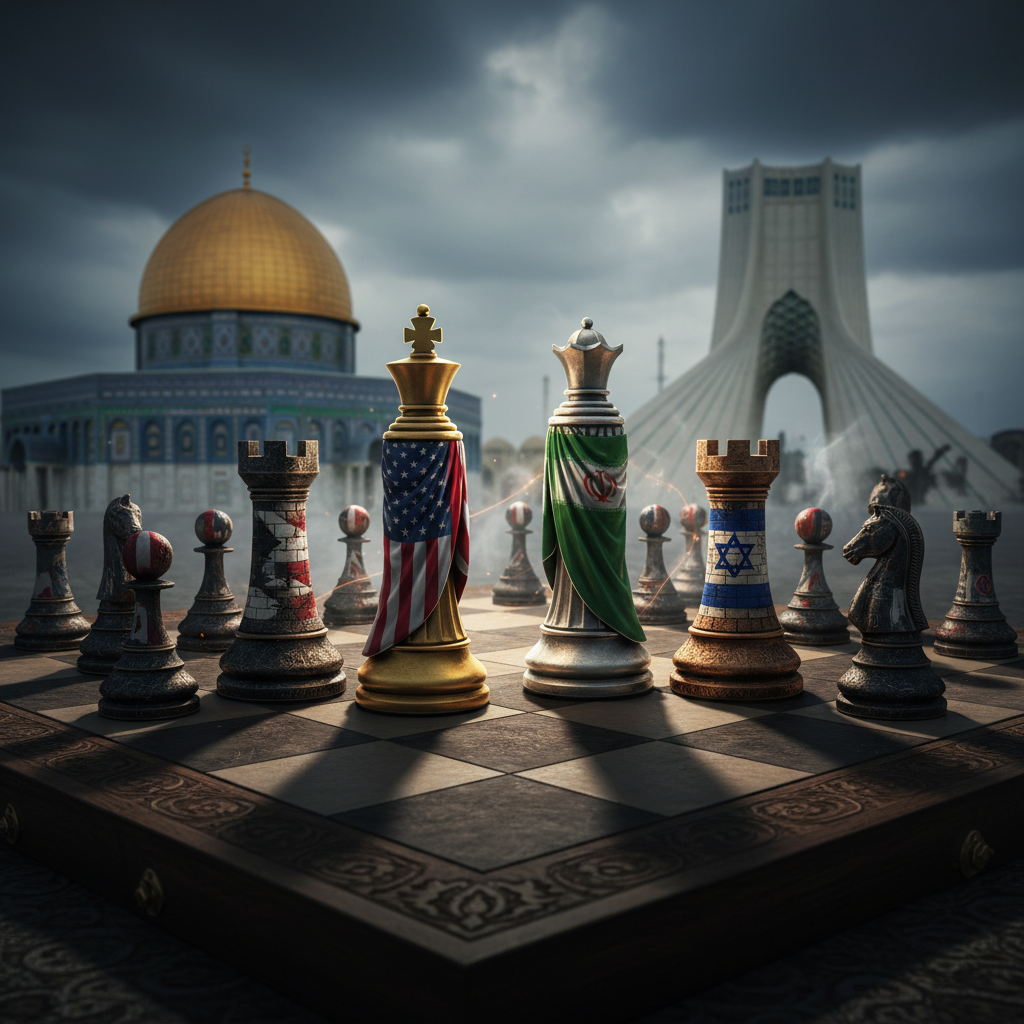
An editorial illustration depicting geopolitical tensions in the Middle East. The scene features a chessboard with symbolic chess pieces representing major powers like the United States, Iran, and Israel. Iconic landmarks and national flags are integrated into the background, while interconnected shadows symbolize Iranian proxies and regional actors. The atmosphere is serious, emphasizing high stakes and regional instability, rendered in a photorealistic style suitable for news or political analysis.

Current Tensions Between Iran, the US, and Israel

Key Points Iran’s Central Role in the CrisisIran remains at the heart of an international crisis involving Washington and Tel Aviv, driven by its accelerated nuclear program, ballistic expansion, repeated violations of international obligations, and structural support for a network of regional armed groups. Despite formal commitments under the Non-Proliferation Treaty (NPT) and the Joint

Current Tensions Between Iran, the US, and Israel Read More »

An editorial illustration depicting geopolitical tensions in the Middle East. The scene features a chessboard with symbolic chess pieces representing major powers like the United States, Iran, and Israel. Iconic landmarks and national flags are integrated into the background, while interconnected shadows symbolize Iranian proxies and regional actors. The atmosphere is serious, emphasizing high stakes and regional instability, rendered in a photorealistic style suitable for news or political analysis.

Tensions actuelles entre l’Iran, les États-Unis et Israël

Points Cles Contexte stratégique Histoire et évolution du programme nucléaire et balistique iranien Cadre juridique, conformité et régime de sanctions internationales Approches opérationnelles Dynamique régionale et rôle des groupes soutenus par l’Iran Conformité, chantage diplomatique et pressions internes La connexion Gaza : pièges tactiques et résilience du Hamas Présence et renforcement de la flotte américaine

Tensions actuelles entre l’Iran, les États-Unis et Israël Read More »

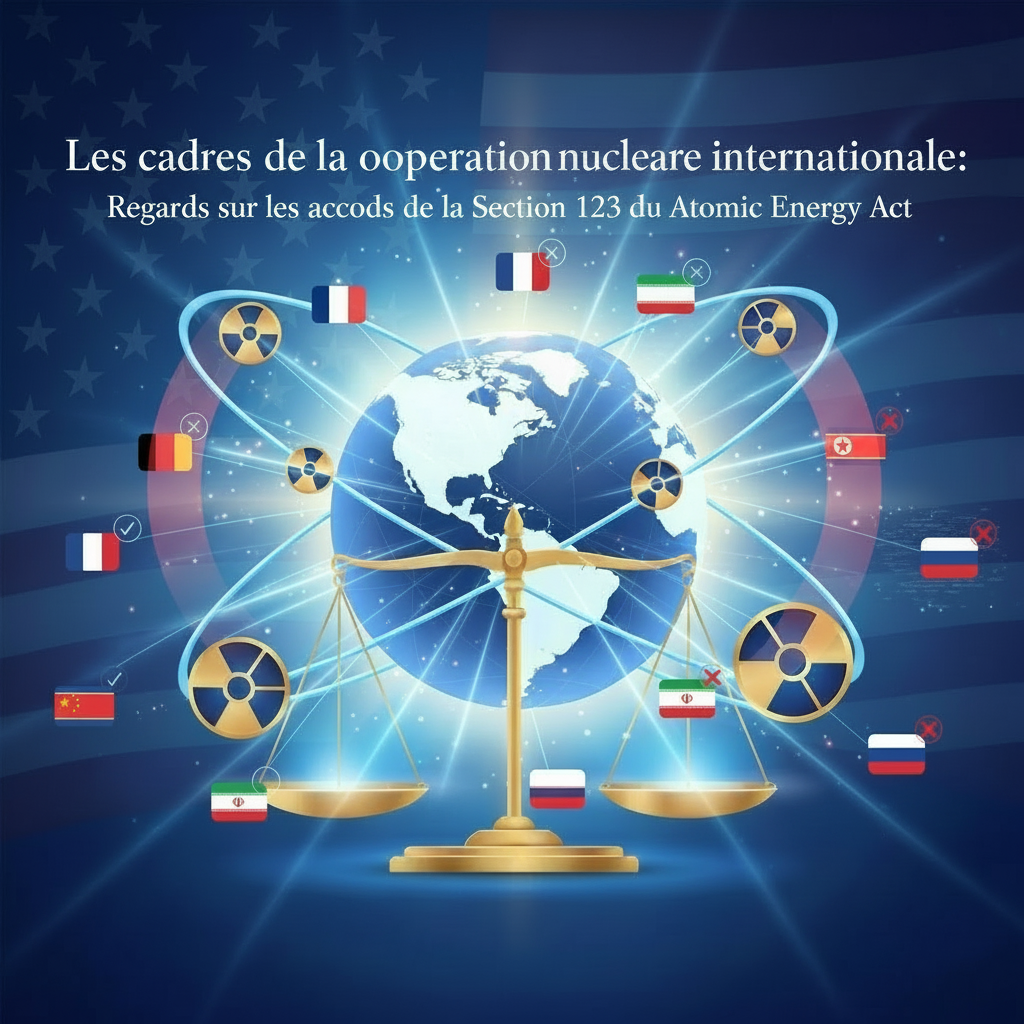
The image depicts global nuclear cooperation and regulation, symbolized by a globe on scales, national flags, and nuclear symbols, set against a US flag backdrop. It visually contrasts cooperative countries with glowing connections and non-cooperative ones with subtle barriers, emphasizing the dynamics of international nuclear agreements.

Les cadres de la coopération nucléaire internationale : Regards sur les accords de la Section 123 du Atomic Energy Act

1. Introduction aux Accords de la Section 123 — Un Enjeu Majeur pour la Gouvernance Nucléaire La coopération nucléaire civile internationale s’inscrit au cœur des enjeux de sécurité globale, de stratégie diplomatique et de développement économique. Avant que les États-Unis n’exportent un réacteur, des composants sensibles ou du combustible nucléaire à destination d’un autre pays,

Les cadres de la coopération nucléaire internationale : Regards sur les accords de la Section 123 du Atomic Energy Act Read More »

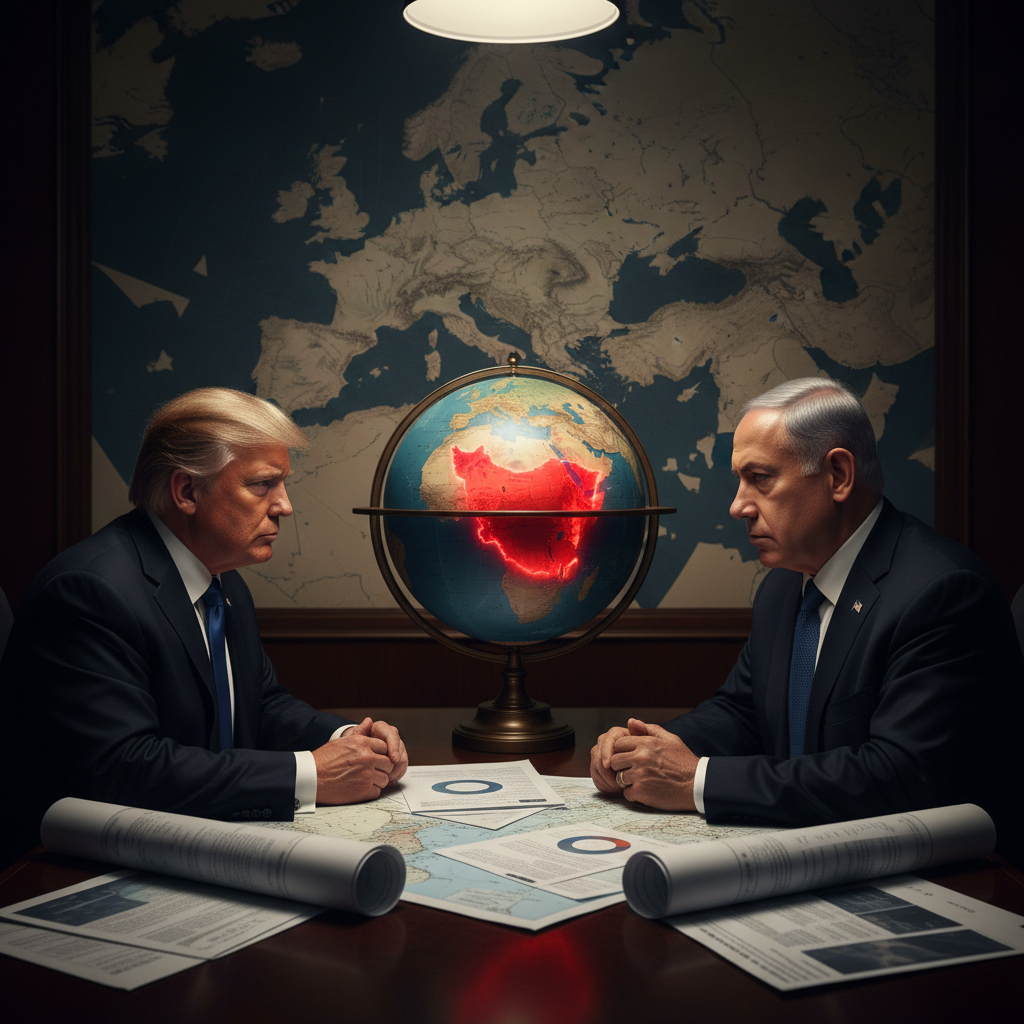
"Donald Trump and Benjamin Netanyahu engaged in a serious discussion at a table with maps and documents, symbolizing strategic planning for a potential strike on Iran. In the background, a distressed Iranian population under threat is depicted, symbolizing the ongoing massacre, while a fragmented and fading Europe looms in the distance, representing its absence from the debate. The scene is set with dark, moody tones and a faint light symbolizing hope and rescue."

La Mission Urgente de Netanyahu à Washington : Confronter les Menaces des Missiles et Satellites Iraniens

La visite imminente du Premier ministre Benjamin Netanyahu à Washington, D.C., représente un moment crucial dans la lutte continue pour contrer les menaces croissantes posées par l’Iran. Alors que l’attention mondiale reste largement concentrée sur les ambitions nucléaires de l’Iran, ce voyage met en lumière une préoccupation plus large et tout aussi pressante : le

La Mission Urgente de Netanyahu à Washington : Confronter les Menaces des Missiles et Satellites Iraniens Read More »

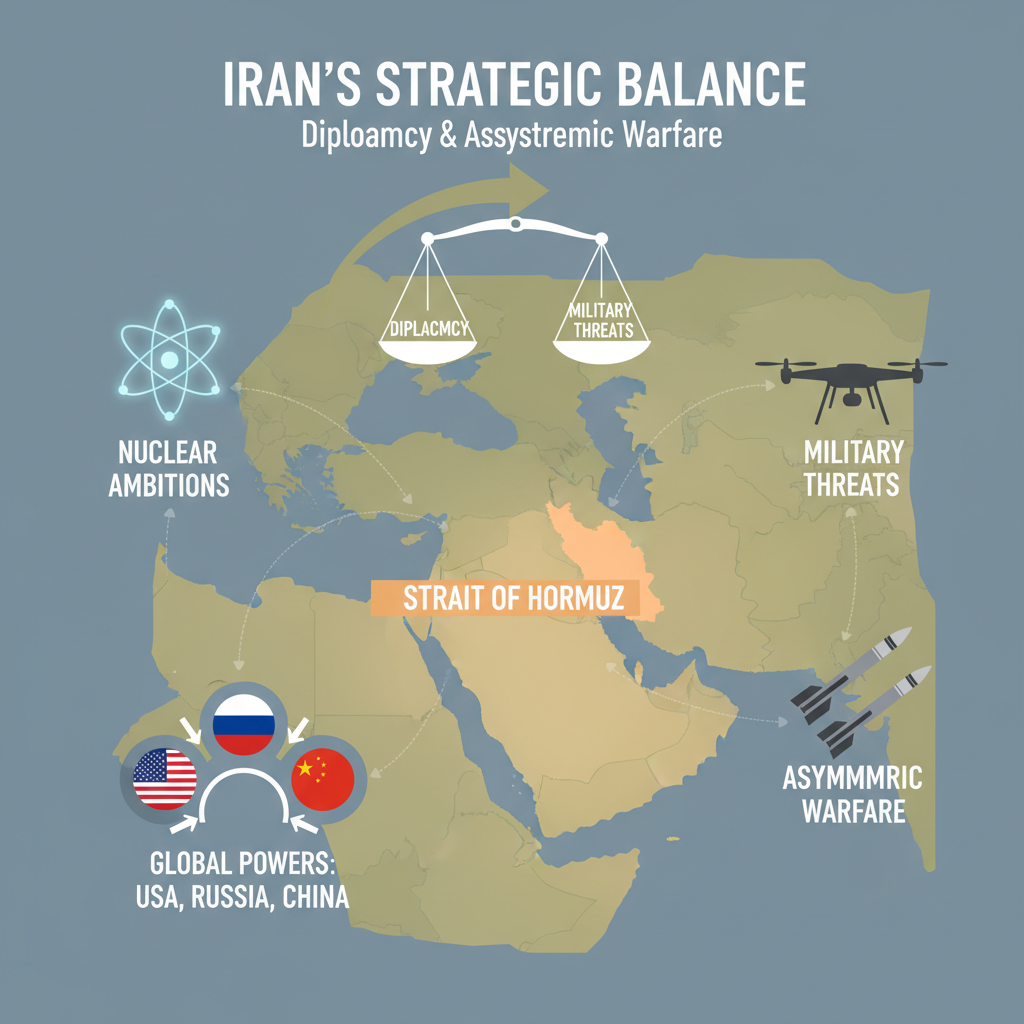
ran Strategy Infographic: A professional visual representation of Iran's strategic balance, featuring elements like a nuclear symbol for its nuclear ambitions, a map of the Middle East highlighting the Strait of Hormuz, military equipment such as drones and missiles for asymmetric warfare, and flags of global powers (USA, Russia, China) to depict geopolitical positioning

Iran’s Strategy: A Technical Analysis Between Negotiation and Coercion

The foreign policy of the Islamic Republic of Iran is a fascinating subject of study for experts in international relations and military sciences. Often described as dualistic, it constantly oscillates between diplomatic negotiation and military coercion. This approach is not contradictory but rather constitutes a coherent strategic doctrine rooted in realist theory, aimed at ensuring

Iran’s Strategy: A Technical Analysis Between Negotiation and Coercion Read More »

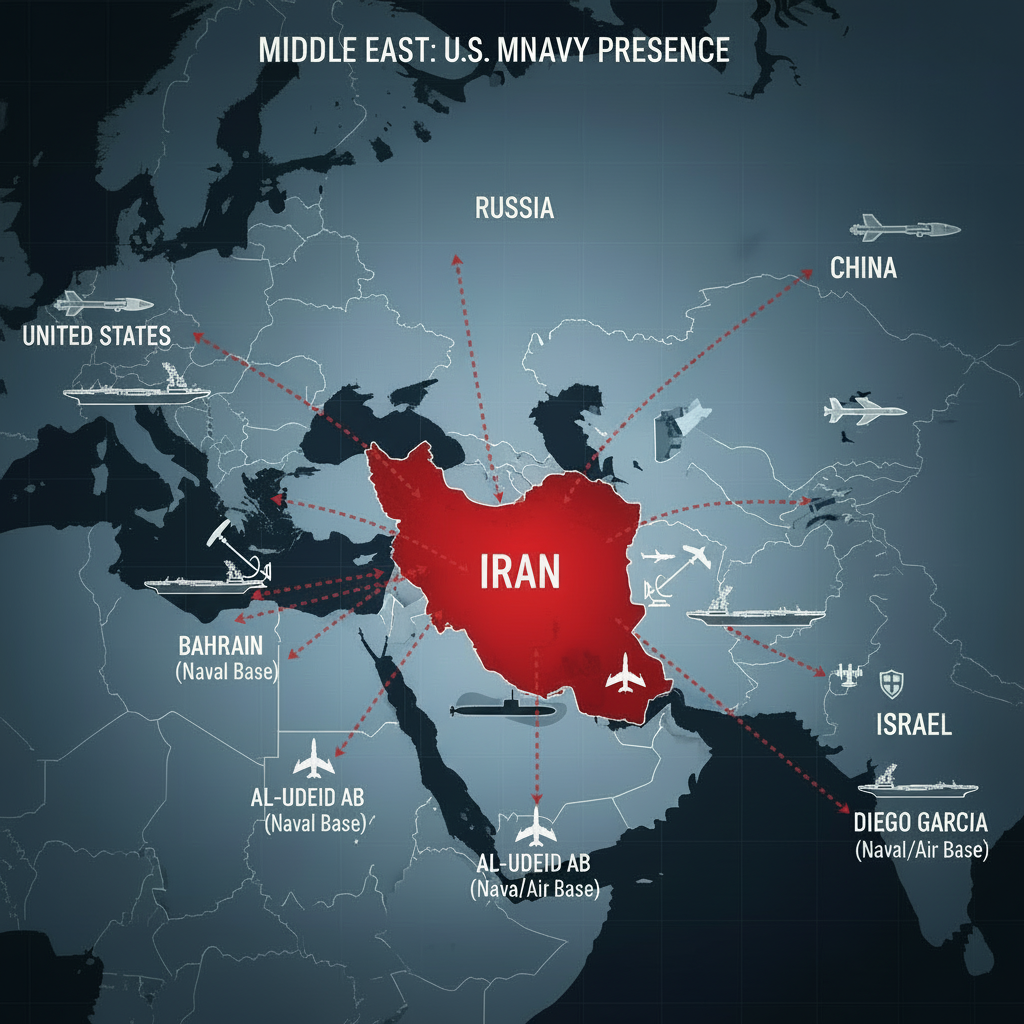
"Carte géopolitique du Moyen-Orient mettant en évidence l'Iran et la présence stratégique des bâtiments de la Navy américaine, incluant des porte-avions, destroyers et sous-marins positionnés dans des zones clés comme le Golfe Persique et l'océan Indien. Style moderne avec des couleurs sobres bleu, gris et rouge."

Geopolitical Dynamics Around Iran and Global Tensions: Fragile Alliances, Nuclear Ambitions, and International Pressures

Iran’s geopolitical position and the resulting global tensions are shaped by historical rivalries, controversial nuclear ambitions, and shifting alliances. This context highlights the complex relationships between Iran, the United States, Russia, China, and regional powers like Israel, as well as the implications for both regional and global stability. Meanwhile, strategic military exercises such as France’s Orion

Geopolitical Dynamics Around Iran and Global Tensions: Fragile Alliances, Nuclear Ambitions, and International Pressures Read More »

"Carte géopolitique du Moyen-Orient mettant en évidence l'Iran et la présence stratégique des bâtiments de la Navy américaine, incluant des porte-avions, destroyers et sous-marins positionnés dans des zones clés comme le Golfe Persique et l'océan Indien. Style moderne avec des couleurs sobres bleu, gris et rouge."

Les dynamiques géopolitiques autour de l’Iran et des tensions globales : entre alliances fragiles, ambitions nucléaires et pressions internationales

La position géopolitique de l’Iran et les tensions globales qui en découlent sont marquées par des rivalités historiques, des ambitions nucléaires controversées et des alliances fluctuantes. Ce contexte met en lumière les relations entre l’Iran, les États-Unis, la Russie, la Chine et les puissances régionales comme Israël, ainsi que les implications pour la stabilité régionale

Les dynamiques géopolitiques autour de l’Iran et des tensions globales : entre alliances fragiles, ambitions nucléaires et pressions internationales Read More »

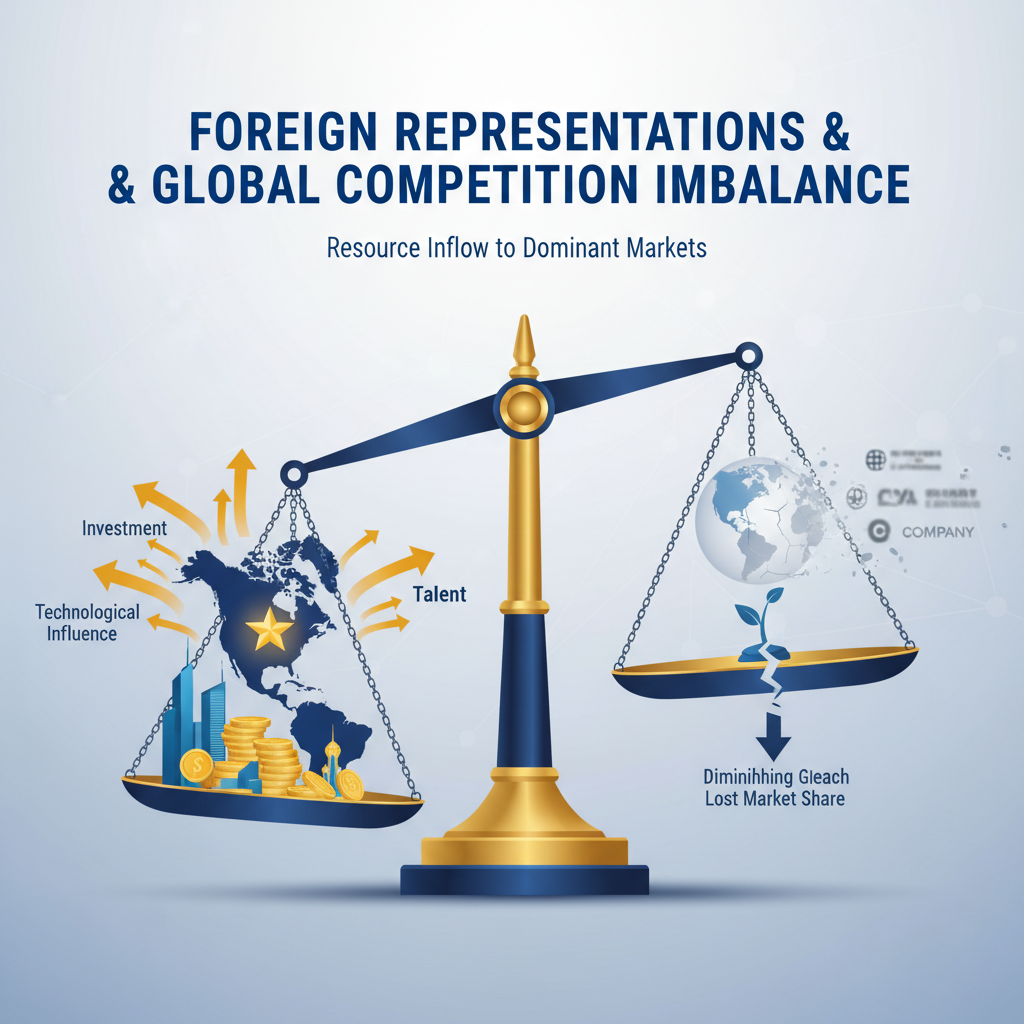
Strategic Analysis: Foreign Representation and U.S. Supply Chain Risks

Our latest report uncovers the tactical operations of foreign representation centers in the U.S., analyzing their impact on competition and critical supply chains. Beyond Diplomacy: Inside the Strategic Machinery of Foreign Representation in the U.S. We often view foreign relations through the lens of formal treaties, state dinners, and high-level summits. However, the real machinery

Strategic Analysis: Foreign Representation and U.S. Supply Chain Risks Read More »

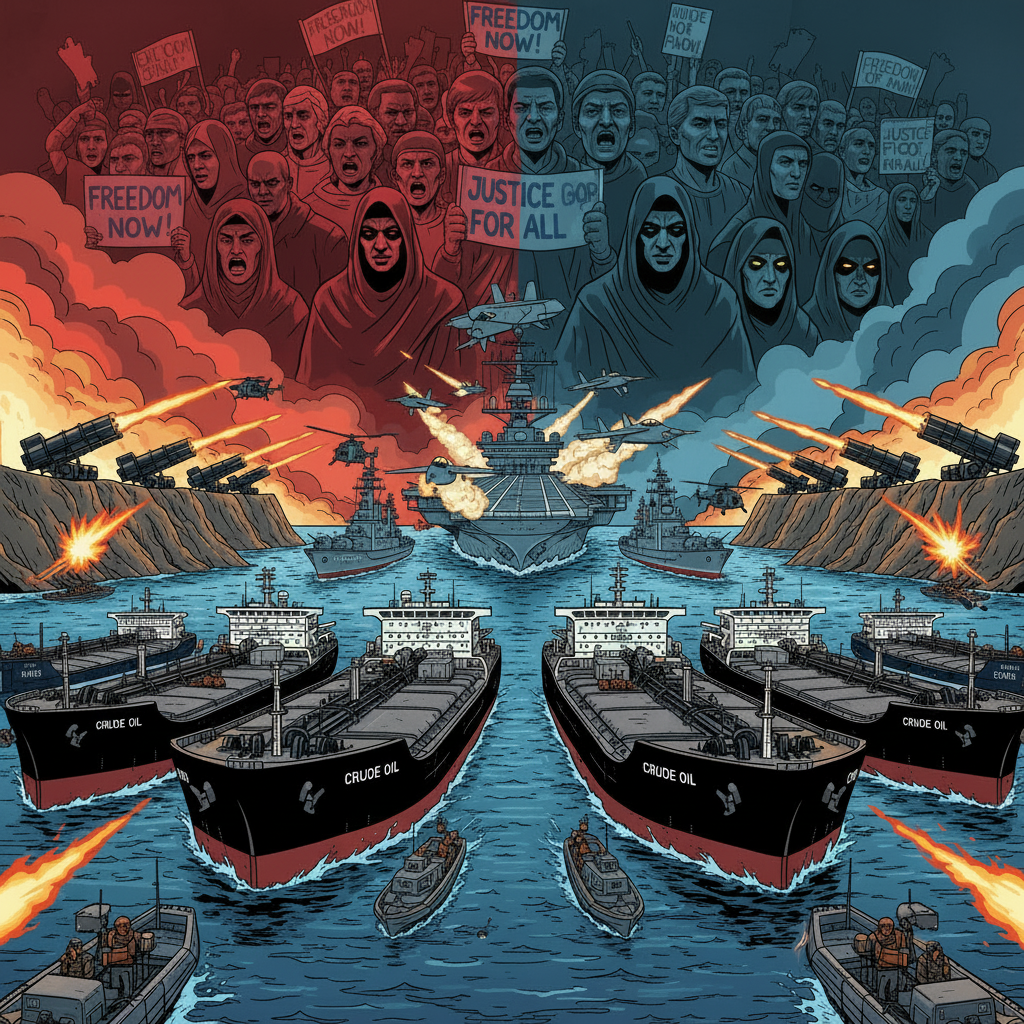
"An intense illustration depicting the escalating U.S.-Iran tensions. The Strait of Hormuz is shown with oil tankers under threat, surrounded by Iranian naval forces, patrol boats, and naval mines. A U.S. aircraft carrier group approaches, with jets taking off and helicopters in the air, symbolizing military reinforcement. In the background, a mural-style depiction of protestors holding signs for freedom and justice contrasts with shadowy, menacing figures representing the Iranian regime. The color palette features fiery reds and deep blues, emphasizing conflict and urgency."

L’Iran et ses Proxies Intensifient leurs Menaces face au Renforcement Militaire des États-Unis

Hajj Abu Husayn al Hamidawi, le leader de la milice irakienne pro-iranienne Kataib Hezbollah, a récemment été photographié en train de remplir un formulaire de « volontaire martyr ». Téhéran et son réseau d’alliés régionaux ont intensifié leurs menaces contre les États-Unis et Israël en réponse à la décision de Washington d’augmenter sa présence militaire

L’Iran et ses Proxies Intensifient leurs Menaces face au Renforcement Militaire des États-Unis Read More »