Defense

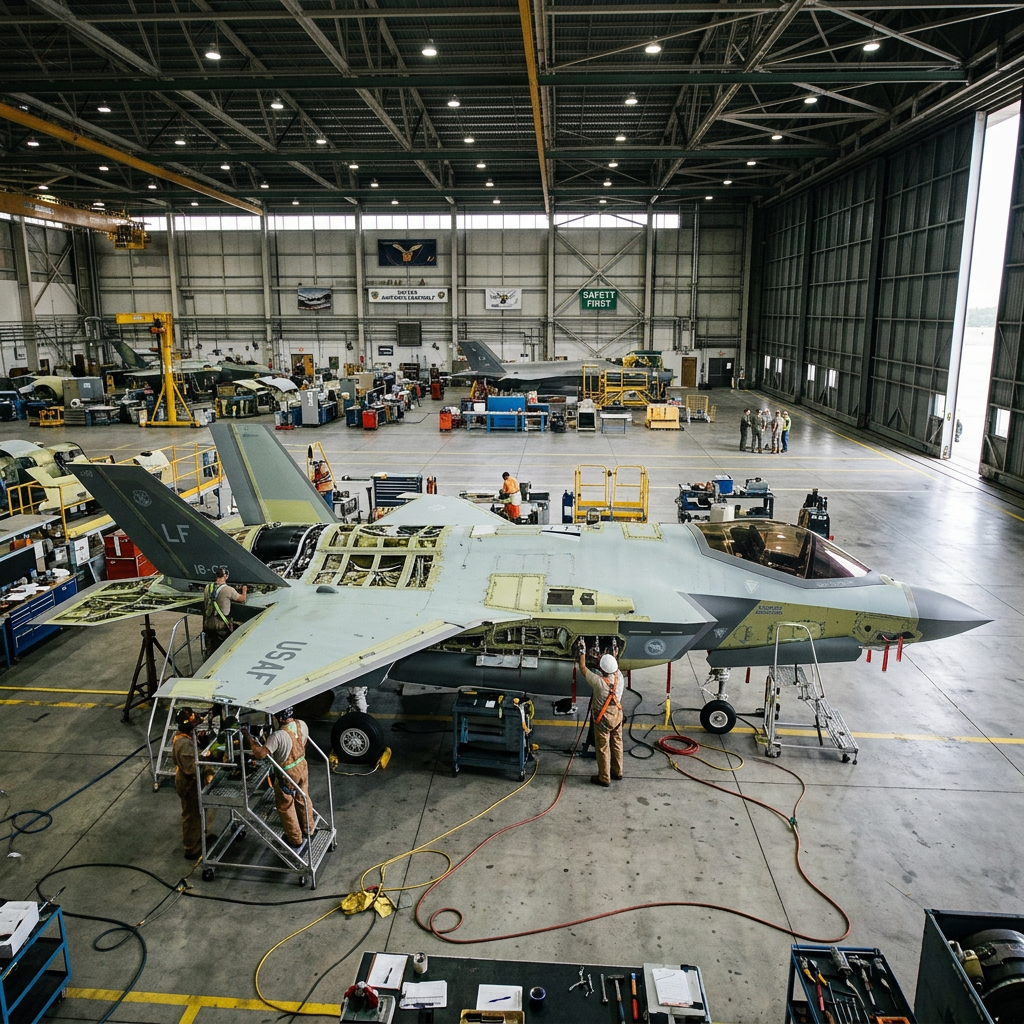
Military jet undergoing maintenance with technicians working in an aircraft hangar

Defense Spending: Strategy, Cost, and Opportunity Costs

This article analyzes defense spending as a complex economic decision, highlighting the difficulty of measuring its effectiveness since it aims to prevent disasters rather than generate returns. It advocates for optimized military budgets aligned with clear strategies, while emphasizing opportunity costs, procurement inefficiencies, and the importance of balancing security needs with economic realities.

Defense Spending: Strategy, Cost, and Opportunity Costs Read More »

Drone flying over industrial storage tanks under a colorful sunset sky

The Shift from Deterrence to Defense: Lessons Learned

This essay analyzes the selective failure of nuclear deterrence observed in the conflicts of 2025 and 2026, highlighting cases in Ukraine, Israel, South Asia, and Iran. It advocates for a shift from deterrence by threat to deterrence by denial, emphasizing resilience and defense while warning against the impulse for nuclear proliferation among anxious allies.

The Shift from Deterrence to Defense: Lessons Learned Read More »

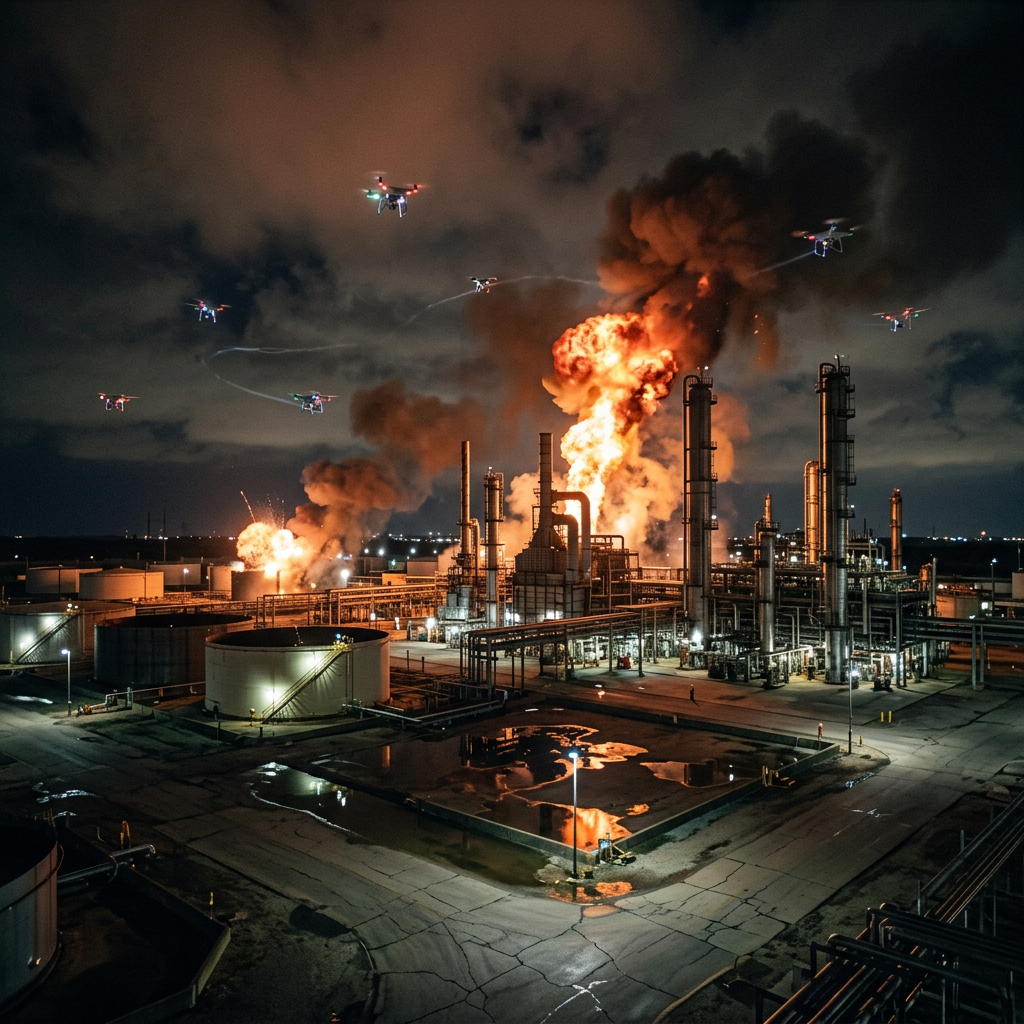
Drones flying over refinery with large flames and smoke from explosion at night

Russia-Ukraine War Update: Stalled Offensives and Fuel Crisis by July 2026

By July 2026, the Russia-Ukraine war has shifted to a stalemate marked by limited territorial gains for Russia, a severe fuel crisis from Ukrainian strikes, and expanding geopolitical implications. Russia’s offensive stutters, and a Ukrainian deep-strike campaign severely hampers Russian logistics, exacerbating operational challenges and casualties.

Russia-Ukraine War Update: Stalled Offensives and Fuel Crisis by July 2026 Read More »

Two cargo container ships at sea in stormy weather with rough waves and dark clouds

Strategic Risks of the South China Sea for Global Trade

The South China Sea is a critical area for global trade, with a third of maritime commerce passing through it, creating significant business risks. CEOs must address this persistent geopolitical tension, as disruptions can severely impact supply chains and enterprise value. Organizations should invest in resilience and prepare for potential crises to mitigate these risks effectively.

Strategic Risks of the South China Sea for Global Trade Read More »

Air Force drone flying over a city skyline at dusk with illuminated buildings

LAWS: Analyzing AI-Driven Autonomous Weapons in Modern Warfare

Lethal autonomous weapons systems (LAWS) are actively deployed in conflicts, presenting significant governance challenges. This article analyzes their technology, legal implications, and international governance efforts. It highlights the need for a binding treaty to ensure ethical accountability and compliance with international humanitarian law to address gaps in existing frameworks and prevent misuse.

LAWS: Analyzing AI-Driven Autonomous Weapons in Modern Warfare Read More »

High-contrast infographic map illustrating the Indo-Pacific maritime strategy, highlighting global trade routes, key economic hubs, and critical maritime chokepoints for international commerce

Asia’s Sea Lanes Under Pressure: The Strategic Warning From Hormuz

Meta Title: Indo-Pacific Maritime Security Strategy: Hormuz Warning, Malacca Trade Risks, Taiwan Strait Economic Impact & Supply Chain Resilience Meta Description: Explore how the Strait of Hormuz crisis is reshaping Indo-Pacific maritime security strategy, from Strait of Malacca trade risks to Taiwan Strait economic impact, supply chain resilience, semiconductor exposure, and the growing threat of

Asia’s Sea Lanes Under Pressure: The Strategic Warning From Hormuz Read More »

"An infographic illustrating Germany's leadership in European conventional rearmament, represented by a modern military helmet positioned slightly off-center on a glowing Europe. The globe features stylized outlines of European countries, with subtle nuclear symbols near France and England to signify their nuclear capabilities. The composition uses a professional, minimalist style with muted grays, blues, and metallic tones, emphasizing Germany's strategic role in European defense."

Le prochain hégémon de l’Europe : Les implications stratégiques et géopolitiques d’une Allemagne réarmée

Résumé analytique Le 27 février 2022, les plaques tectoniques de la sécurité européenne ont bougé. Lors d’une session extraordinaire du Bundestag, le chancelier Olaf Scholz a annoncé un Zeitenwende — un tournant décisif. Ce n’était pas une simple réaction à l’invasion de l’Ukraine par la Russie ; c’était l’abandon de près de huit décennies de

Le prochain hégémon de l’Europe : Les implications stratégiques et géopolitiques d’une Allemagne réarmée Read More »

"An infographic illustrating Germany's leadership in European conventional rearmament, represented by a modern military helmet positioned slightly off-center on a glowing Europe. The globe features stylized outlines of European countries, with subtle nuclear symbols near France and England to signify their nuclear capabilities. The composition uses a professional, minimalist style with muted grays, blues, and metallic tones, emphasizing Germany's strategic role in European defense."

Europe’s Next Hegemon: Strategic and Geopolitical Consequences of a Rearmed Germany

Executive Summary On February 27, 2022, Germany reached a turning point. Chancellor Olaf Scholz’s announcement of a Zeitenwende—a “watershed moment” in German foreign and security policy—was more than a pledge to funnel hundreds of billions of euros into the Bundeswehr. For the first time since World War II, Germany cast aside its long-held reservations about

Europe’s Next Hegemon: Strategic and Geopolitical Consequences of a Rearmed Germany Read More »