defense

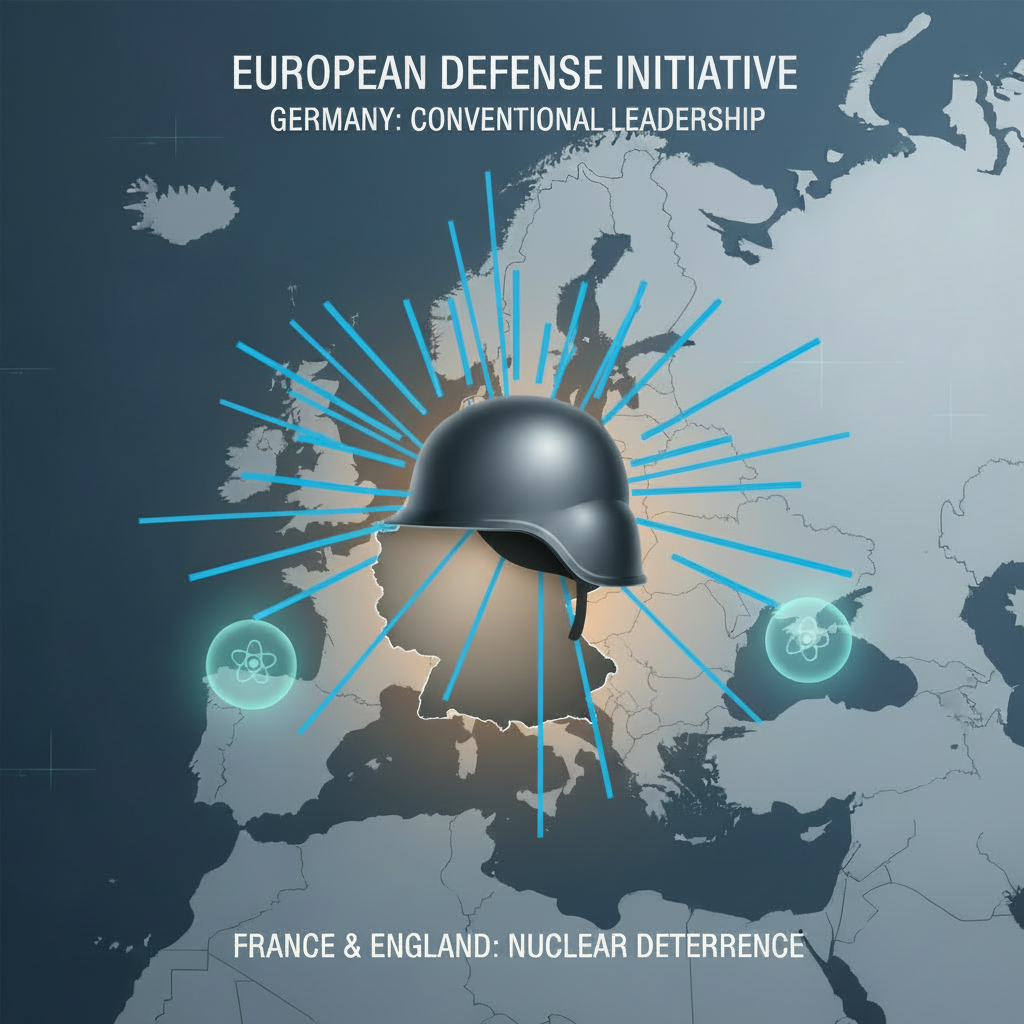
"An infographic illustrating Germany's leadership in European conventional rearmament, represented by a modern military helmet positioned slightly off-center on a glowing Europe. The globe features stylized outlines of European countries, with subtle nuclear symbols near France and England to signify their nuclear capabilities. The composition uses a professional, minimalist style with muted grays, blues, and metallic tones, emphasizing Germany's strategic role in European defense."

Le prochain hégémon de l’Europe : Les implications stratégiques et géopolitiques d’une Allemagne réarmée

Résumé analytique Le 27 février 2022, les plaques tectoniques de la sécurité européenne ont bougé. Lors d’une session extraordinaire du Bundestag, le chancelier Olaf Scholz a annoncé un Zeitenwende — un tournant décisif. Ce n’était pas une simple réaction à l’invasion de l’Ukraine par la Russie ; c’était l’abandon de près de huit décennies de […]

Le prochain hégémon de l’Europe : Les implications stratégiques et géopolitiques d’une Allemagne réarmée Read More »

"An infographic illustrating Germany's leadership in European conventional rearmament, represented by a modern military helmet positioned slightly off-center on a glowing Europe. The globe features stylized outlines of European countries, with subtle nuclear symbols near France and England to signify their nuclear capabilities. The composition uses a professional, minimalist style with muted grays, blues, and metallic tones, emphasizing Germany's strategic role in European defense."

Europe’s Next Hegemon: Strategic and Geopolitical Consequences of a Rearmed Germany

Executive Summary On February 27, 2022, Germany reached a turning point. Chancellor Olaf Scholz’s announcement of a Zeitenwende—a “watershed moment” in German foreign and security policy—was more than a pledge to funnel hundreds of billions of euros into the Bundeswehr. For the first time since World War II, Germany cast aside its long-held reservations about

Europe’s Next Hegemon: Strategic and Geopolitical Consequences of a Rearmed Germany Read More »

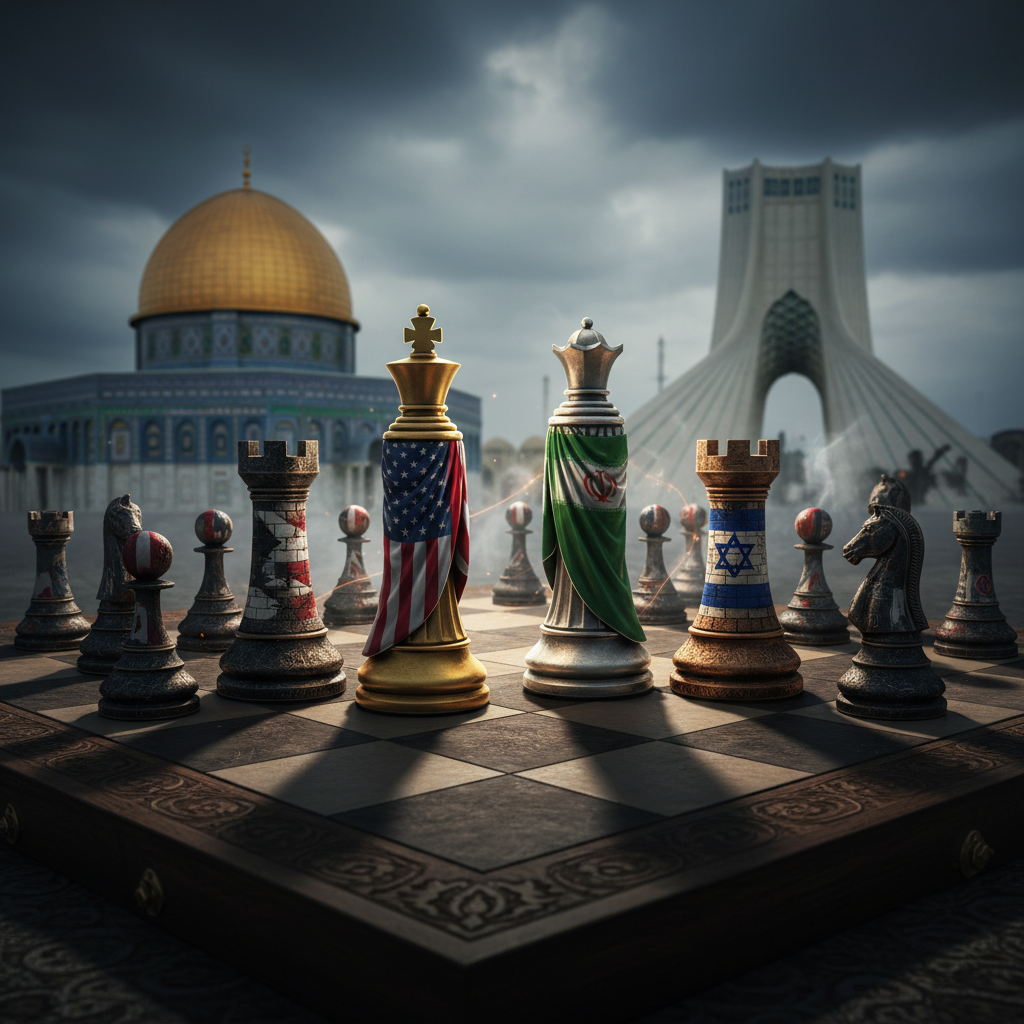
An editorial illustration depicting geopolitical tensions in the Middle East. The scene features a chessboard with symbolic chess pieces representing major powers like the United States, Iran, and Israel. Iconic landmarks and national flags are integrated into the background, while interconnected shadows symbolize Iranian proxies and regional actors. The atmosphere is serious, emphasizing high stakes and regional instability, rendered in a photorealistic style suitable for news or political analysis.

Current Tensions Between Iran, the US, and Israel

Key Points Iran’s Central Role in the CrisisIran remains at the heart of an international crisis involving Washington and Tel Aviv, driven by its accelerated nuclear program, ballistic expansion, repeated violations of international obligations, and structural support for a network of regional armed groups. Despite formal commitments under the Non-Proliferation Treaty (NPT) and the Joint

Current Tensions Between Iran, the US, and Israel Read More »

An editorial illustration depicting geopolitical tensions in the Middle East. The scene features a chessboard with symbolic chess pieces representing major powers like the United States, Iran, and Israel. Iconic landmarks and national flags are integrated into the background, while interconnected shadows symbolize Iranian proxies and regional actors. The atmosphere is serious, emphasizing high stakes and regional instability, rendered in a photorealistic style suitable for news or political analysis.

Tensions actuelles entre l’Iran, les États-Unis et Israël

Points Cles Contexte stratégique Histoire et évolution du programme nucléaire et balistique iranien Cadre juridique, conformité et régime de sanctions internationales Approches opérationnelles Dynamique régionale et rôle des groupes soutenus par l’Iran Conformité, chantage diplomatique et pressions internes La connexion Gaza : pièges tactiques et résilience du Hamas Présence et renforcement de la flotte américaine

Tensions actuelles entre l’Iran, les États-Unis et Israël Read More »

A high-tech command center with a large curved screen displaying a detailed world map and data visualizations. The room is dimly lit with ambient blue and white lighting, creating a focused and professional atmosphere. In the foreground, a sleek glass desk holds a tablet showcasing a digital dossier titled "Unified Geopolitical Analysis Rewrite," surrounded by minimalistic office items like a pen, notebook, and coffee cup. The scene conveys a sense of global strategy and data-driven decision-making.

La poudrière : repenser la dissuasion face à la nouvelle donne stratégique

Synthèse stratégique Qualifier le monde actuel de « poudrière », selon le général Pierre de Villiers, n’est pas du simple alarmisme : c’est le cœur des enjeux sécuritaires contemporains. Le « dividende de la paix » post-Guerre froide a disparu. À sa place, la résurgence des rivalités, l’effritement des régimes de contrôle des armements et

La poudrière : repenser la dissuasion face à la nouvelle donne stratégique Read More »

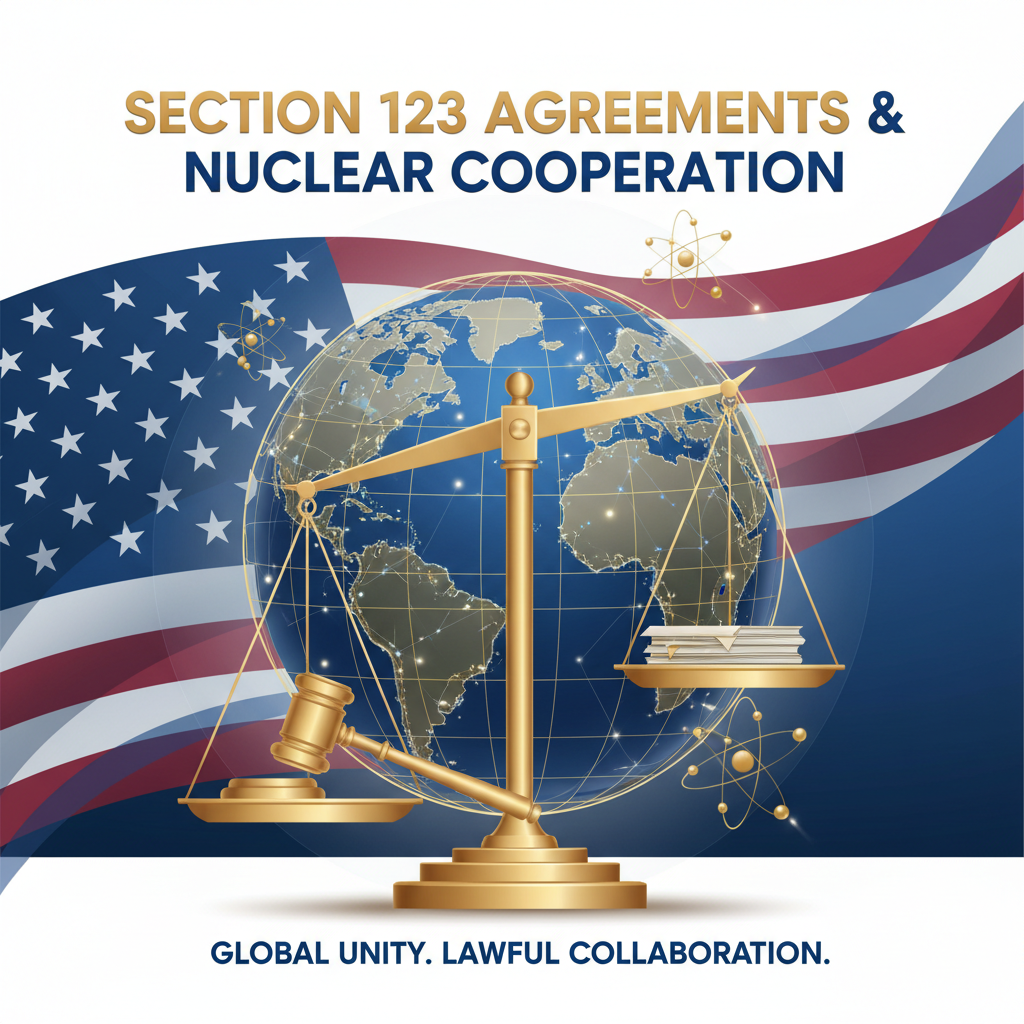
Illustration depicting global nuclear cooperation and legal agreements, symbolized by scales of justice, a globe, and the US flag, conveying balance and international law.

Section 123 Agreements and Nuclear Cooperation.

1. Introduction: The Stakes of International Nuclear Cooperation Civil nuclear partnerships are not simply commercial transactions; they represent a fusion of science, diplomacy, and global security management. As nations search for sustainable energy and technological self-sufficiency, robust international mechanisms are required to prevent the peaceful atom from fueling the spread of nuclear weapons. The U.S.

Section 123 Agreements and Nuclear Cooperation. Read More »

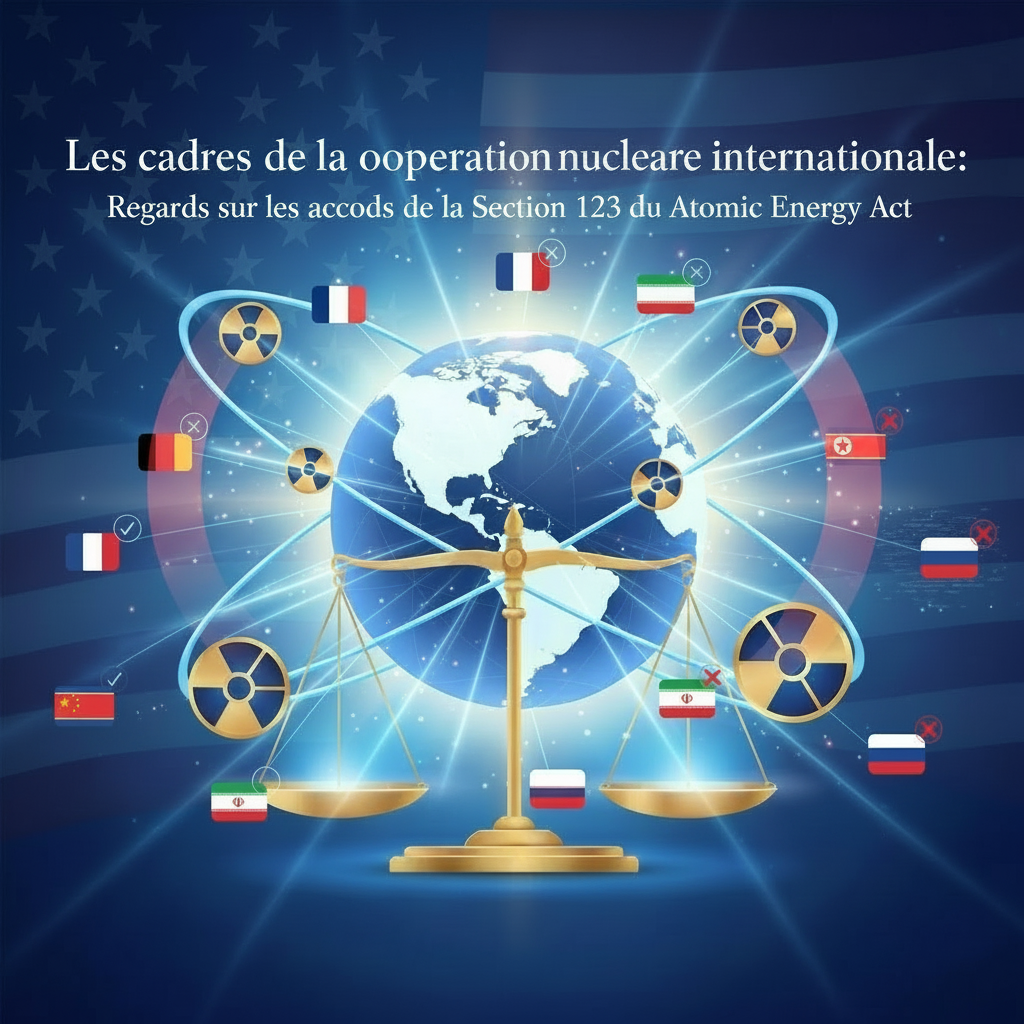
The image depicts global nuclear cooperation and regulation, symbolized by a globe on scales, national flags, and nuclear symbols, set against a US flag backdrop. It visually contrasts cooperative countries with glowing connections and non-cooperative ones with subtle barriers, emphasizing the dynamics of international nuclear agreements.

Les cadres de la coopération nucléaire internationale : Regards sur les accords de la Section 123 du Atomic Energy Act

1. Introduction aux Accords de la Section 123 — Un Enjeu Majeur pour la Gouvernance Nucléaire La coopération nucléaire civile internationale s’inscrit au cœur des enjeux de sécurité globale, de stratégie diplomatique et de développement économique. Avant que les États-Unis n’exportent un réacteur, des composants sensibles ou du combustible nucléaire à destination d’un autre pays,

Les cadres de la coopération nucléaire internationale : Regards sur les accords de la Section 123 du Atomic Energy Act Read More »

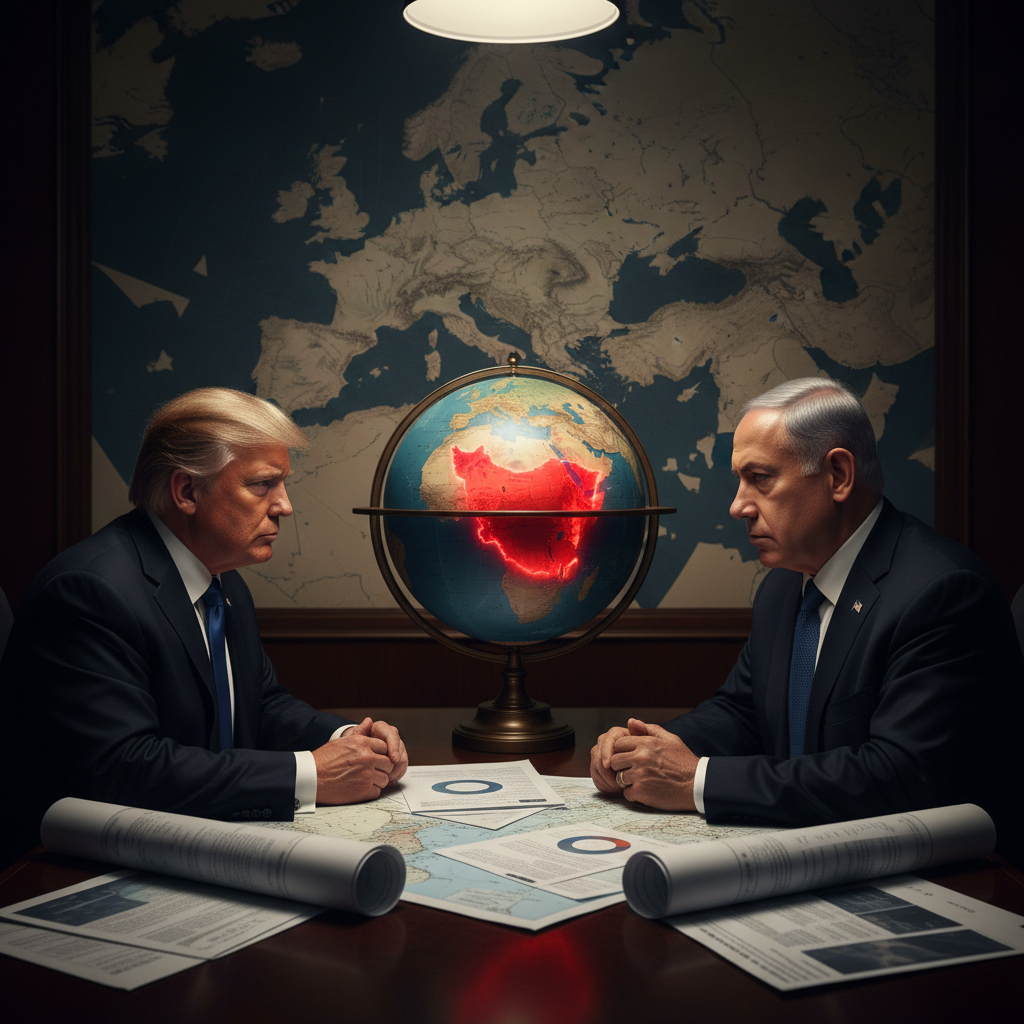
"Donald Trump and Benjamin Netanyahu engaged in a serious discussion at a table with maps and documents, symbolizing strategic planning for a potential strike on Iran. In the background, a distressed Iranian population under threat is depicted, symbolizing the ongoing massacre, while a fragmented and fading Europe looms in the distance, representing its absence from the debate. The scene is set with dark, moody tones and a faint light symbolizing hope and rescue."

Netanyahu’s Urgent Mission to Washington: Confronting Iran’s Missile and Satellite Threats

Prime Minister Benjamin Netanyahu’s upcoming visit to Washington, D.C., is a critical moment in the ongoing struggle to address the growing threats posed by Iran. While much of the global focus remains on Iran’s nuclear ambitions, Netanyahu’s trip highlights a broader and equally pressing concern: Iran’s ballistic missile program and its destabilizing impact on the

Netanyahu’s Urgent Mission to Washington: Confronting Iran’s Missile and Satellite Threats Read More »

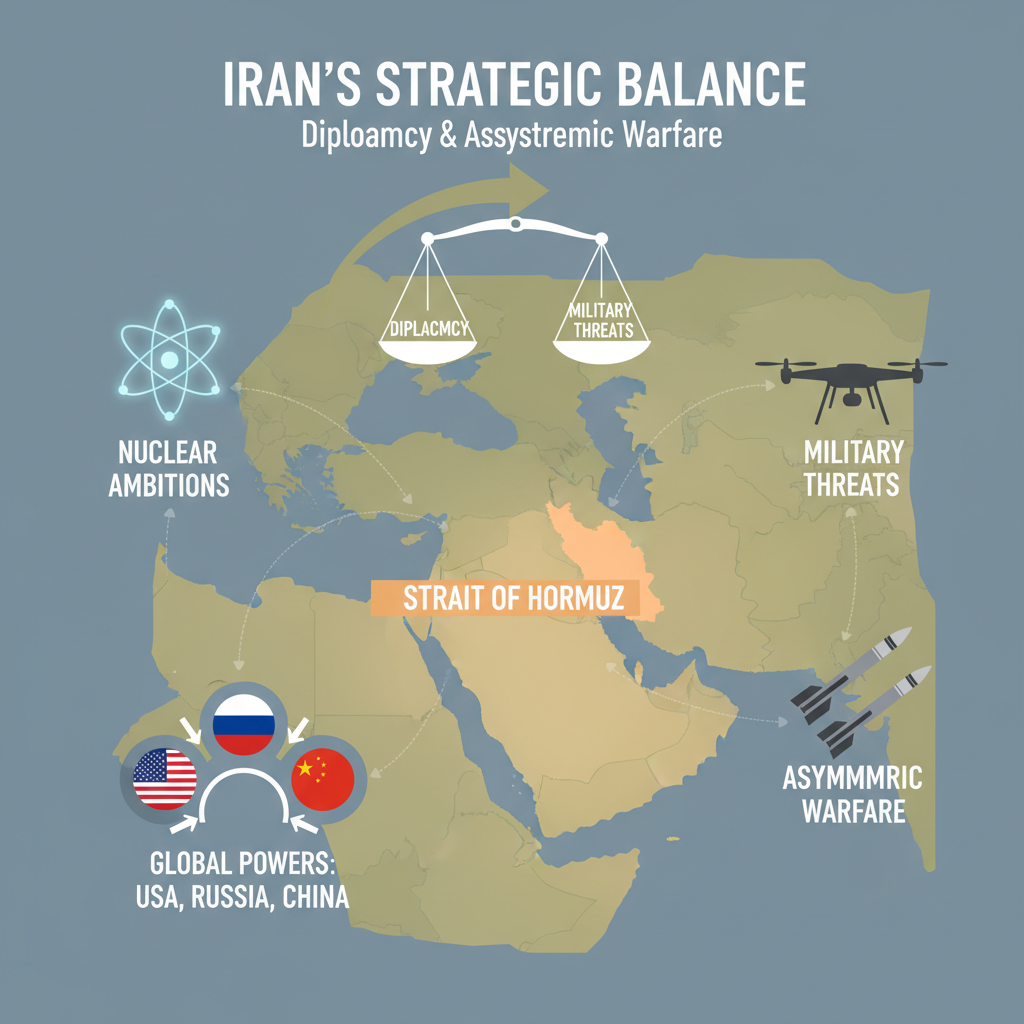
ran Strategy Infographic: A professional visual representation of Iran's strategic balance, featuring elements like a nuclear symbol for its nuclear ambitions, a map of the Middle East highlighting the Strait of Hormuz, military equipment such as drones and missiles for asymmetric warfare, and flags of global powers (USA, Russia, China) to depict geopolitical positioning

La stratégie iranienne : une analyse technique entre négociation et coercition

La politique étrangère de la République islamique d’Iran est un objet d’étude fascinant pour les spécialistes des relations internationales et des sciences militaires. Souvent qualifiée de duale, elle oscille en permanence entre des postures de négociation diplomatique et de coercition militaire. Cette approche n’est pas contradictoire mais constitue une doctrine stratégique cohérente, ancrée dans la

La stratégie iranienne : une analyse technique entre négociation et coercition Read More »

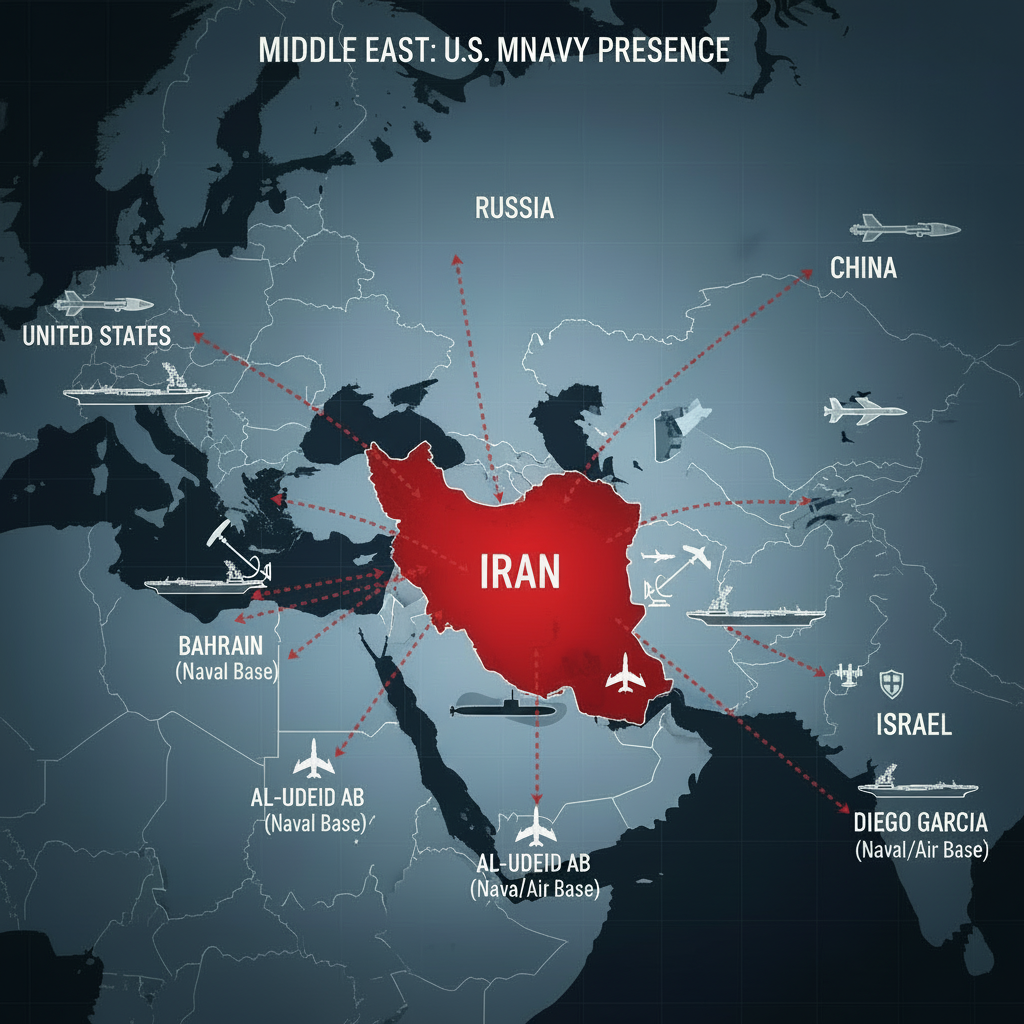
"Carte géopolitique du Moyen-Orient mettant en évidence l'Iran et la présence stratégique des bâtiments de la Navy américaine, incluant des porte-avions, destroyers et sous-marins positionnés dans des zones clés comme le Golfe Persique et l'océan Indien. Style moderne avec des couleurs sobres bleu, gris et rouge."

Les dynamiques géopolitiques autour de l’Iran et des tensions globales : entre alliances fragiles, ambitions nucléaires et pressions internationales

La position géopolitique de l’Iran et les tensions globales qui en découlent sont marquées par des rivalités historiques, des ambitions nucléaires controversées et des alliances fluctuantes. Ce contexte met en lumière les relations entre l’Iran, les États-Unis, la Russie, la Chine et les puissances régionales comme Israël, ainsi que les implications pour la stabilité régionale

Les dynamiques géopolitiques autour de l’Iran et des tensions globales : entre alliances fragiles, ambitions nucléaires et pressions internationales Read More »