Middle East security

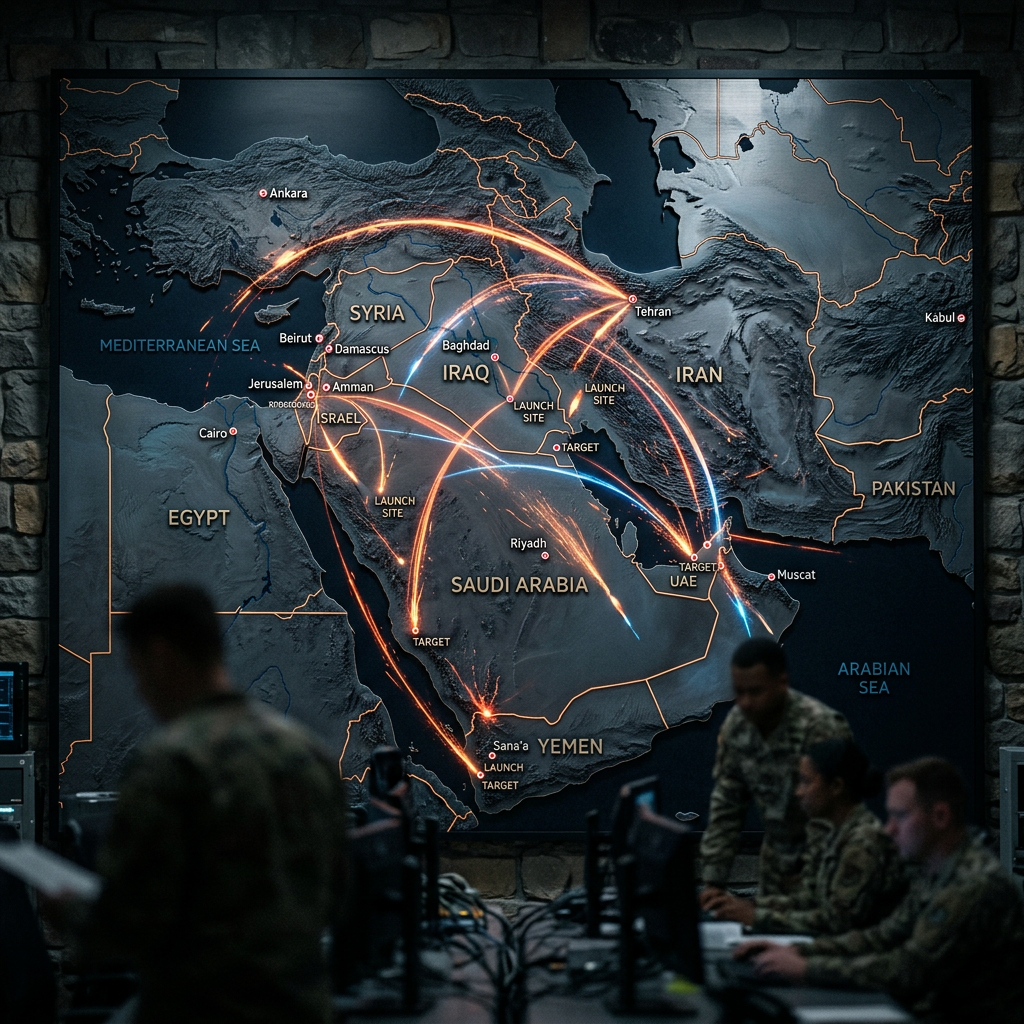
Digital map displaying missile launch sites and targets across Middle Eastern countries with trajectories shown

US-Iran Islamabad MoU: A Fragile Road to Peace

The June 17, 2026 Islamabad MoU between the US and Iran aimed to ease long-standing tensions through a 60-day framework for a comprehensive deal, addressing military operations, sanctions, and nuclear commitments. However, subsequent missile tests, asset disputes, and internal regime divisions reveal a precarious situation with heightened risks of renewed conflict.

US-Iran Islamabad MoU: A Fragile Road to Peace Read More »

Chessboard with chess pieces on sand desert with city skyline and oil refinery at sunset

The Impact of Iran’s Erosion on Middle East Stability

The Middle East is undergoing a significant strategic transformation as the bipolar order between Iran and the U.S.-aligned bloc disintegrates. Key events like the 2026 Iran war and the reimposition of UN sanctions have weakened Iran’s proxy network, prompting Gulf states to adopt a hedging strategy and pursue conditional partnerships, fostering a fluid, multipolar environment marked by uncertainty and adaptive policymaking.

The Impact of Iran’s Erosion on Middle East Stability Read More »

A high-resolution aerial view of the Strait of Hormuz, showcasing two massive aircraft carriers and their escorts alongside commercial vessels. The scene highlights global trade routes and military dominance, with no flags or emblems present, emphasizing the strategic importance of the maritime chokepoint

US Iran Strategic Report Update

Date: April 16, 2026Prepared by: Strategic Geopolitical Intelligence Unit – Responsible Public Affairs Executive Summary The strategic landscape of the Middle East is undergoing a defining transformation, driven by the decisive leadership of the United States and the uncompromising military resilience of Israel. Built upon the foundational successes of the “Maximum Pressure” doctrine championed by

US Iran Strategic Report Update Read More »