international business diplomacy

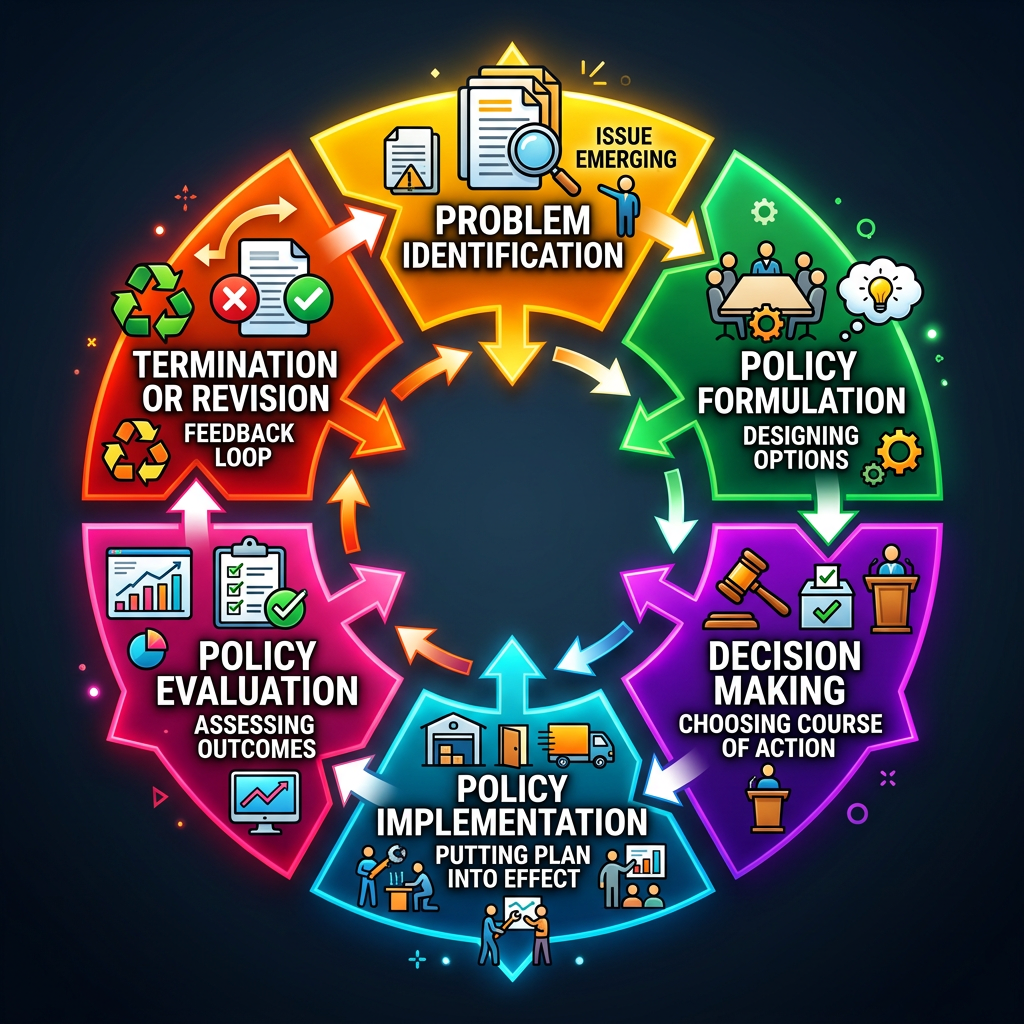
Circular infographic showing four policymaking stages: agenda setting, formulation, implementation, evaluation

From Agenda to Implementation: A Policy Framework

This article argues that policymaking operates as a structured, cyclical system with four interdependent stages: agenda setting, consultation, negotiation, and implementation. Emphasizing case studies from international diplomacy and corporate regulation, it demonstrates that effective policymaking requires understanding this framework to navigate the complexities of power dynamics and design durable agreements.

From Agenda to Implementation: A Policy Framework Read More »

Runic stones with words like Harmony, Journey, Strength, Flow, Wisdom along a winding mountain river

Closing the Gap: Strategic Communications in Public Affairs

This article explores the challenges of strategic communications in public affairs and why evidence-based policies often fail to gain legislative traction. It identifies four key barriers: information overload, misaligned message delivery, neglected relationships, and complex evidence accessibility. Case studies exemplify successful and failed strategies, leading to a framework for effective policy communications.

Closing the Gap: Strategic Communications in Public Affairs Read More »

Office interior with glass walls overlooking futuristic skyscrapers with greenery and elevated transit

Integrating Legislative and Regulatory Affairs for Better Governance

This paper argues that organizations should integrate legislative and regulatory affairs, treating them as interconnected phases of governance. The separation creates risks such as loss of legislative intent and inconsistent positioning. Proposed integration strategies include unified planning, structural alignment, shared intelligence, knowledge continuity, and coherent external messaging for improved policy outcomes.

Integrating Legislative and Regulatory Affairs for Better Governance Read More »

Map of West Africa at night showing country borders illuminated with glowing fiery lines

JNIM Transformation: Threat to Global Security in the Sahel

The security architecture of the Sahel is undergoing a fundamental transformation. In 2024, West Africa accounted for more than half of all terrorism-related deaths globally. Central to this destabilization is the rapid expansion of Jama’at Nusrat al-Islam wal-Muslimin (JNIM). As I recently discussed in an interview with Sky News Arabia, the group is transitioning from

JNIM Transformation: Threat to Global Security in the Sahel Read More »

Increase contrast of policy cycle illustration

Mastering Government Consultations: A Strategic Guide

Governments often seek public input on proposed policies through formal consultations, crucial in shaping effective regulations. Success hinges on timely engagement during the formulation stage, adherence to the Gunning Principles for fair participation, and presenting well-structured, evidence-driven submissions. Collaboration and transparency enhance influence, enabling stakeholders to navigate policy processes effectively.

Mastering Government Consultations: A Strategic Guide Read More »

Increase contrast of futuristic data pathway cityscape

Aligning Corporate Reputation with Public Affairs Strategy

The article asserts that corporate reputation and public affairs should be seen as an interdependent system rather than separate functions. It emphasizes that aligning external advocacy with internal practices enhances credibility, strengthens stakeholder trust, and improves policy influence. Using examples from companies like Microsoft and Unilever, it advocates for deliberate collaboration among executives to convert reputation into a measurable strategic advantage.

Aligning Corporate Reputation with Public Affairs Strategy Read More »

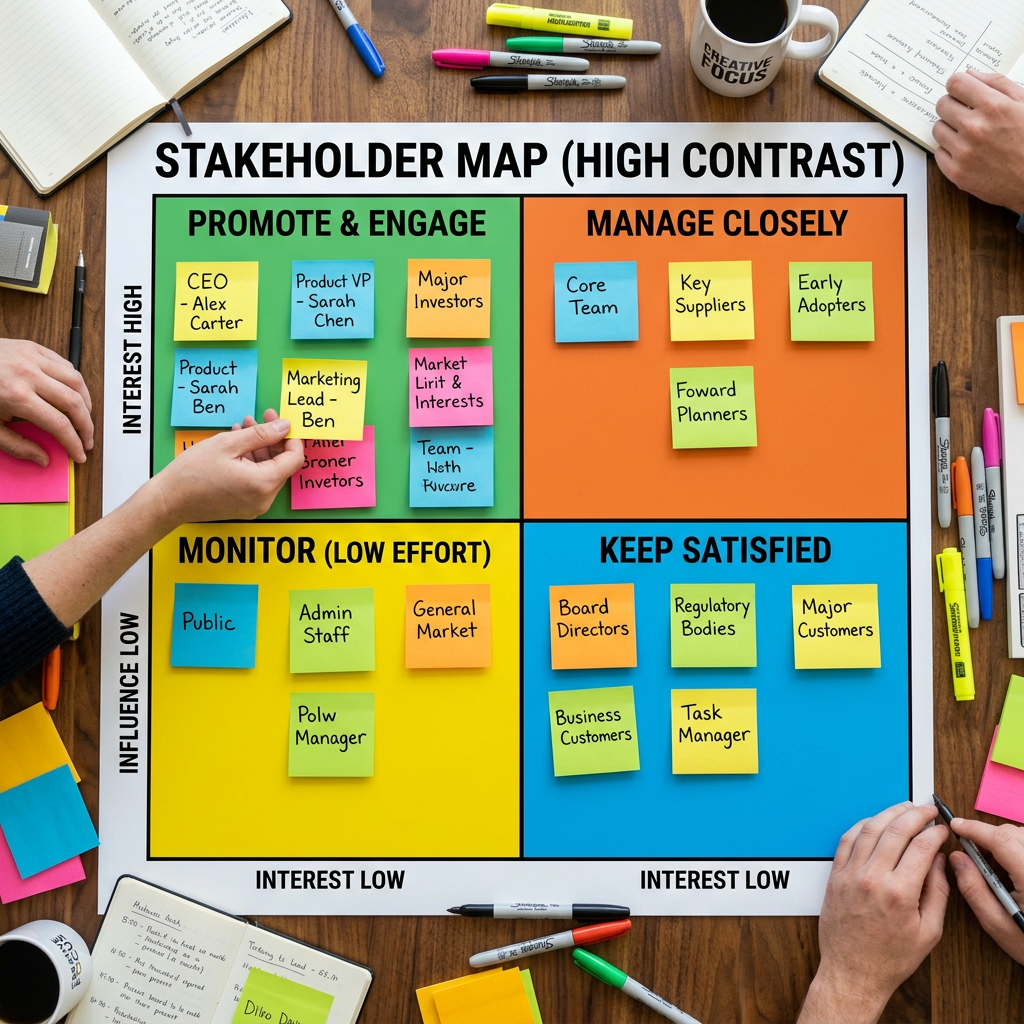
Stakeholder map chart with sticky notes categorizing stakeholders by interest and influence levels

Mastering Policy Engagement in Complex Regulatory Environments

This article advocates for transforming policy engagement into a proactive strategy that influences regulatory outcomes. It outlines eleven best practices, including stakeholder mapping, cross-functional coordination, and evidence-based advocacy. Companies that implement these strategies can shift from vulnerability to establishing a competitive advantage, effectively shaping the regulatory landscape.

Mastering Policy Engagement in Complex Regulatory Environments Read More »

Scales of justice with legal documents in office conference room

How Data Drives Strategic Advocacy

In high-stakes policy environments, evidence-led advocacy is crucial for recommendations’ durability. This approach relies on verifiable data and transparent methodologies to withstand scrutiny, contrasting with assertion-based tactics. Effective implementation of evidence strengthens credibility, fosters lasting influence, and requires institutional practices that prioritize sourcing, calibrating claims, and mapping disagreements to enhance decision-making.

How Data Drives Strategic Advocacy Read More »

Business team discussing financial documents in a modern boardroom with city skyline at dusk

Public Affairs Belongs in the Boardroom: Why It Is a Strategic Leadership Function, Not a Support Role

Public affairs is now a crucial strategic function for companies, influencing external forces that impact value, such as policy, regulation, and reputational trust. Firms that proactively engage in public affairs avoid significant costs and crises. Elevating this function to the boardroom enhances decision-making and provides a competitive edge in a fast-paced business environment.

Public Affairs Belongs in the Boardroom: Why It Is a Strategic Leadership Function, Not a Support Role Read More »

Lighted domino standing at the front of a curved row of black dominoes on a wooden surface

The Quiet Advantage: How Foresight Beats Firefighting in Public Affairs

This article emphasizes the need for public affairs teams to shift from reactive strategies to proactive issue anticipation and horizon scanning. It outlines a five-stage framework to identify emerging legislation and regulatory changes early, allowing organizations to influence outcomes before they solidify, thus avoiding crisis management and enhancing strategic decision-making.

The Quiet Advantage: How Foresight Beats Firefighting in Public Affairs Read More »