International Affairs

A high-angle photograph of a modern, high-tech defense manufacturing facility, showcasing a blend of industrial automation, precision engineering, and strategic corporate oversight in a clean, bright space

Defense Industrial Policy 2026: How Nations Are Rebuilding Strategic Capacity

Meta title Defense Industrial Policy 2026: How Nations Are Rebuilding Strategic Capacity Meta description Explore how governments are reshaping defense industrial policy in 2026 through procurement reform, resilient defense supply chains, stockpile rebuilding, and stronger public-private coordination. The global security environment has entered a more demanding phase, and defense planners know it. The old assumption

Defense Industrial Policy 2026: How Nations Are Rebuilding Strategic Capacity Read More »

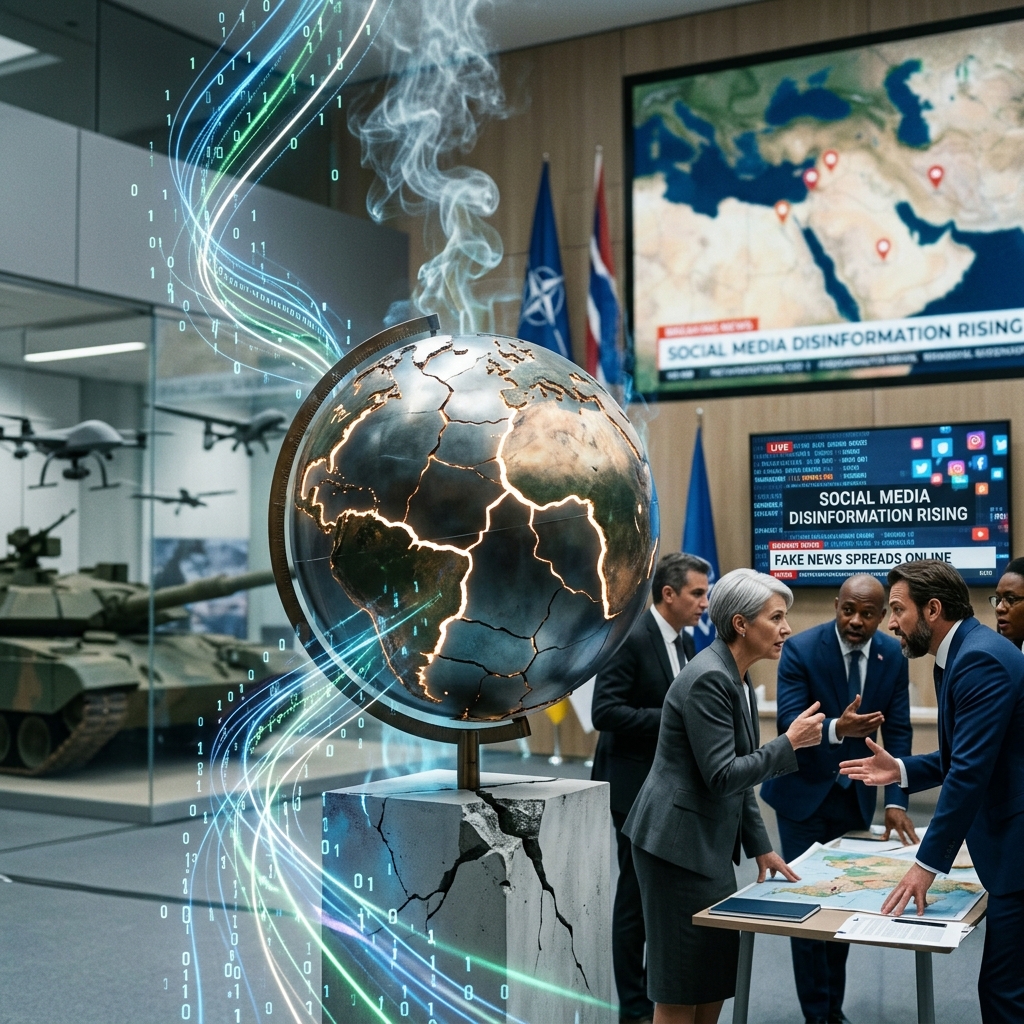
A realistic depiction of global security challenges in the post-American era, featuring a fractured globe surrounded by digital data streams, military equipment, and political leaders in intense discussion. The scene includes a blurred map of the Middle East, NATO flags, and a digital screen showing social media disinformation, symbolizing the interplay between traditional military power and modern information warfare

Global Security in the Post-American Era: How Bad Leadership and Information Warfare Are Reshaping the World

Meta Title: Global Security in the Post-American Era Meta Description: Explore how the post-American era and information warfare reshape global security. Discover the impact on NATO, Israel’s defense, and Hamas’s resilience. Are the foundational pillars of the international order collapsing before our eyes? As the geopolitical landscape shifts into what historians and foreign policy analysts

Global Security in the Post-American Era: How Bad Leadership and Information Warfare Are Reshaping the World Read More »

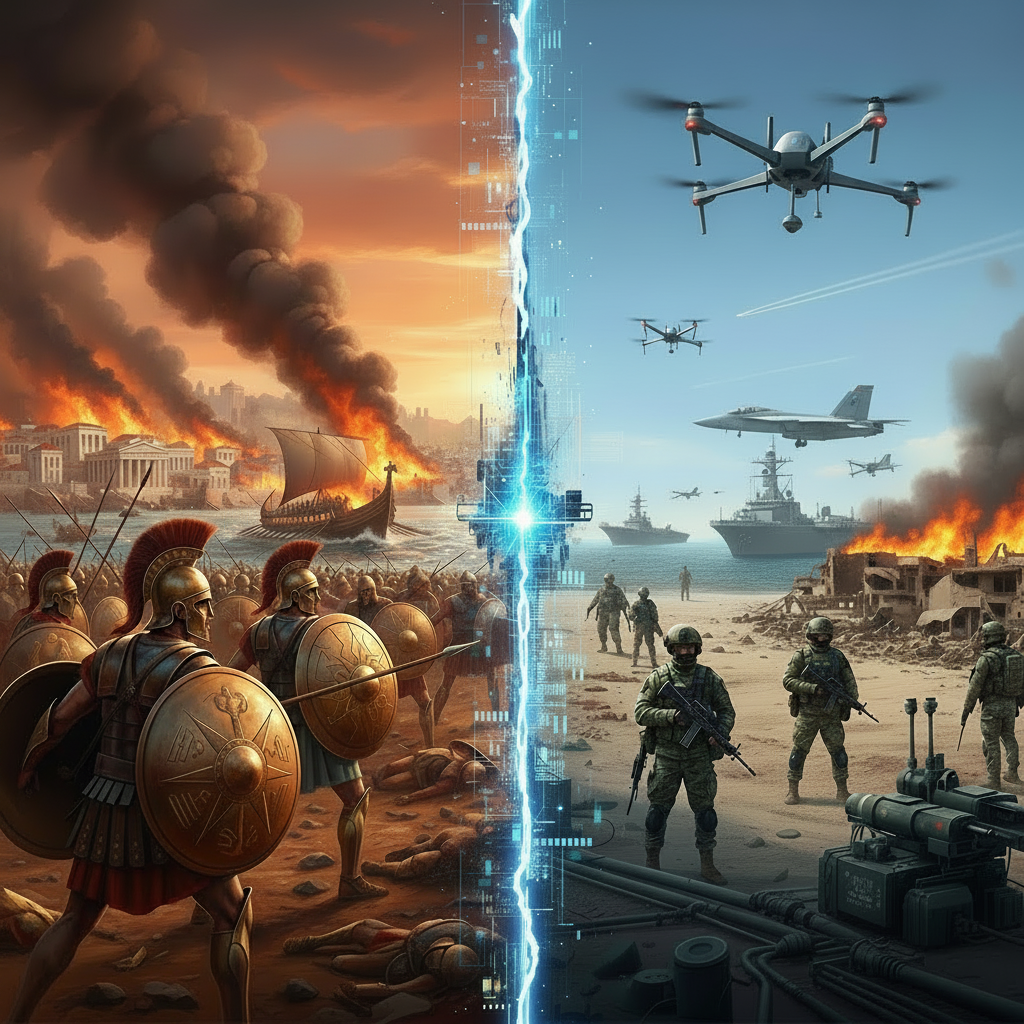
The image depicts a split composition contrasting the Peloponnesian War and the US-Iran conflict. On the left, ancient Greek warriors in detailed bronze armor are shown amidst a burning city with vivid flames and smoke. On the right, modern military forces, including the US Navy with warships, aircraft carriers, and drones, are set against a Middle Eastern desert landscape. A destroyed and burning section of Iran is depicted with realistic ruins, intense fire, and billowing smoke. The two sides are divided by a glowing digital rift, symbolizing the evolution of conflict over time

Parallèles entre les conflits historiques et la Guerre américano-iranienne

1. La guerre du Péloponnèse : Peur, rivalité et escalade À la base, la guerre du Péloponnèse nous raconte l’histoire étonnamment moderne de deux puissances qui s’observent du coin de l’œil, se défient, s’inquiètent. D’un côté, Athènes, pleine d’audace et avide de conquête sur les mers ; de l’autre, Sparte, forte de sa maîtrise de la

Parallèles entre les conflits historiques et la Guerre américano-iranienne Read More »

The image depicts a split composition contrasting the Peloponnesian War and the US-Iran conflict. On the left, ancient Greek warriors in detailed bronze armor are shown amidst a burning city with vivid flames and smoke. On the right, modern military forces, including the US Navy with warships, aircraft carriers, and drones, are set against a Middle Eastern desert landscape. A destroyed and burning section of Iran is depicted with realistic ruins, intense fire, and billowing smoke. The two sides are divided by a glowing digital rift, symbolizing the evolution of conflict over time

Historical Lessons for Modern Conflict: The Peloponnesian War, Great Power Rivalries, and the US-Iran Standoff

The Peloponnesian War, as recounted by Thucydides, is one of history’s most enduring case studies on the dynamics of power, rivalry, and the unintended consequences of prolonged conflict. Its lessons remain strikingly relevant today, particularly as tensions between the United States and Iran continue to simmer. This ancient conflict offers a lens through which we

Historical Lessons for Modern Conflict: The Peloponnesian War, Great Power Rivalries, and the US-Iran Standoff Read More »

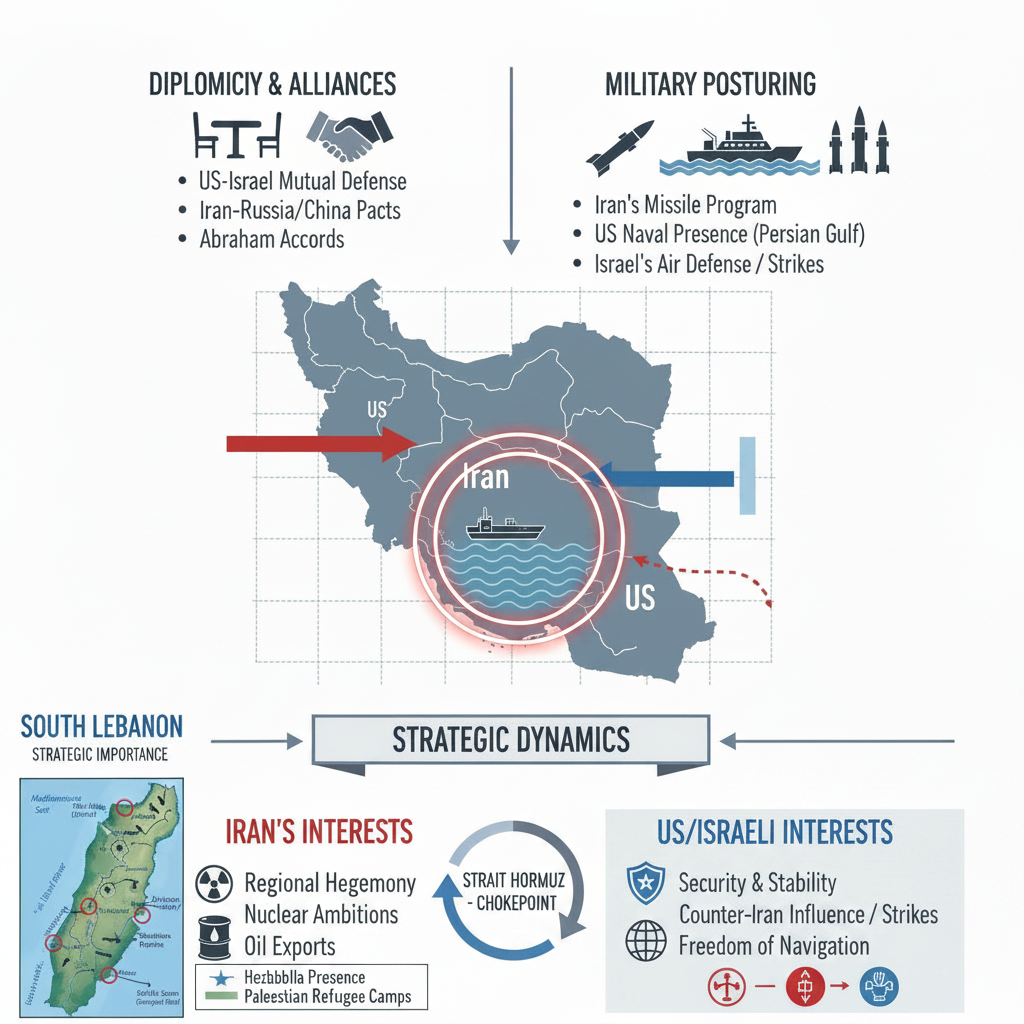
Infographic detailing geopolitical dynamics around Iran, highlighting strategic interests, military postures, and alliances between key global and regional actors, with a focus on South Lebanon

Navigating Tensions: A Fresh Look at the Evolving Iran–US–Israel Dynamics

Table of Contents Executive Summary The Middle East stands on the cusp of significant change, caught between energy shocks, evolving security alliances, and a clear shift in the historic partnership between the United States and Israel. A hard-won, two-week ceasefire between the U.S. and Iran was reached on April 7, with each side eager to

Navigating Tensions: A Fresh Look at the Evolving Iran–US–Israel Dynamics Read More »

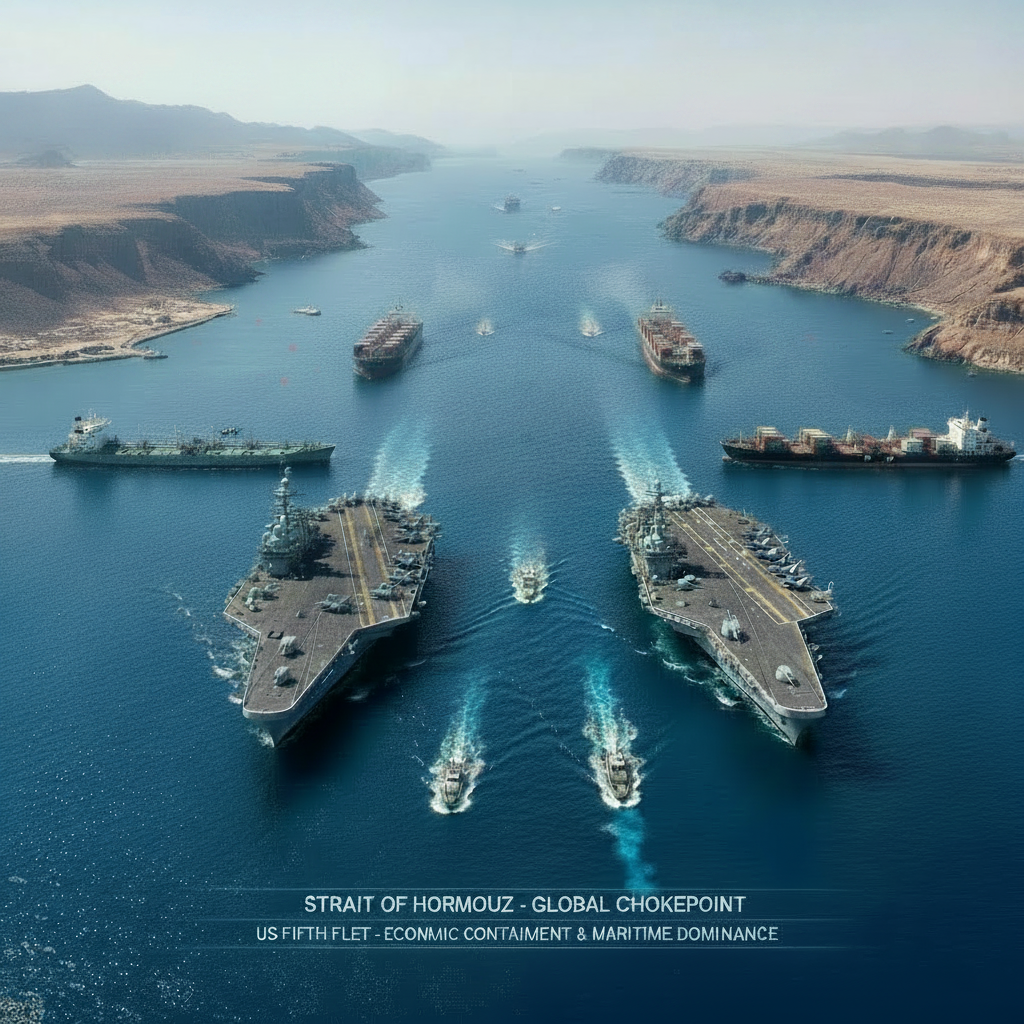
A high-resolution aerial view of the Strait of Hormuz, showcasing two massive aircraft carriers and their escorts alongside commercial vessels. The scene highlights global trade routes and military dominance, with no flags or emblems present, emphasizing the strategic importance of the maritime chokepoint

US Iran Strategic Report Update

Date: April 16, 2026Prepared by: Strategic Geopolitical Intelligence Unit – Responsible Public Affairs Executive Summary The strategic landscape of the Middle East is undergoing a defining transformation, driven by the decisive leadership of the United States and the uncompromising military resilience of Israel. Built upon the foundational successes of the “Maximum Pressure” doctrine championed by

US Iran Strategic Report Update Read More »

A dramatic composite image depicting high-stakes geopolitical discussions under a stormy sky, juxtaposed with a powerful naval fleet and oil tankers at sea, symbolizing global power dynamics and strategic tensions. Shadows of China and Russia loom in the background, representing their readiness to intervene with Iran

Negotiating Power and Leverage: Lessons from the Strait of Hormuz Stalemate

“Beyond the BATNA: Redefining Leverage in the Strait of Hormuz Stalemate”

This section explores how negotiators can redefine leverage even in seemingly powerless situations. It highlights strategies like cultivating partial alternatives, analyzing the counterparty’s hidden vulnerabilities, and reframing threats as warnings. For example, the text discusses how the U.S. could mitigate reliance on the Strait of Hormuz by developing alternative pipelines and renewable energy sources, thereby reducing Iran’s leverage. It also emphasizes the importance of mutual vulnerabilities, such as Iran’s dependence on the Strait for economic survival, and the use of tacit consent to create temporary solutions without formal agreements.

This approach demonstrates how creative negotiation tactics can shift power dynamics and achieve stability in high-stakes geopolitical conflicts.

Negotiating Power and Leverage: Lessons from the Strait of Hormuz Stalemate Read More »

Multiple boats navigating through the calm waters of the Strait of Hormuz, surrounded by a vast expanse of sea and distant landforms under a clear sky.

The Illusion of Power: The Strategic Degradation of the Iranian Regime and the New Middle East

Summary: This article examines the evolving balance of power in the Middle East, focusing on the strategic decline of the Iranian regime amid mounting internal and external pressures. It explores how actions by the U.S. (under President Trump and Vice President Vance), European powers, Gulf states, and regional mediators have exposed the gap between Iran’s

The Illusion of Power: The Strategic Degradation of the Iranian Regime and the New Middle East Read More »

"An infographic illustrating Germany's leadership in European conventional rearmament, represented by a modern military helmet positioned slightly off-center on a glowing Europe. The globe features stylized outlines of European countries, with subtle nuclear symbols near France and England to signify their nuclear capabilities. The composition uses a professional, minimalist style with muted grays, blues, and metallic tones, emphasizing Germany's strategic role in European defense."

Le prochain hégémon de l’Europe : Les implications stratégiques et géopolitiques d’une Allemagne réarmée

Résumé analytique Le 27 février 2022, les plaques tectoniques de la sécurité européenne ont bougé. Lors d’une session extraordinaire du Bundestag, le chancelier Olaf Scholz a annoncé un Zeitenwende — un tournant décisif. Ce n’était pas une simple réaction à l’invasion de l’Ukraine par la Russie ; c’était l’abandon de près de huit décennies de

Le prochain hégémon de l’Europe : Les implications stratégiques et géopolitiques d’une Allemagne réarmée Read More »